
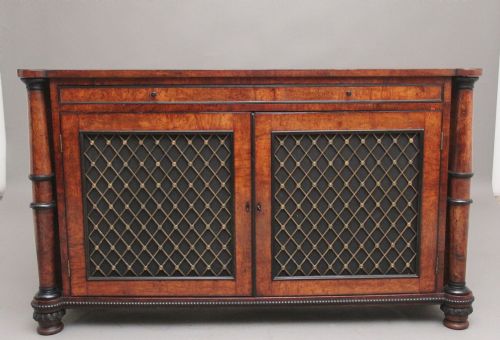
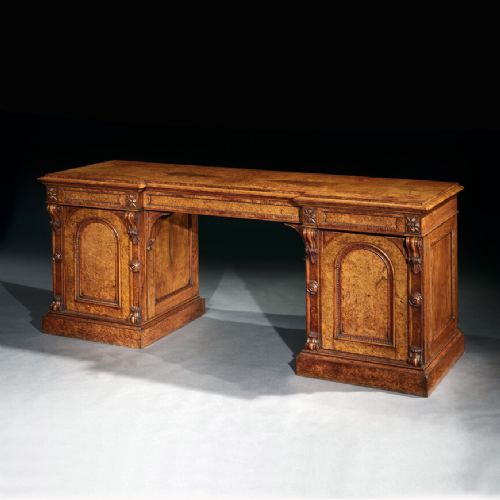
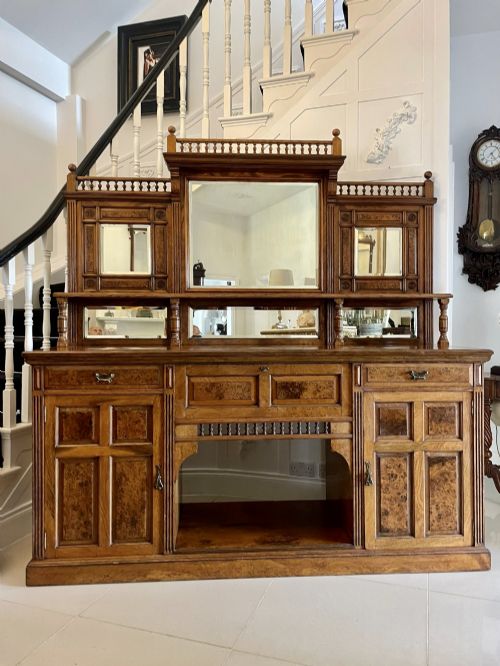
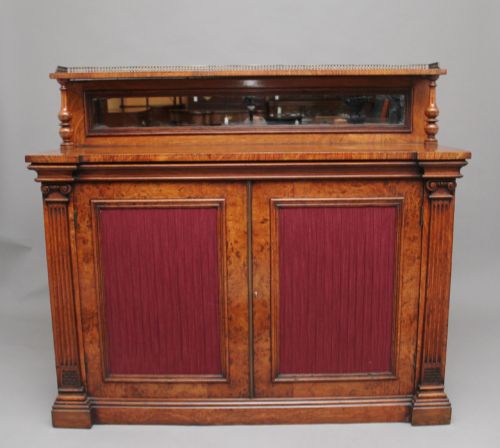


Pollard Oak Credenza
A pollard oak credenza brings deep, mottled timber figuring and solid nineteenth-century presence to a room.
Pollard Oak Credenza
When you search for a pollard oak credenza, you encounter substantial nineteenth-century storage pieces built from timber taken from pollarded trees, which creates a distinctive, swirling burr grain. The pieces on this page span the Victorian and Regency eras, taking forms such as cabinets, chiffoniers, sideboards and large credenzas.
You are most likely to meet Victorian sideboard and cabinet formats featuring rich oak surfaces, sometimes enhanced with ebony inlay or mirror backs. Makers incorporated glazed doors, top shelves and carved details, resulting in heavy, architectural furniture designed for formal dining rooms and parlours.
How they were made
Cabinetmakers constructed these pieces primarily from pollard oak and burr oak timbers, selecting sections with high natural figuring for the main visual surfaces. They frequently combined this timber with contrasting ebony inlay and brass fittings.
Construction techniques from the period involved solid framing lined with carefully matched veneers to display the swirling grain patterns across large doors and panels. Glass panels and mirrored backs were integrated into the more elaborate Victorian and Regency designs.
The listings on this page span the nineteenth century, uniting Victorian and Regency eras through the shared use of pollard oak, brass and ebony inlay.
What varies in quality
Quality in these pieces rests upon the selection and matching of the timber veneer, where dense, evenly distributed burr patterns distinguish superior examples from plain ones. The intricacy of the cabinetmaking, seen in fine ebony stringing and carving, also separates standard items from exhibition-grade work.
The architectural ambition of the piece dictates its standing, moving from simple two-door cabinets to large mirror-backed sideboards with Gothic Revival detailing or attributed workshops.
William Trotter
The Pollard Oak Credenza Glossary
- Pollard oak
- Timber harvested from trees that were cut back close to the trunk to encourage dense, highly figured branch growth. This process produces the swirling, knotty grain patterns prized by nineteenth-century cabinetmakers.
- Credenza
- A low dining room cabinet or sideboard used for displaying plate and serving food. Nineteenth-century examples often feature enclosed cupboards and decorative mirrored superstructures.
- Chiffonier
- A small, low sideboard or cabinet popular during the Regency and Victorian periods. It typically includes shelves above or enclosed storage below for china and linens.
- Gothic Revival
- An architectural and decorative style drawing inspiration from medieval forms. Pieces in this style incorporate pointed arches, heavy carvings and ecclesiastical motifs.
- Ebony inlay
- The practice of recessing dark contrasting wood into the lighter oak surface to create geometric lines or borders. This technique highlights the boundaries of panels and drawers.
Pollard Oak Credenza: Frequently Asked Questions
Where should I place a pollard oak credenza?
These substantial pieces anchor a dining room or large hallway, where their figured timber grain and generous surface area can be appreciated properly.
Keep them away from direct sunlight and strong heat sources to protect the polished nineteenth-century wood finish.
How do I clean pollard oak furniture?
Dust the timber regularly with a soft, dry cloth and apply a quality beeswax occasionally to nourish the grain.
Avoid silicone-based sprays and excess moisture, which can damage the historic polish and veneer.
What is the difference between a sideboard and a credenza?
While both serve dining and living spaces for storage, nineteenth-century credenzas often sit lower and focus on display with glass or mirrored elements.
Sideboards tend to be heavier rectangular units designed primarily for heavy serving and tableware storage.
How can I tell Victorian pieces from Regency ones?
Regency items generally display cleaner classical lines with restrained use of brass and dark wood inlay.
Victorian pieces tend to be heavier and more ornate, frequently featuring mirror backs, elaborate carving and Gothic Revival influences.