
Antique Oak Dining Cabinet
An antique oak dining cabinet brings enduring timber grain and practical dining storage into a modern room.
Antique Oak Dining Cabinet
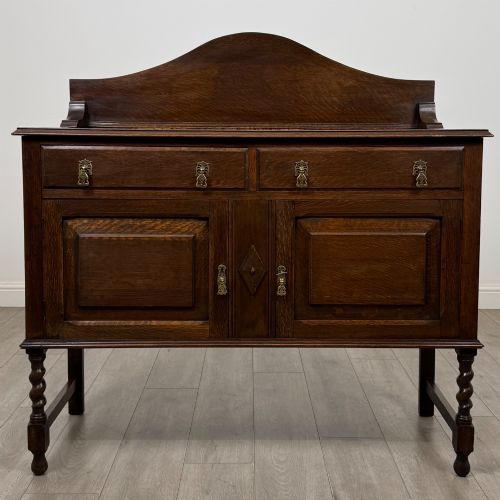
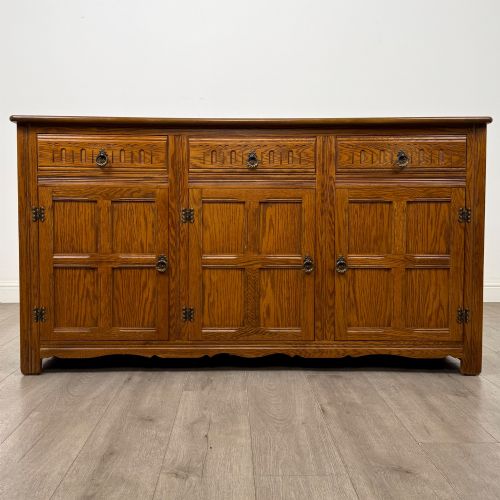
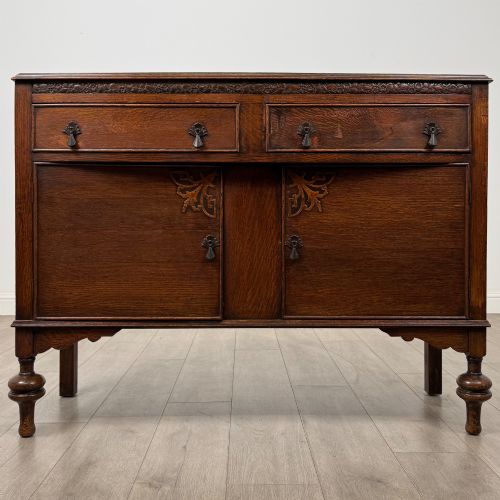
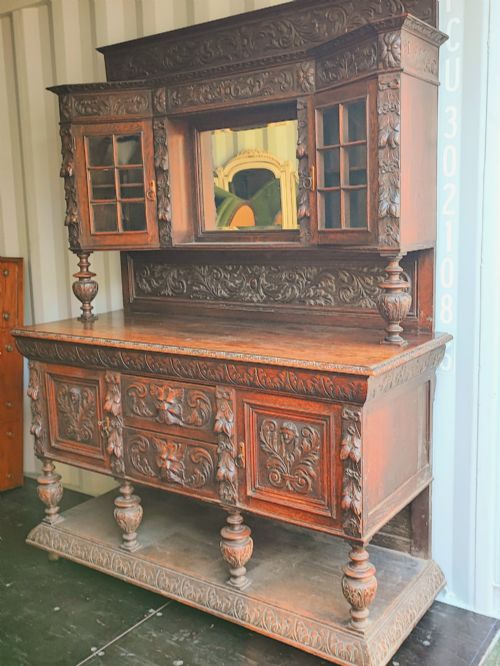
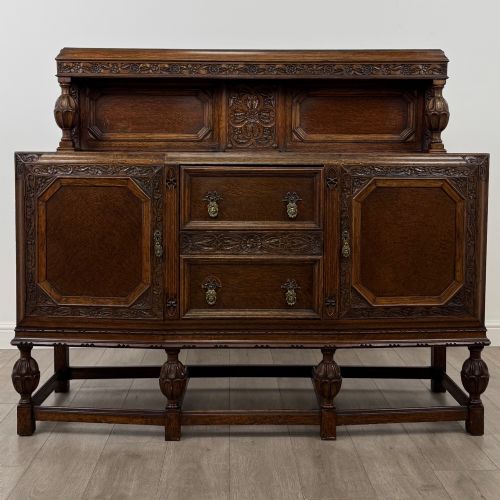
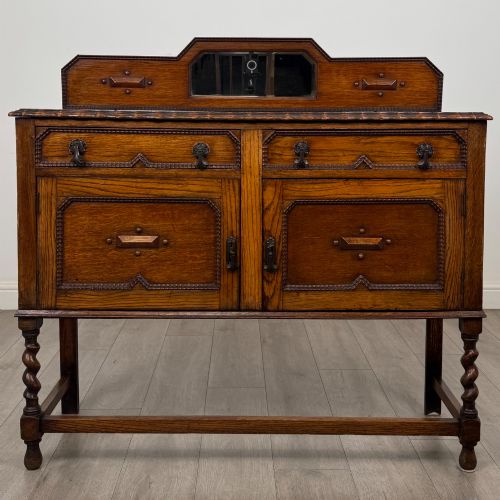
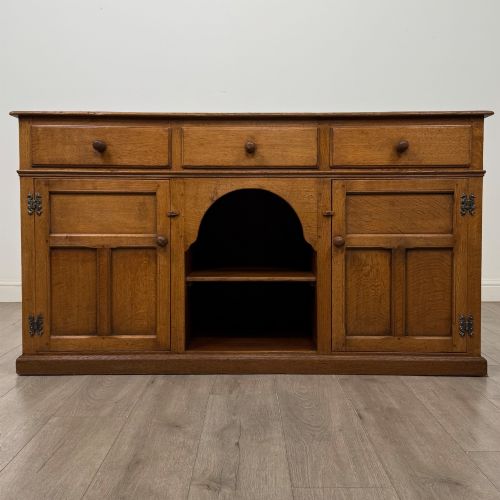
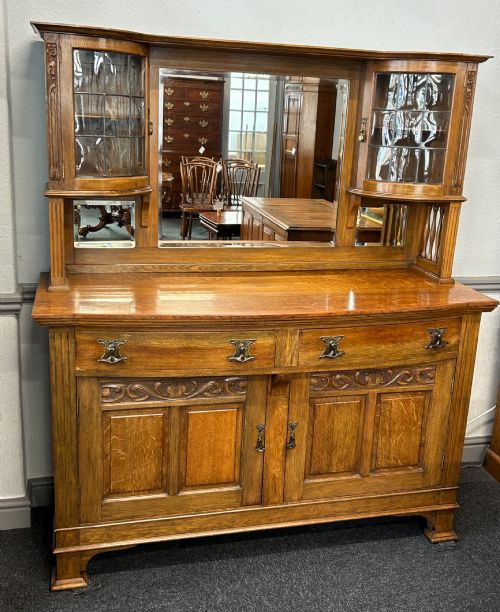
An antique oak dining cabinet encompasses substantial storage furniture designed for the dining room, most frequently appearing on this page as sideboards, dressers, and buffet servers. These forms serve to store tableware, linen, and food provisions while anchoring the room with heavy timber presence.
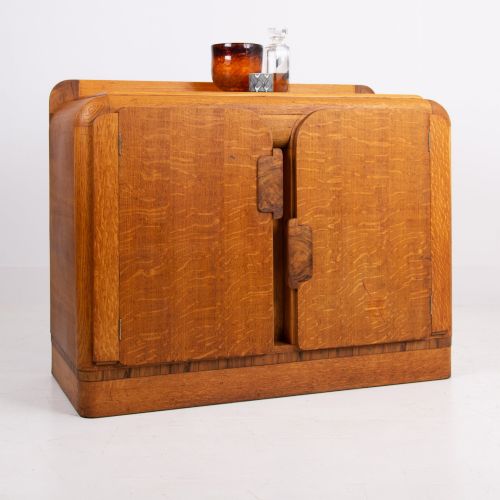
The pieces span multiple eras, showing particular strength in Victorian and Edwardian examples alongside earlier 18th-century country pieces. Buyers encounter everything from simple golden oak server bases to heavily carved mirrorback sideboards and Welsh dressers with breakfront drawers.
Regional variations and revivalist movements shape the selection, including Jacobean Revival carving, Arts and Crafts simplicity, and continental styles. This variety allows a dining space to take on distinct architectural character depending on the chosen decade and maker's hand.
Materials and construction methods
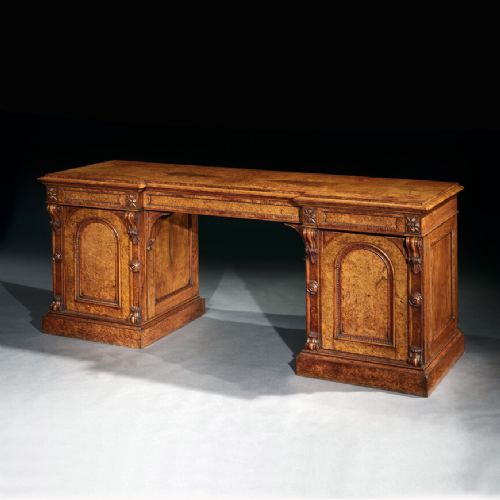
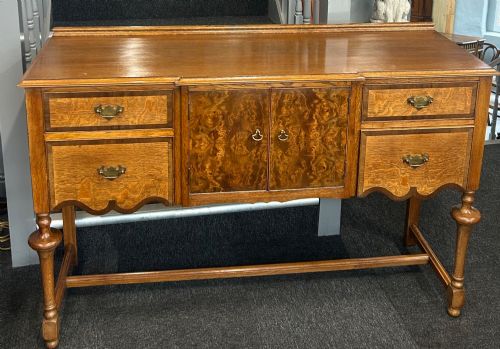
Solid oak forms the primary structural foundation of these cabinets, frequently complemented by specialised veneers such as pollard oak and burr walnut to create dramatic grain patterns on door fronts and drawers. Brass and iron hardware, including drop handles and hinges, provide functional contrast to the heavy timber.
Joinery methods rely on traditional cabinet-making techniques suited to dense hardwoods, supporting large surfaces like mirrorbacks, breakfront counters, and panelled doors. Secondary woods and mirror glass integrate into the larger buffet and dresser forms without compromising the dominant oak exterior.
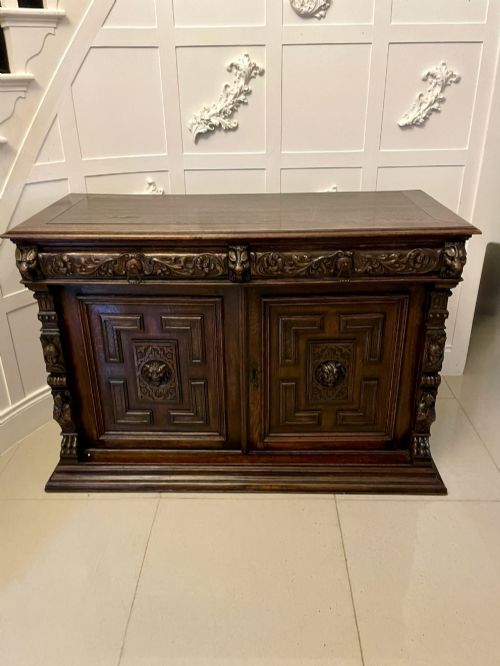
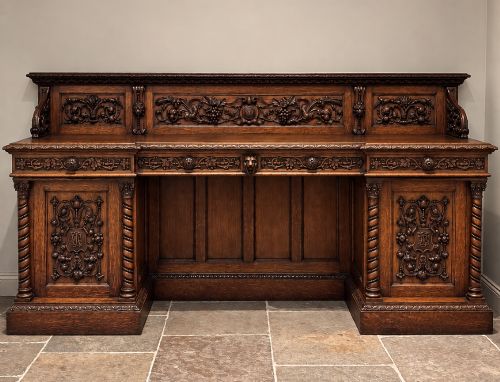
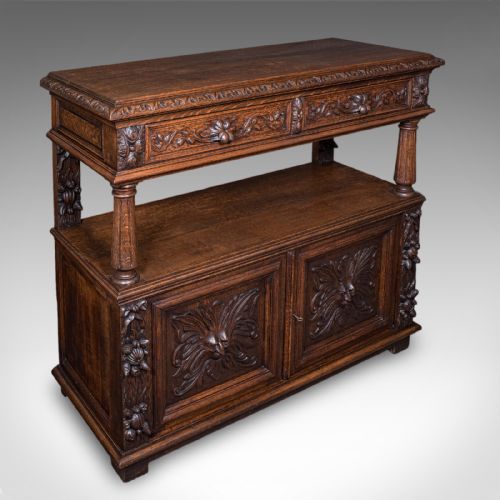
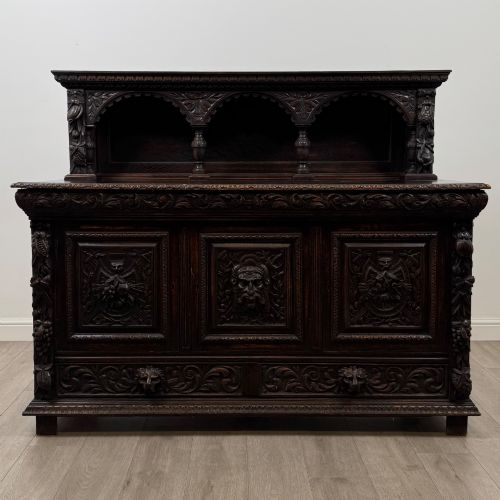
Several heavy oak sideboards conceal elaborate hand-carved Green Man faces peering out from the foliage.
Markers of distinction
Quality reveals itself in the depth and crispness of the carved ornamentation, distinguishing spirited hand-carved Green Man motifs and linenfold panels from mechanical or shallow factory work. Timber selection equally dictates standard, where matched pollard oak figures or uniform golden oak planks elevate the visual weight of a sideboard.
Structural integrity and hardware retention separate exceptional examples from standard utility pieces, seen in original brass mounts, well-fitted drawers, and intact mirrorback attachments. The harmony between proportion, decorative restraint, and functional storage defines the upper tier of surviving dining cabinetry.
Heals of London·Maple and Co·T Simpson and Son
The Antique Oak Dining Cabinet Glossary
- Welsh dresser
- A traditional tall storage unit combining open plate racks or upper shelving with enclosed lower cupboards and drawer bases. This form displays ceramic collections while concealing dining linens.
- Pollard oak
- Oak timber taken from trees that have been pollarded, producing a tightly clustered, knotted grain pattern. Cabinet-makers used these decorative veneers on prominent door panels.
- Mirrorback
- An upright wooden frame containing a polished mirror plate attached to the rear of a sideboard. It reflects light and displays ornamental crests.
- Breakfront
- A cabinet front where the central section projects forward from the flanking outer cupboards. This architectural device adds depth and shadow to large dining furniture.
Antique Oak Dining Cabinet: Frequently Asked Questions
What is an antique oak dining cabinet used for?
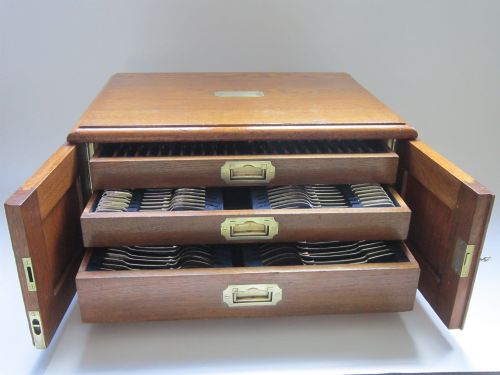
These cabinets provide essential storage and serving space within a dining room, accommodating cutlery canteens, linen, and heavy serving platters.
The flat top surfaces function effectively as server stations during meals or display areas for decorative ceramics and silver.
How do I date an oak sideboard?
Dating relies upon stylistic markers, hardware types, and construction methods characteristic of periods like the Victorian era or Edwardian decades.
Heavily carved mirrorbacks and dark finishes typically indicate late 19th-century work, whereas golden oak and simpler lines often point toward early 20th-century production.
Where should I place a dining cabinet?
A large sideboard or dresser requires a prominent wall in a dining room or spacious living area where its depth and height can anchor the space.
Placement should avoid direct heat sources and strong sunlight to protect the aged oak timber and preserve polished finishes.
What distinguishes Arts and Crafts cabinets?
Arts and Crafts pieces emphasise honest construction, visible grain, and restrained decoration over the heavy ornamentation of Victorian revival styles.
These cabinets often feature subtle copper hardware, simplistic geometric panels, and lighter oak tones characteristic of the early 20th century.