




19th Century Pearlware
These 19th century pearlware pieces are refined earthenware ceramics displaying characteristic blue and white transfer printing or vivid enamel painting that collectors treasure for their rich historical charm.
19th Century Pearlware
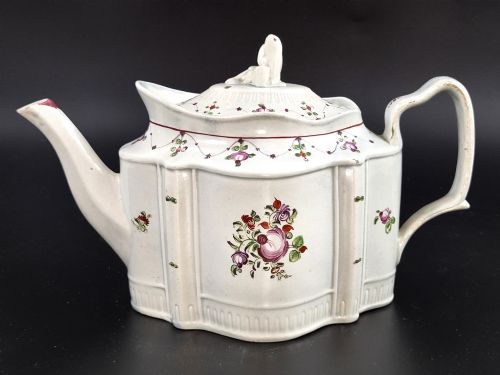
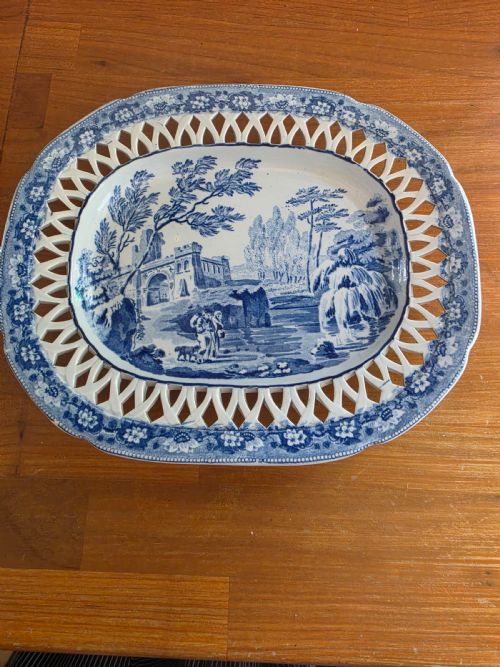
When you search for 19th century pearlware, you encounter a diverse array of utilitarian and decorative items spanning the Georgian, Regency, and early Victorian periods. These pieces range from blue and white transfer-printed plates and serving platters to robust jugs, pitchers, and figural groups.
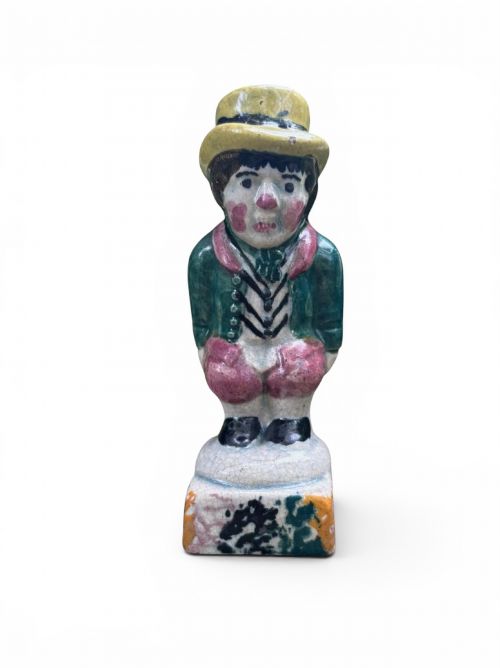
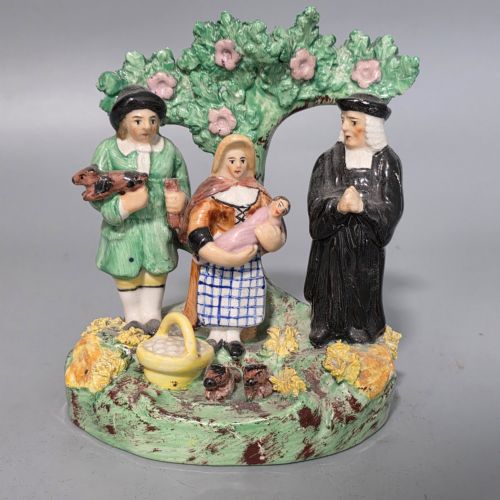
You are most likely to meet transfer-printed tableware and Staffordshire figures on this page, alongside specialised forms like frog mugs, meat drainers, and spill vases. The selection reflects the domestic and ornamental ceramic output of English potteries during the height of the pottery trade.
Materials and production techniques
Potters formed these items using refined white earthenware bodies covered with a characteristic pearlware glaze, which incorporated a small amount of cobalt to counteract the natural yellowish tint of the fired clay. This created a pale, bluish-white surface that provided an ideal ground for decoration.
Decoration relied heavily on intricate blue and white transfer printing from copper plates, as well as hand-applied enamel colours and metallic lustre highlights. Potters often combined moulded relief work with painted or printed details, particularly on figural groups and decorative vessels.
A ceramic frog lurks inside the rim of several drinking vessels, waiting to startle thirsty drinkers.
Distinctions in quality and execution
The purity of the pearlware glaze and the smoothness of the underlying ceramic body also differentiate standard utilitarian wares from highly ambitious ornamental figures and specialised serving pieces.
Davenport·Walton·Thomas Harley·Brameld and Co·John Rogers and Son·Spode
The 19th Century Pearlware Glossary
- Pearlware
- A refined earthenware developed in the late 18th century featuring a transparent lead glaze tinted with cobalt oxide. This subtle addition produced a bluish pooling effect in crevices that distinguishes it from earlier creamware.
- Transfer printing
- A mechanical decoration technique where an engraved copper plate applied an inked design to tissue paper, which was then transferred onto the unglazed or biscuit ceramic surface. It allowed for intricate, repeatable patterns across large sets of tableware.
- Prattware
- A type of earthenware decorated underglaze in limited vibrant colours such as ochre, blue, brown, and green, commonly associated with figures, jugs, and plaques from the late 18th and early 19th centuries.
- Spill vase
- A hollow tubular ceramic vessel designed to hold taper spills used for lighting candles or fires. They frequently depicted animals, cottages, or figures in regional Staffordshire styles.
- Frog mug
- A drinking vessel featuring a modelled ceramic frog peering over the interior rim, often designed as a playful surprise for the drinker. They were frequently inscribed with personal names or dates.
19th Century Pearlware: Frequently Asked Questions
What is pearlware?
Pearlware is a refined white earthenware developed to compete with porcelain by utilising a glaze with a subtle bluish tint. It bridged the gap between creamware and later white ironstone.
Potters used this ceramic body extensively throughout the Georgian and Regency periods for both utilitarian tableware and decorative display items.
How do I care for antique pearlware?
Wash these ceramics gently by hand in warm water using mild soap, avoiding dishwashers and harsh abrasive scourers that can damage the historical glaze. Store them securely away from heavy foot traffic.
Display transfer-printed plates and hollowware out of direct, prolonged sunlight to protect any hand-applied enamel colours from fading over time.
How do I distinguish pearlware from creamware?
Examine the pooled areas of the glaze, particularly around the foot rim or handles, where the characteristic bluish tint of pearlware collects visibly. Creamware presents a warmer, buttery-yellow tone.
This deliberate shift in glaze chemistry occurred around the turn of the 19th century to give earthenware a whiter, more modern appearance.
Were these pieces used daily?
Many items served practical domestic purposes in 19th-century households, including large serving platters, tea bowls, jugs, and dinner plates. Other items, such as figural groups and spill vases, were strictly ornamental mantelpiece decorations.
Wear patterns and staining on tableware reflect their active service in period dining rooms before entering collections.