


19th Century Lacquer Box
A 19th century lacquer box brings intricate gilding and rich historical depth to a desk or table, offering a tactile piece of global artistry.
19th Century Lacquer Box
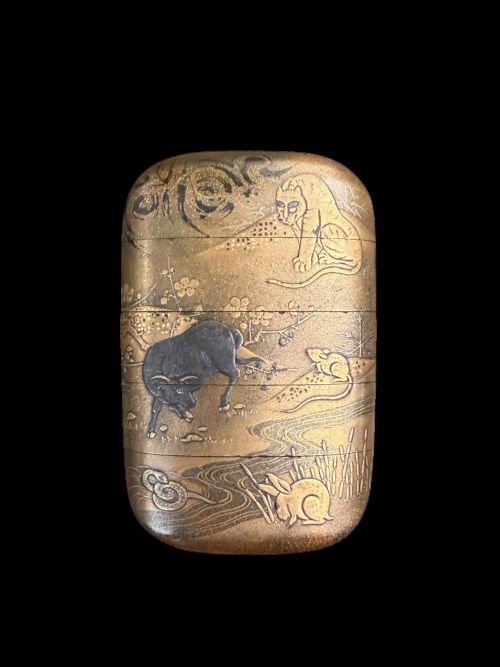
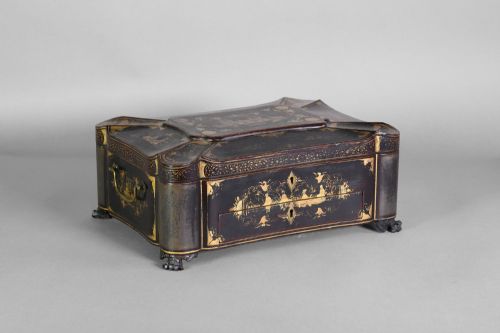
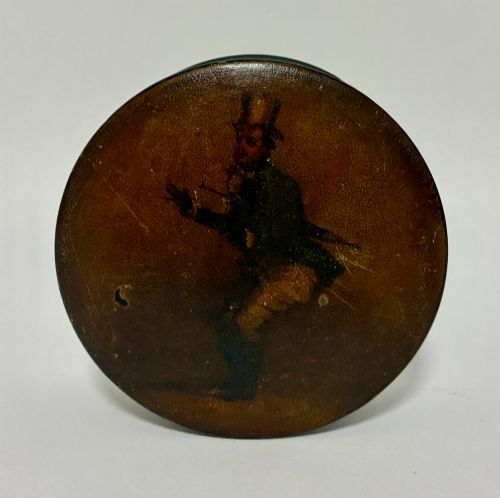
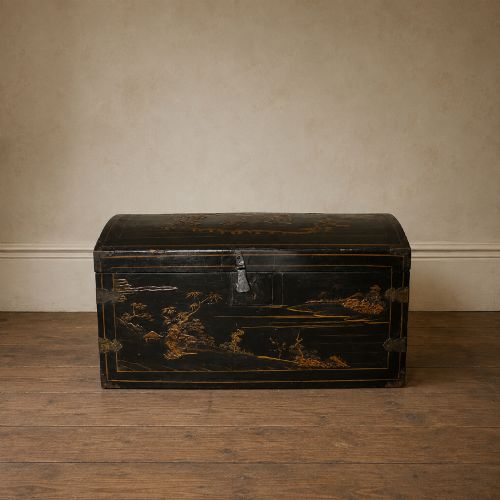
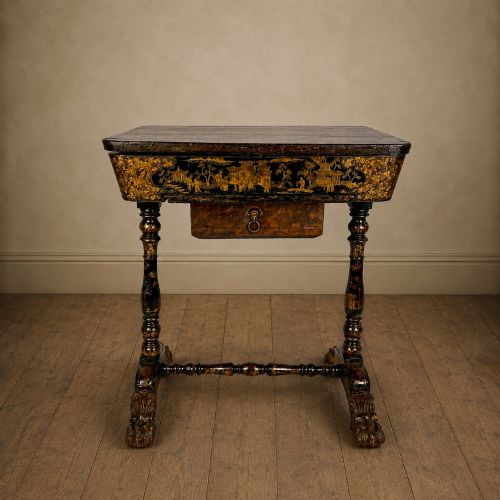
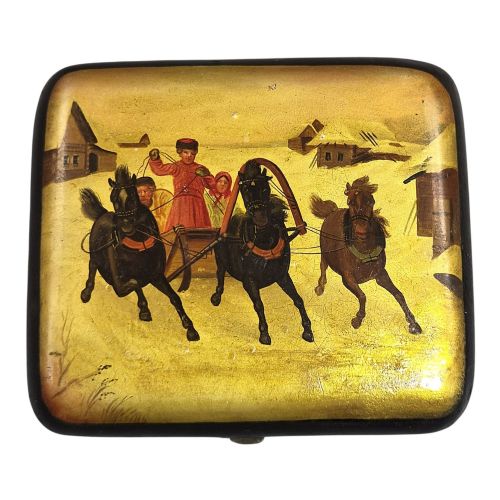
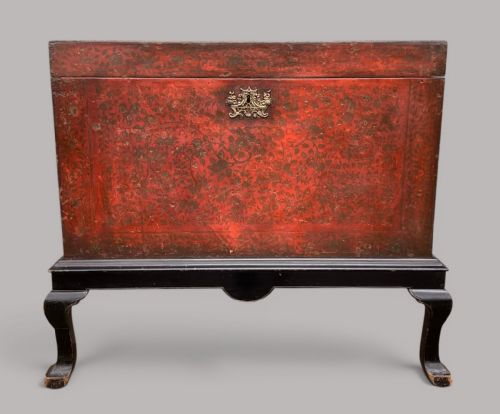
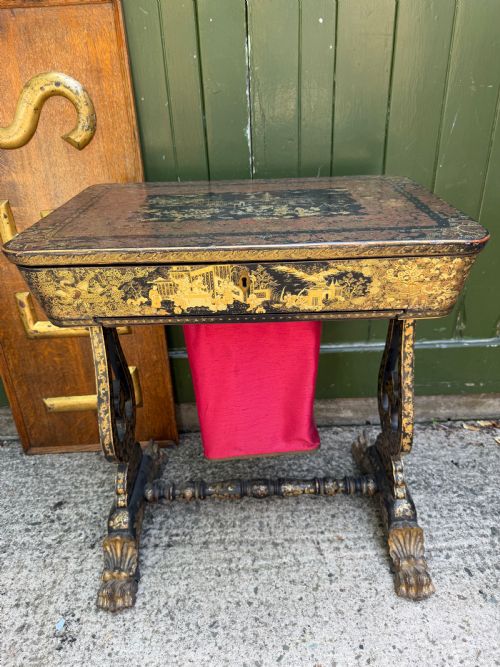
When searching for a 19th century lacquer box, collectors encounter a diverse array of utilitarian and decorative containers shaped by distinct regional traditions. The selection spans utilitarian pocket items like snuff boxes and cigarette cases to larger household furnishings such as tea caddies, sewing tables, and domed chests.
The objects originate from varied global workshops, reflecting Victorian British tastes alongside Chinese Export, Japanese Meiji, Indian, Persian, and European designs. Papier-mâché and wood serve as the primary foundational mediums for these portable containers.
Most pieces on offer date from the Georgian, Regency, and Victorian eras, or parallel the Chinese Qing Dynasty. Buyers frequently find tea caddies, needlework boxes, and small pocket snuff boxes as the most common expressions of this craft.
How they were made
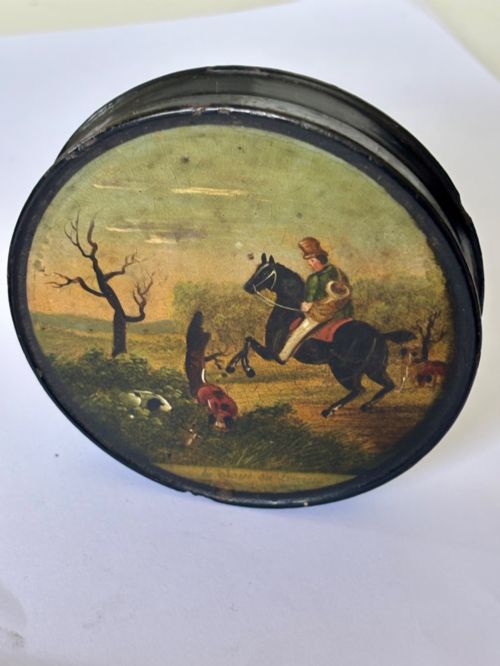
Makers constructed these vessels primarily from wood or layered papier-mâché, applying successive coats of lacquer to achieve a hard, durable surface. Artisans frequently built up relief designs before adding layers of paint and gold leaf.
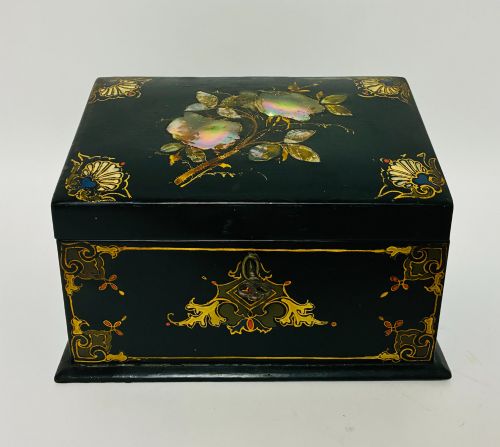
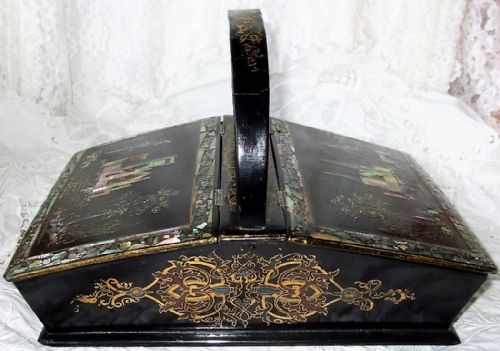
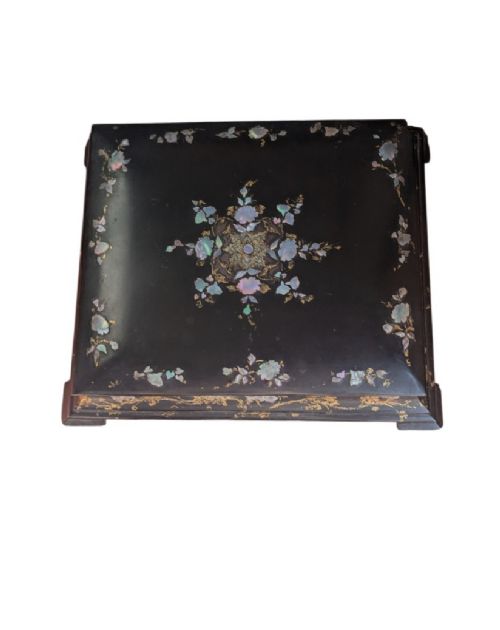
Gilding, hand-painting, and penwork define the surface ornamentation across British, European, and Asian pieces alike. Detail work often incorporates contrasting materials such as mother-of-pearl inlay, brass fittings, and painted enamel.
Some ingenious German and Georgian snuff boxes feature concealed erotic compartments designed for private amusement.
What varies in quality
The standard of a lacquer piece rests upon the crispness of the hand-painted or gilt decoration and the depth of the finish. Superior examples display meticulous brushwork and stable grounds without extensive crazing or loss to the lacquer layer.
Construction integrity also dictates worth, seen in the precise alignment of lids, hinges, and fitted interiors. Pieces retaining original compartments, internal tea canisters, or well-preserved papier-mâché structures command greater appreciation.
Vishnyakov Workshop·Stobwasser·G Cobb
The 19th Century Lacquer Box Glossary
- Papier-mâché
- A composite material made from paper pulp or layers of paper reinforced with glue, moulded and dried to form a sturdy base for lacquer. It allows for smooth, curved surfaces ideal for small boxes and tea caddies.
- Chinoiserie
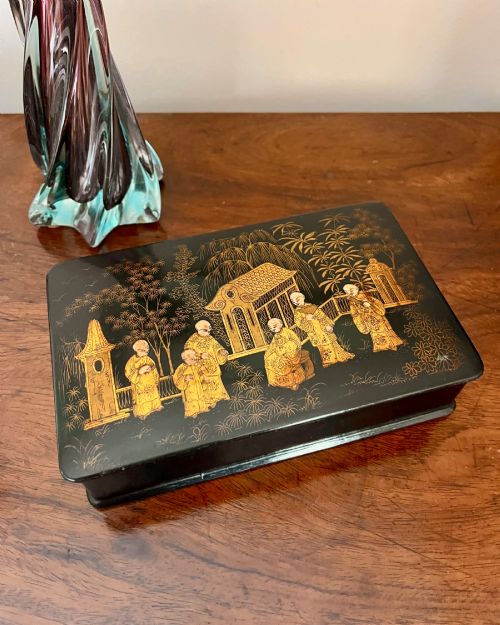
- European artistic style reflecting Chinese motifs and decorative techniques, popular in Regency and Victorian furnishings. It frequently appears on black and gilt lacquered boxes.
- Japanned
- European imitation of East Asian lacquerwork, created by applying heat-dried varnish layers to wood or metal. Yellow japanned finishes are a distinct variation found in the period.
- Kodansu
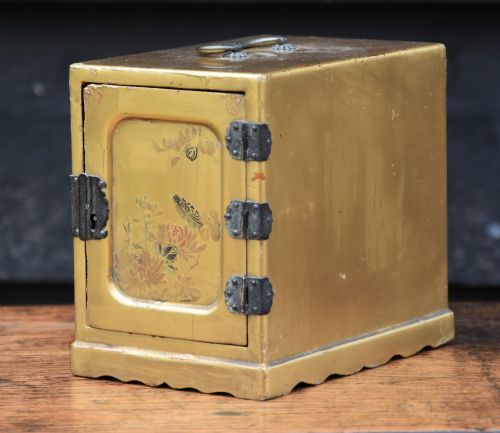
- A traditional Japanese small cabinet or box with multiple internal drawers, often finished in fine gold lacquer. These pieces demonstrate high-status Meiji period craftsmanship.
- Cinnabar
- A bright scarlet mineral pigment used to colour lacquer in carved Chinese and Qing Dynasty vessels. The pigment provides a rich, tactile depth when carved in relief.
19th Century Lacquer Box: Frequently Asked Questions
What were 19th century lacquer boxes used for?
These boxes served various domestic functions, from storing precious tea leaves and sewing equipment to holding letters, documents, and personal tobacco.
Smaller pocket versions held snuff or cigarettes, while larger cabinets and chests organised jewellery and valuables in the home.
How do I care for lacquer boxes?
Keep these objects away from direct sunlight, extreme heat, and high humidity, which can cause the lacquer to crack or lift from the base material. Dust them gently with a soft, dry cloth without applying modern liquid polishes or chemical cleaners.
How do I distinguish regional styles?
Chinese Export and Japanese pieces frequently feature intricate gold landscapes, figures, and flora on black or red grounds, often utilising mother-of-pearl.
European papier-mâché items from the Regency and Victorian periods often lean towards penwork, floral motifs, or japanned finishes.
What is the difference between papier-mâché and wood boxes?
Papier-mâché boxes offer moulded, seamless curves and a lighter weight, which suited the smooth painted finishes popular in the nineteenth century.
Wooden boxes utilise traditional joinery and provide a heavier, more rigid structure for larger chests, work tables, and tea caddies.