





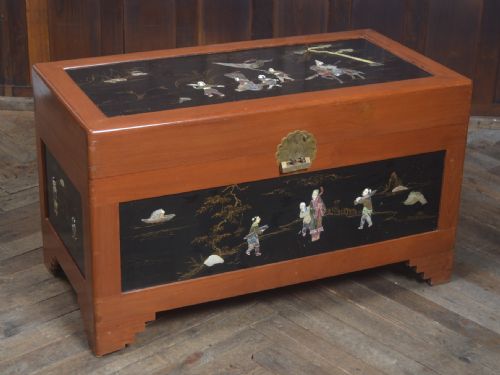
Chinese Black Lacquer Box
A chinese black lacquer box brings deep dark surfaces and rich gilding into a room, offering both hidden storage and striking decorative presence.
Chinese Black Lacquer Box
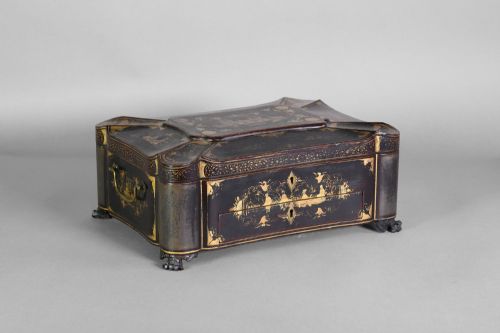
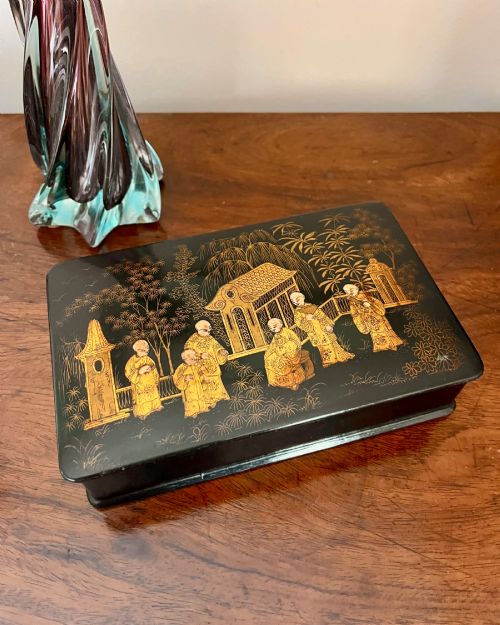
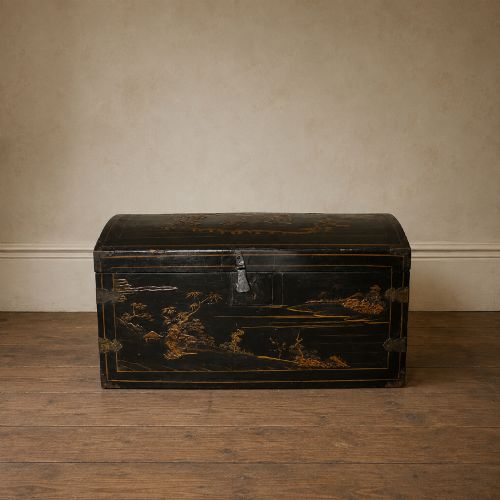
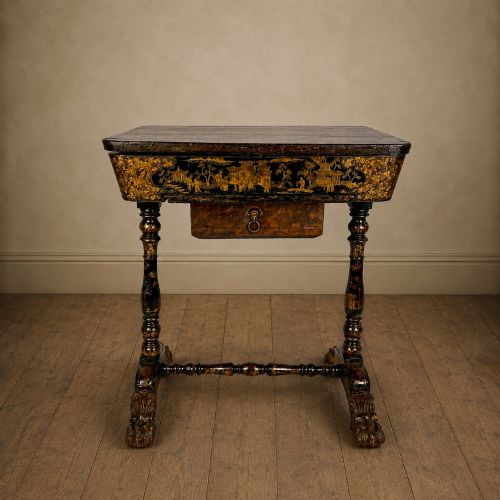
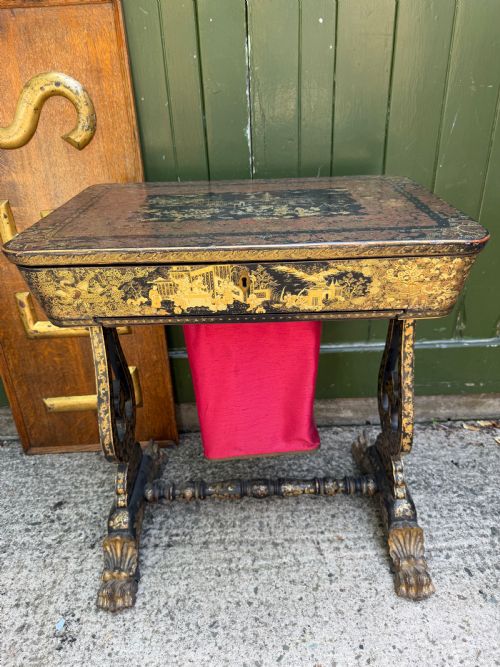
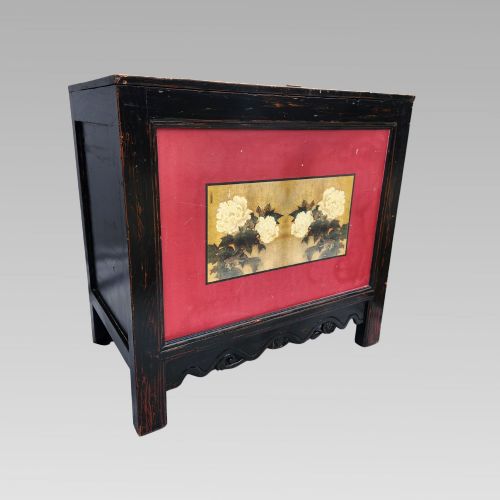
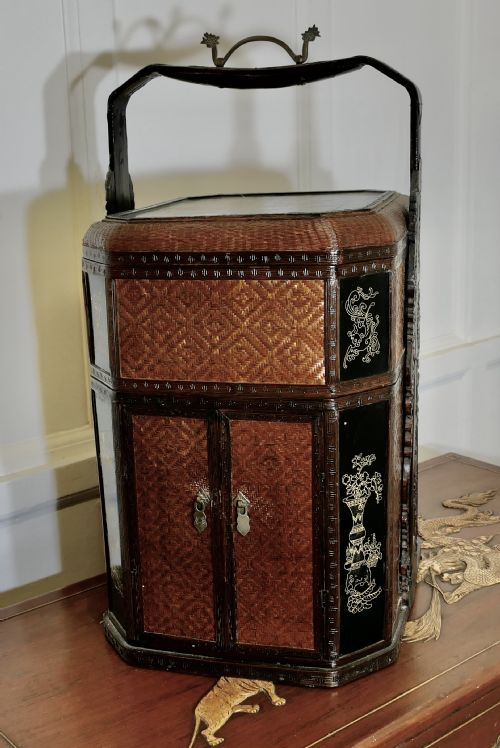
A chinese black lacquer box encompasses forms ranging from small tea caddies and table cabinets to large storage chests, trunks, and work tables. Buyers searching for a chinese black lacquer box will most frequently encounter nineteenth century export pieces featuring traditional motifs.
The selection extends from eighteenth century coffers down to early twentieth century storage trunks and decorative boxes. Alongside classic chests, the listings include specialised items such as sewing tables and tea caddies built for domestic utility.
Origins span distinct periods including the Regency era, the nineteenth century, and the early twentieth century up to nineteen thirty. Styles move between traditional Chinese designs, Chinese export work, and Regency chinoiserie interpretations.
How they were made
Construction relies upon a wooden core, frequently utilising wood or camphor wood, upon which layers of lacquer are applied to create a smooth dark ground. Artisans then built up surface decoration using pigment, metal, and gold leaf.
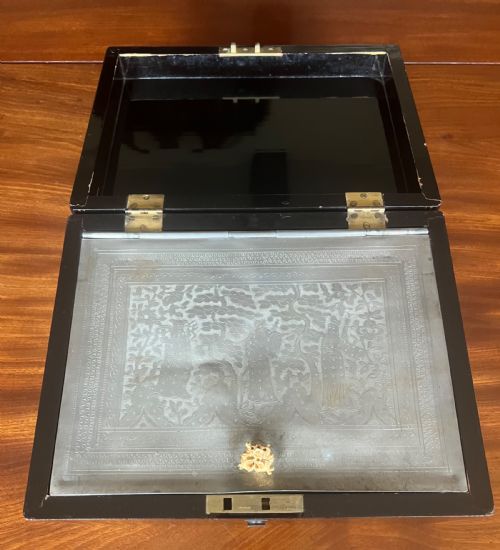
Gilded decoration provides the characteristic metallic contrast against the dark background on chests and table cabinets. Hardware elements incorporate brass to secure corners, hinges, and closures.
Period designations range from the eighteenth century through the Regency era and the nineteenth century up to nineteen thirty.
What varies in quality
Quality rests upon the depth of the lacquer surface and the precision of the gilding applied to panels and lids. Finer examples display intricate hand-painted details that retain their clarity across complex figural or floral scenes.
Structural integrity of the underlying timber and the retention of original brass hardware distinguish superior items from simpler utility trunks. The complexity of form, from a basic tea caddy to a fitted work table with internal compartments, also elevates the standing of a piece.
The Chinese Black Lacquer Box Glossary
- Lacquer
- A durable resin finish applied in multiple layers to a wooden base to form a hard, glossy protective coating. This technique creates the deep dark surface characteristic of these pieces.
- Chinoiserie
- European theatrical interpretation of Chinese artistic motifs, popular during the Regency period and later. It appears frequently on export chests and work tables.
- Chinese Export
- Goods manufactured in China specifically for Western markets, blending traditional craftsmanship with European furniture forms like sewing tables. These items date predominantly from the eighteenth and nineteenth centuries.
- Tea Caddy
- A small container designed to store loose tea leaves securely, often fitted with internal compartments. Early examples from the nineteenth century are frequently encountered.
- Coffer
- A large, sturdy chest or trunk used for storage and transport of valuables. They often feature robust wooden construction with metal or brass reinforcement.
Chinese Black Lacquer Box: Frequently Asked Questions
What were these boxes used for?
These boxes served practical storage roles in domestic interiors, holding valuable textiles, documents, or personal items. Smaller vessels like tea caddies managed precious tea leaves.
Larger trunks and coffers accommodated blankets and garments, while specialised work tables combined storage with sewing surfaces.
How do I clean a lacquer surface?
Dusting requires only a soft, dry cloth to remove surface particles without scratching the delicate layers. Avoid modern chemical polishes and damp cloths that might penetrate hairline cracks in the finish.
Keeping the piece away from direct sunlight and extreme humidity protects the underlying wood and prevents the lacquer from drying out.
How do I tell different periods apart?
Eighteenth century pieces often display heavier proportions and simpler, direct export motifs. Nineteenth century examples frequently incorporate elaborate gilded chinoiserie scenes and fitted interiors.
Early twentieth century pieces shift toward simpler storage trunks, pigment-finished leather, and camphor wood construction.
Where were these pieces made?
Many items originate from Chinese workshops producing specifically for export to Western buyers through ports like Canton. Regional Chinese makers also produced pieces for domestic and international markets.
At the same time, European makers produced Regency chinoiserie interpretations inspired by imported Asian aesthetics.