






19th Century Kazak
These 19th century kazak rugs bring bold tribal geometry and saturated natural dyes directly from the Caucasus into domestic rooms.
19th Century Kazak
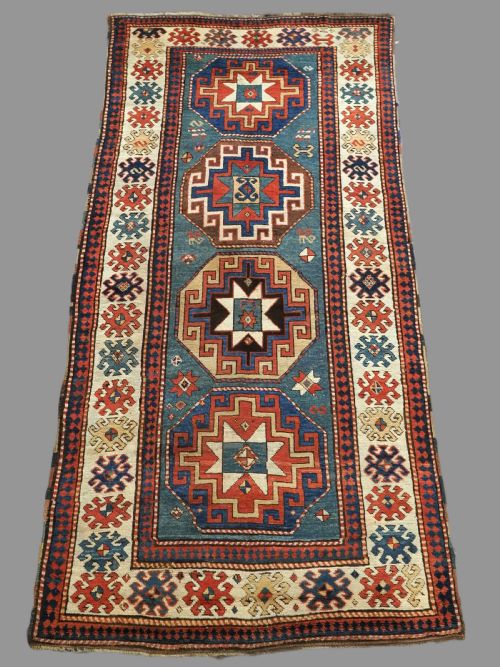
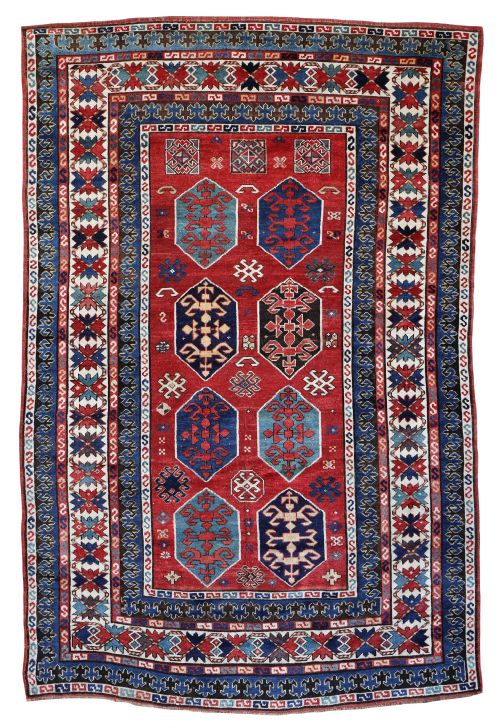
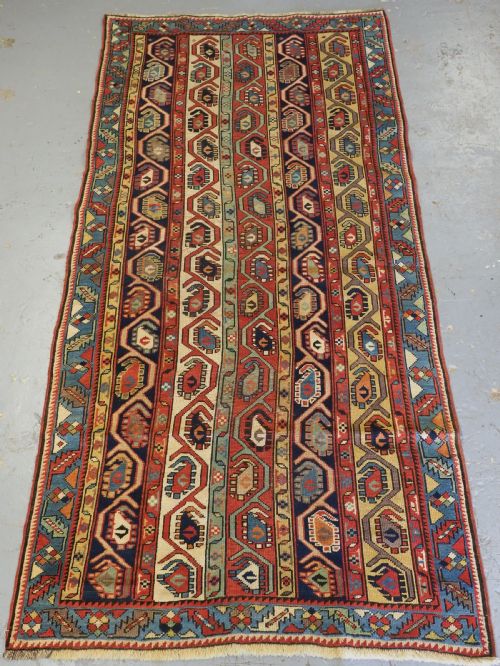
A 19th century kazak is a tribal woven rug originating from the Caucasus region, frequently produced in village workshops or nomadic camps during the eighteen-fifties through the early nineteen-hundreds. Buyers looking for these pieces encounter distinct regional subtypes such as Bordjalou, Karachov, Gendje, Moghan, Sewan, and Fachralo, each defined by specific geometric layouts.
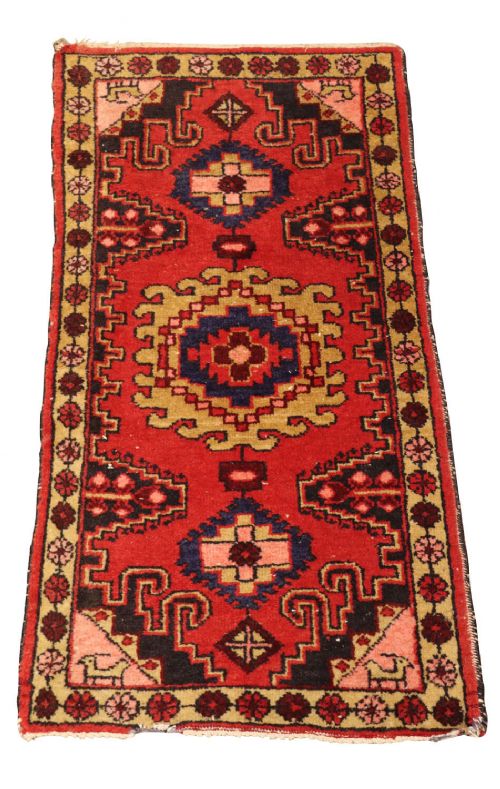
The formats vary between square prayer rugs, standard rectangular formats, and extended long rugs or runners. Geometric medallions, latch hooks, animal motifs, and compartment designs dominate the visual field rather than floral curves.
Most examples found in this inventory date from the final decades of the nineteenth century, reflecting the peak of traditional Caucasian weaving before commercial aniline dyes altered village production. The palette relies heavily on rich madder reds, deep indigos, and occasional yellow or green ground formats.
Materials and construction methods
These carpets are constructed using wool for the pile, warp, and weft, often utilising hand-spun wool that produces a dense, tactile surface. The knotting is hand-knotted by regional weavers working on vertical looms, creating sturdy floor coverings intended for heavy domestic use.
The colour relies on natural dyes extracted from plants and insects, giving the wool a rich depth that responds well to age. Variations in the spinning and dyeing process leave subtle tonal shifts within single colour fields, a normal characteristic of nineteenth-century village textiles.
19th Century Kazak Retail Price Guide 2026
Typical asking prices for 19th century kazak among the pieces listed under this phrase on Sellingantiques today, from the lower quarter to the upper quarter. They describe what is for sale here now, not the wider market.
Keep an eye out for rogue animal motifs and tiny folk art horses wandering across the geometric fields.
Distinctions in quality and execution
Quality in a 19th century kazak rests on the crispness of the drawing and the saturation of the dye palette. Finer examples display precise geometry in the medallions and latch hooks, whereas lesser pieces show more compressed or irregular proportions.
The condition of the pile and the integrity of the original borders also divide standard examples from exceptional survivals. Well-preserved pieces retain a long, glossy wool pile and clear contrasts between the primary motifs and the background field.
The 19th Century Kazak Glossary
- Kazak
- A designated style of antique rug woven in the southern Caucasus by various tribal and village groups. They are known for bold geometric structures and strong primary colours.
- Latch hook
- A stepped, triangular motif projecting from the edges of medallions or borders. This geometric device appears frequently across Caucasian tribal weaving.
- Medallion
- A central decorative motif placed in the field of the rug. In these pieces, they often take hooked, star, or polygonal shapes.
- Memling gul
- An octagonal guls or medallion featuring hooked appendages, named after the fifteenth-century painter who depicted similar Anatolian carpets. They form the primary motif in several regional subtypes.
- Prayer rug
- A format characterised by a niche or mihrab design at one end, intended to indicate the direction of prayer. These square or rectangular rugs were frequently produced in smaller dimensions.
19th Century Kazak: Frequently Asked Questions
Where were 19th century kazak rugs made?
These rugs were woven in the Caucasus region, encompassing areas of modern-day Armenia, Azerbaijan, and Georgia. Different villages and nomadic groups across the region developed their own distinct variations in design and colour.
Local weavers worked within specific tribal traditions, passing down patterns for medallions, latch hooks, and border arrangements from generation to generation.
How do I identify a Fachralo or Karachov kazak?
Karachov rugs typically feature large central octagonal or square medallions flanked by smaller geometric fillers on a contrasting ground. Fachralo rugs often display a distinct niche or prayer design accompanied by bold latch-hooked borders.
Examining the specific arrangement of the medallions and the secondary motifs helps distinguish between the different regional weaving traditions of the Caucasus.
Are these rugs suitable for high-traffic areas?
Hand-knotted wool rugs from this period were built for practical endurance by nomadic and village communities. The dense wool pile handles everyday foot traffic well when supported by an appropriate underlay.
Placing them in moderate-use spaces helps preserve the remaining pile and natural dyes while allowing you to enjoy the textile daily.
How should I clean and maintain my rug?
Regular gentle vacuuming without a rotating brush roll prevents dust and grit from settling into the wool foundation. Professional cleaning by a specialist in antique textiles is recommended when deep cleaning becomes necessary.
Keeping the rug out of direct, continuous sunlight protects the natural madder reds and indigos from fading over time.