


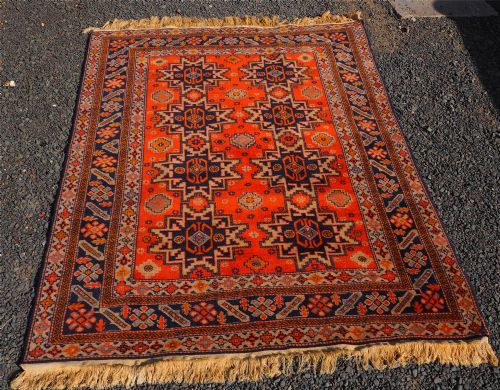
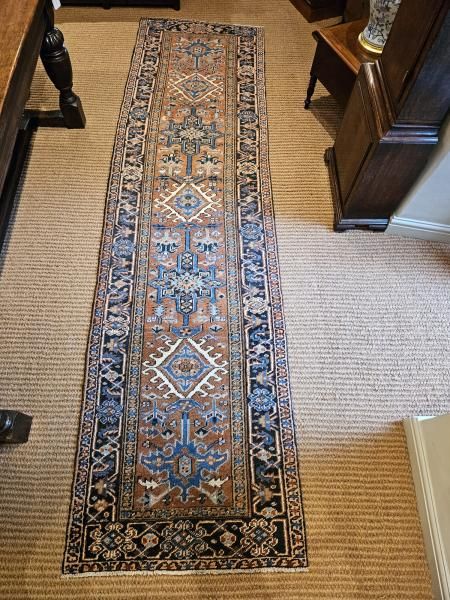
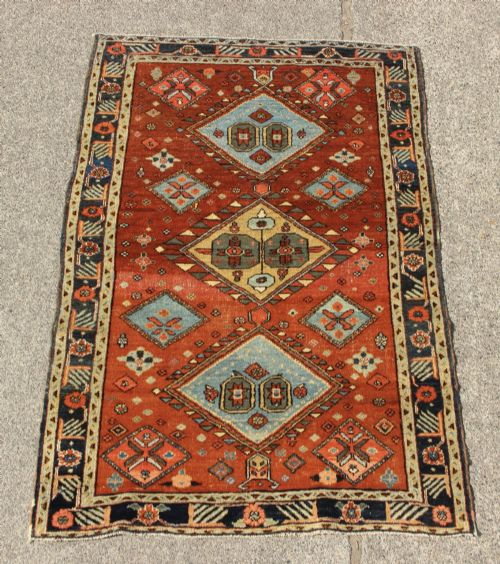
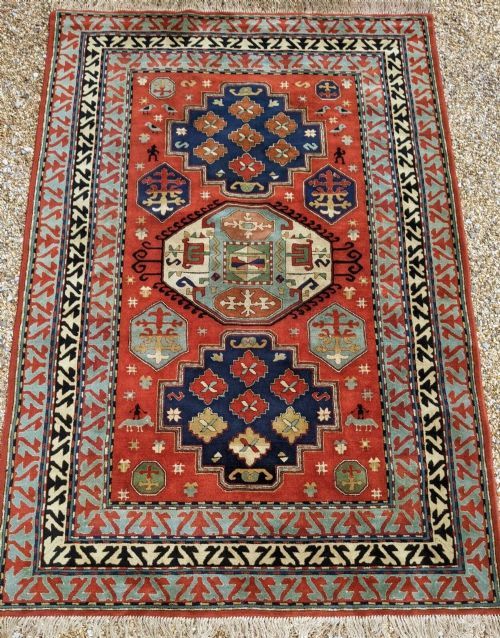




Terracotta Caucasian Rug
A terracotta caucasian rug brings geometry and rich regional history directly to the floor.
Terracotta Caucasian Rug
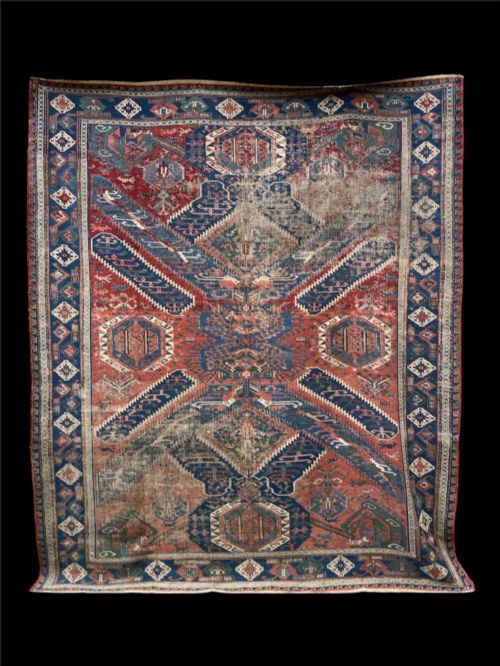
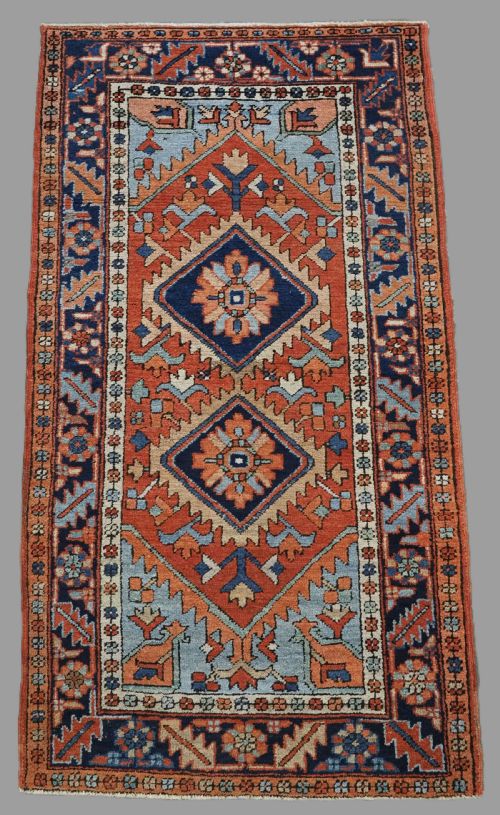
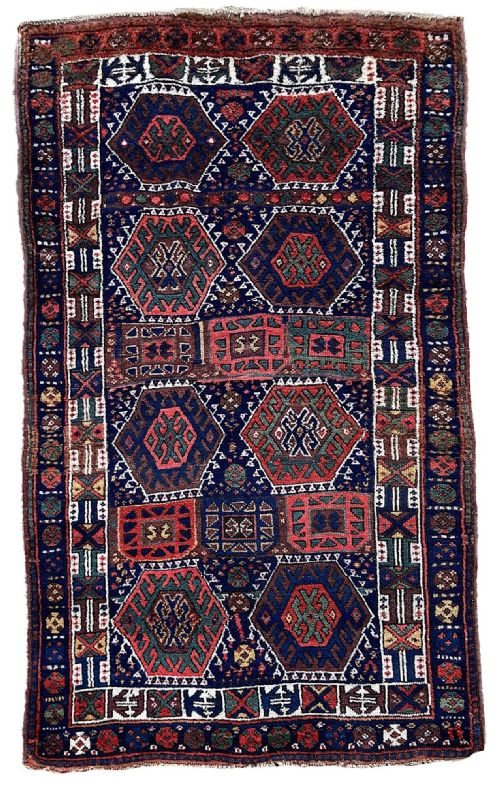
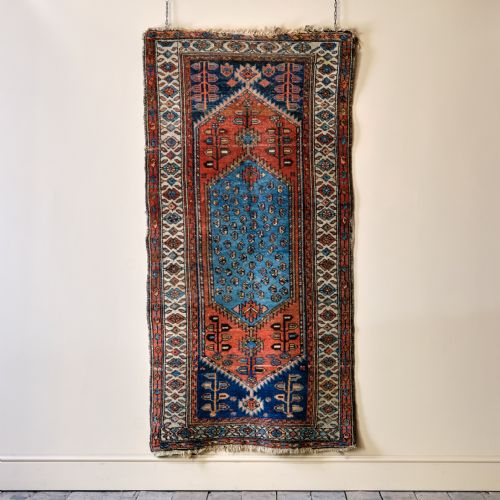
When you search for a terracotta caucasian rug, you are looking at hand-knotted woven textiles hailing from the Caucasus region and neighbouring areas, typically featuring geometric motifs and earthy tones. These pieces range from small village rugs and runners to saddlebags and prayer rugs produced across the nineteenth and early twentieth centuries.
The specimens you meet on this page span various tribal weaving traditions including Kurdish, Shahsevan, Shirvan, and Kazak styles. They often incorporate traditional symbols, medallions, and directional designs woven on wool foundations.
How they were made
Weavers constructed these textiles using wool and hand-spun wool for both the pile and the foundational warps and wefts. This natural fibre gives the rugs their characteristic weight and resilience.
The vibrant fields and borders owe their longevity to natural dyes, which develop subtle tonal variations known as abrash over time.
Terracotta Caucasian Rug Retail Price Guide 2026
Typical asking prices for terracotta caucasian rug among the pieces listed under this phrase on Sellingantiques today, from the lower quarter to the upper quarter. They describe what is for sale here now, not the wider market.
Listings feature pieces dated across the nineteenth and early twentieth centuries, spanning periods from the eighteen-seventies to nineteen-thirty.
What varies in quality
Quality in these tribal weavings rests on the tightness of the knotting and the crispness of the geometric drawing. Finer examples display precise execution of intricate motifs and complex border systems.
The depth and clarity of the natural dye palette also dictate the standing of a piece, with harmonious colour saturation marking out superior weaving.
Kurdish Nomads·Shahsavan Nomads
The Terracotta Caucasian Rug Glossary
- Abrash
- A variation in colour shading caused by batches of hand-spun yarn taking dye differently or by the use of distinct dye lots during weaving.
- Sumak
- A flat-weave technique where coloured weft threads are wrapped around the warp threads to create a textured, durable surface.
- Mafrash
- A large storage bag or chest panel produced by nomadic groups, often later utilised as flat-weave rugs or fragments.
- Gul
- A medallion or repeating floral motif frequently found in tribal carpets and rugs from Central Asia and the Caucasus.
- Prayer rug
- A small format rug featuring a mihrab or niche design, traditionally used for individual Islamic prayer.
Terracotta Caucasian Rug: Frequently Asked Questions
How do I care for an old wool rug?
Keep the textile out of direct sunlight to protect the natural dyes from fading over time. Vacuum gently with the suction attachment rather than a rotating brush.
Rotate the rug periodically to ensure even wear across high-traffic areas. Professional cleaning should be undertaken sparingly and only by specialists in antique textiles.
Where were these tribal rugs made?
These pieces originate from the Caucasus region, which spans the area between the Black Sea and the Caspian Sea. Production also extends into neighbouring parts of Northwest Persia and Anatolia.
Nomadic and village communities such as the Kurds, Shahsevan, and Kazak groups produced these textiles for domestic use or local trade.
What is a village rug?
Village rugs are woven by settled or semi-nomadic weavers in small community settings rather than large urban workshops. They typically feature spontaneous geometric designs and memory-based patterns.
These pieces reflect the personal aesthetic and local dye traditions of the specific weavers who constructed them.
How are periods identified?
Dating relies upon structural analysis, including the materials used for the foundation threads and the types of knots tied. Natural dye palettes also provide strong clues to production dates before synthetic dyes became widespread.
Design elements and motifs often align with specific decades, helping to place pieces within the nineteenth or early twentieth century.