


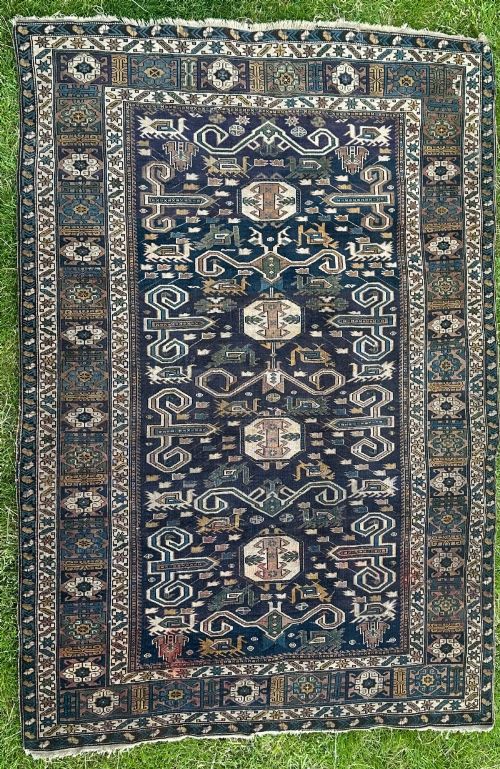
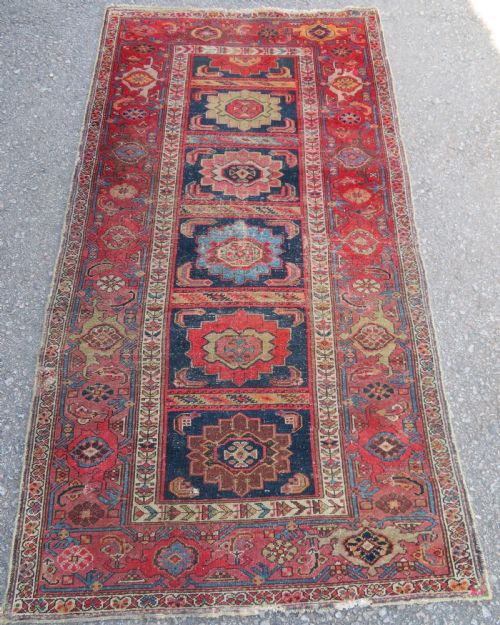
Vintage Caucasian Runner
A vintage caucasian runner brings geometric bite and deep saturated wool to narrow halls and long rooms.
Vintage Caucasian Runner
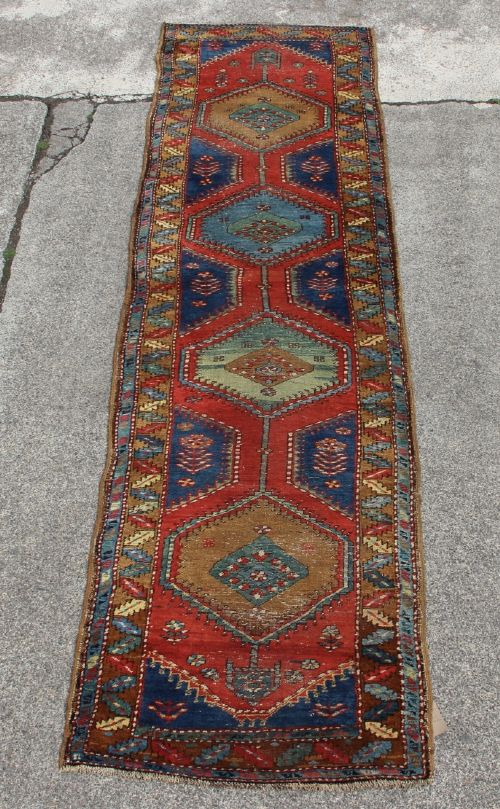
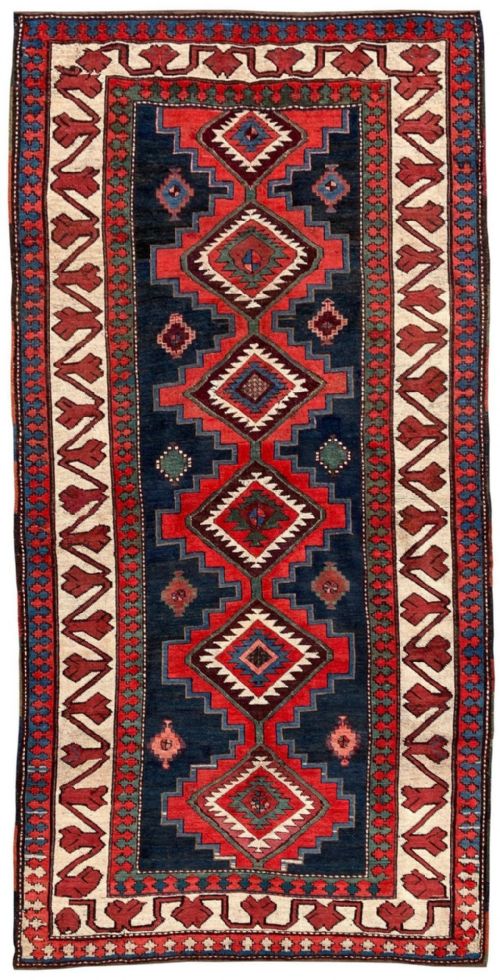
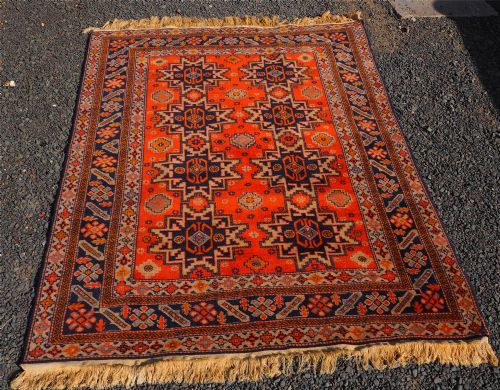
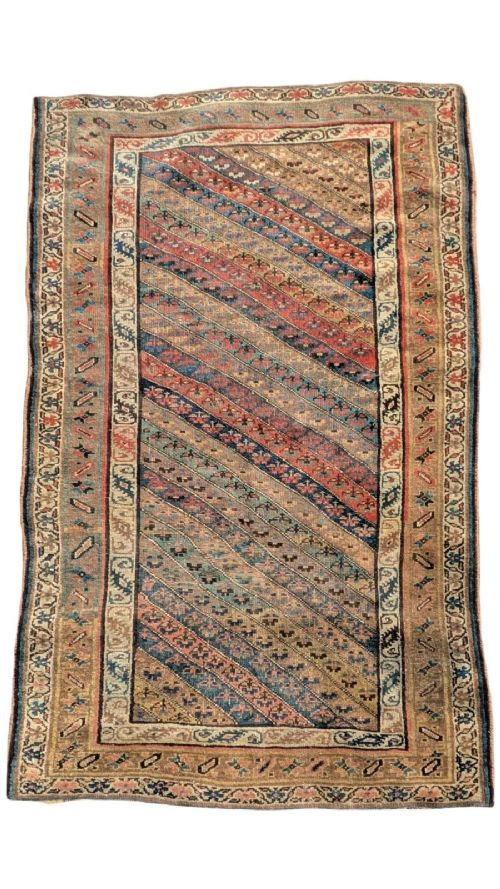
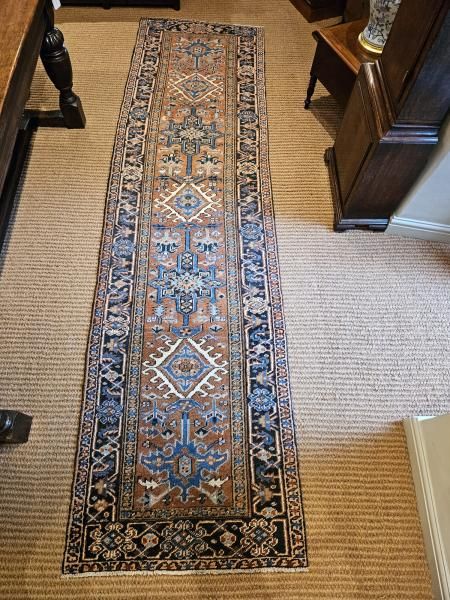
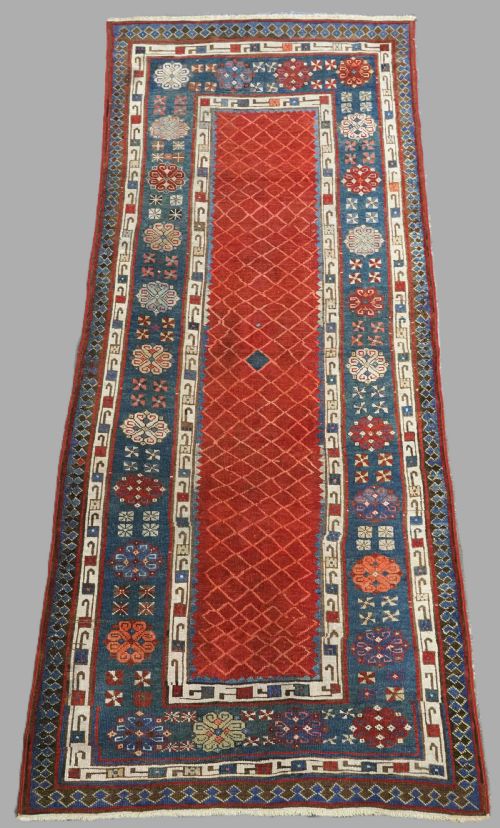
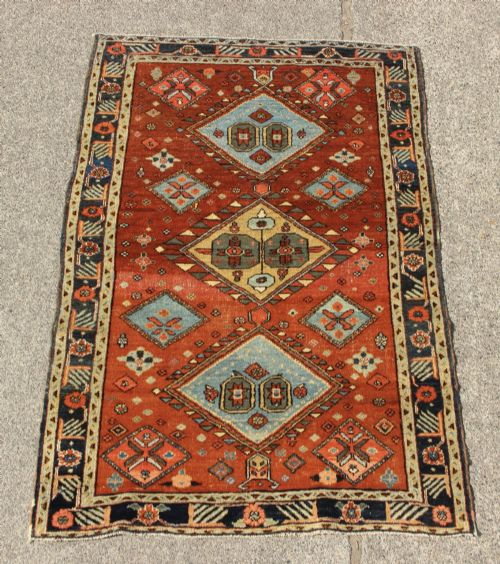
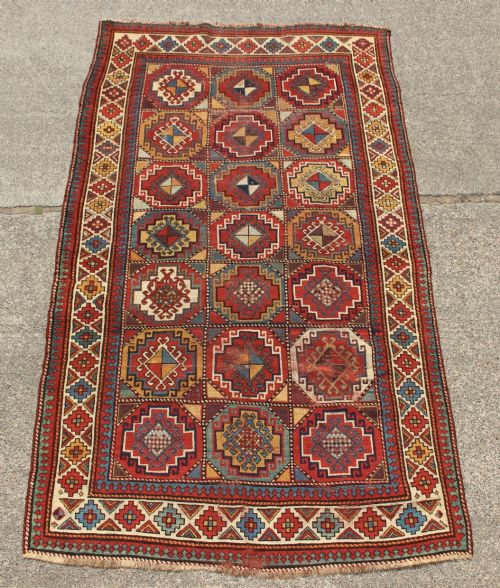
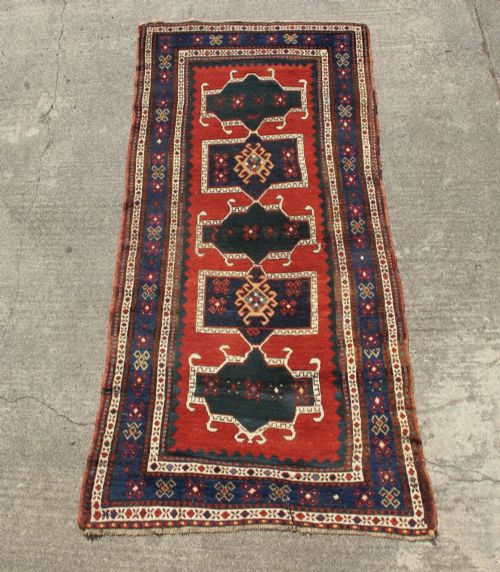
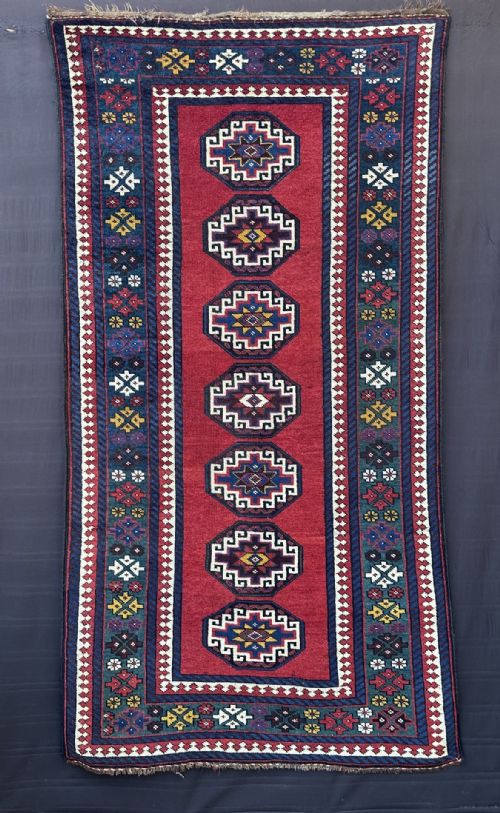
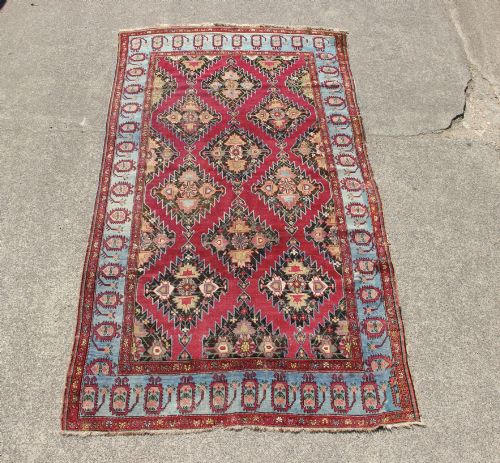
A vintage caucasian runner provides a narrow format designed for hallways, long landings, and transitional spaces. These pieces emerge from the mountain ranges and weaving traditions of the Caucasus, spanning the late nineteenth century through to the early decades of the twentieth century. They typically display bold geometric medallions, repeating star motifs, and sharp lattice patterns rather than floral curves.
The pieces available here bridge several distinct regional weaving groups including Kazak, Shirvan, Karabagh, and Daghestan. Many arrive bearing tribal attributions from Kurdish or Shahsavan makers who populated these highland territories. Buyers encounter formats ranging from elongated long rugs to specific corridor runners created for domestic use in period homes.
Dating across these examples stretches from the 1870s up to the 1930s, encompassing both traditional knotted pile carpets and flat-woven kilims. The aesthetic relies on strong, uncomplicated primary shades that settle into mellow tones as the wool ages. Choosing one means accepting the slight irregularities of hand-knotted village production where straight lines often curve gently along the length.
How they were made
Weavers constructed these runners using hand-spun wool for the pile, foundation warp, andweft threads, often supported by cotton in later or specific regional examples. The sheep wool yielded a dense, resilient staple capable of absorbing rich colour from natural dye baths. Artisans tied individual knots by hand across vertical looms, building up dense geometric fields before finishing the ends.
The palette derives from natural dyes yielding deep madder reds, indigos, and earthy yellows that mellow gracefully across decades of exposure. Village weavers worked from memory and tribal tradition rather than rigid graph paper, resulting in spontaneous design shifts and characteristic minor asymmetries. Flat-woven kilim variations utilised slit-weave techniques without a pile, producing lighter, reversible textiles.
Vintage Caucasian Runner Retail Price Guide 2026
Typical asking prices for vintage caucasian runner among the pieces listed under this phrase on Sellingantiques today, from the lower quarter to the upper quarter. They describe what is for sale here now, not the wider market.
Some runners are affectionately noted as crooked, bearing the charming wobble of a weaver whose straight line surrendered to tea time.
What varies in quality
Quality rests primarily in the saturation and integrity of the wool pile alongside the clarity of the natural dyes. Denser knotting secures sharper definition within geometric medallions and lattice work, holding the structural integrity of the runner firm against heavy foot traffic. Weavers who maintained strict tension across the loom produced straight, even edges that lay flat on the floor.
The individuality of the drawing separates standard village production from finer workshop pieces originating in regional centres. Expressive animal motifs, unusual tribal symbols, and well-balanced proportions contribute to visual success. Wear patterns matter less than the remaining depth of the hand-spun wool and the stability of the cotton or wool foundation.
The Vintage Caucasian Runner Glossary
- Kazak
- A style of rug originating from the western Caucasus region known for bold geometric designs and primary colour palettes. These pieces frequently feature large medallions and hooked polygons.
- Kilim
- A flat-woven carpet or runner produced without a pile using a slit-weave technique. This construction creates a lighter, reversible textile suited to summer floors or wall hanging.
- Medallion
- A central ornamental motif set into the field of the rug. In Caucasian weaving, these tend to be multi-sided polygons or geometric stars rather than circular floral roundels.
- Warp
- The vertical foundation threads stretched tightly on the loom before knotting begins. The exposed ends often form the fringing at either end of the runner.
- Natural Dyes
- Colouring agents sourced from plants, insects, and minerals rather than synthetic compounds. These dyes yield complex, varied tones that mellow with age.
Vintage Caucasian Runner: Frequently Asked Questions
Where should I place a runner?
These narrow formats suit long hallways, kitchens, narrow landings, and gallery spaces where floor coverage requires length rather than breadth. Their robust hand-spun wool construction handles regular foot traffic easily.
Ensure you measure both the length and the width of your corridor carefully, allowing a clear margin of exposed wooden floorboards around the perimeter.
How do I clean my rug?
Gentle, regular vacuuming without a rotating brush bar removes surface dust and grit from the wool pile. Professional specialist cleaning remains essential for deep washing to protect natural dyes.
Avoid chemical spot treatments or excessive water immersion, which can damage the delicate hand-spun wool and cause colour bleeding across the foundation.
Are these runners symmetrical?
Hand-knotted village and tribal pieces naturally exhibit minor irregularities, crooked lines, and slight variations in width along their length. These quirks reflect the traditional hand-loom process rather than modern machine precision.
Embrace these slight shifts in geometry as evidence of authentic village craftsmanship executed by individual weavers working from memory.
How do I identify a Kazak?
Kazak rugs and runners display large, bold geometric medallions, hooked polygons, and strong primary colours like red and blue. The wool is typically thick and plush with a coarser knot count than fine city Persian weaving.
Look for distinctive star motifs, animal figures, and cruciform shapes arranged within an uncluttered field typical of western Caucasian workshops.