






Blue Wool Kazak
A blue wool kazak brings the bold geometric motifs and saturated natural dyes of nineteenth-century Caucasian weaving straight to your floor.
Blue Wool Kazak
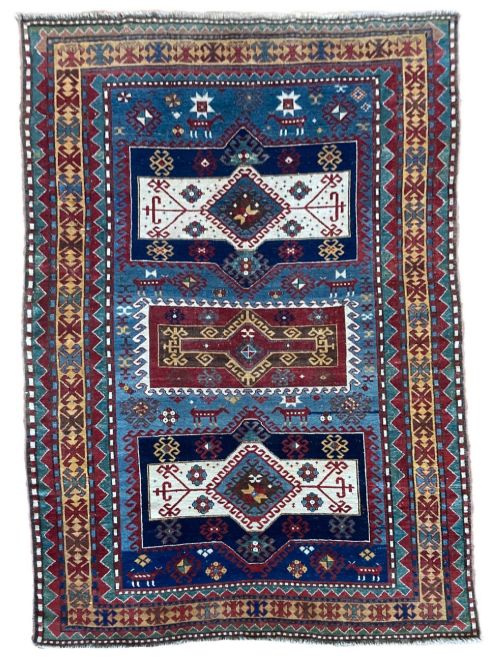
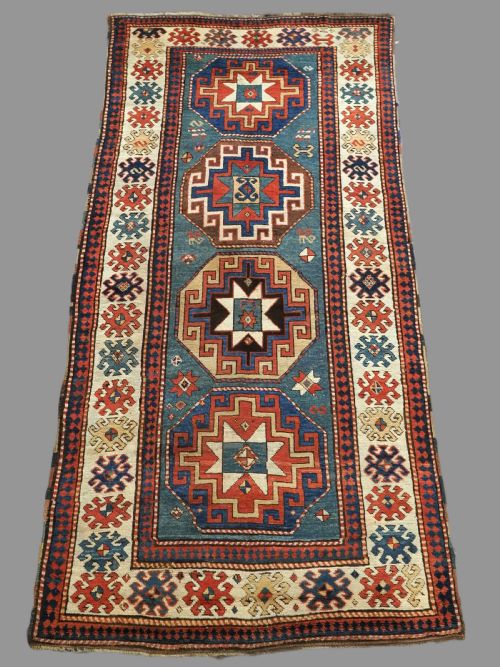
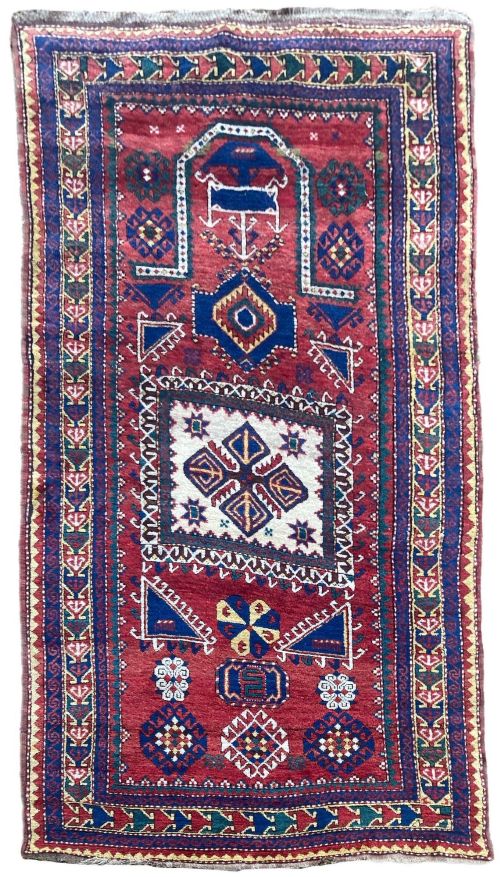
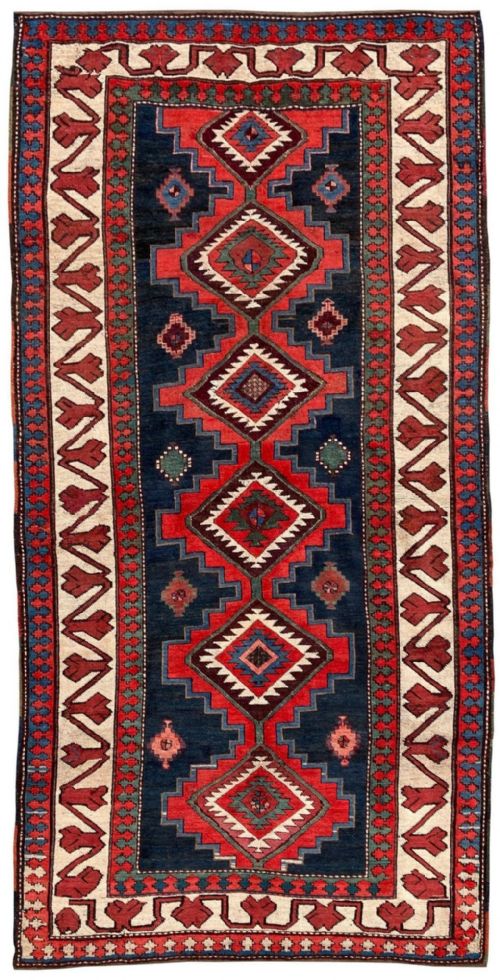
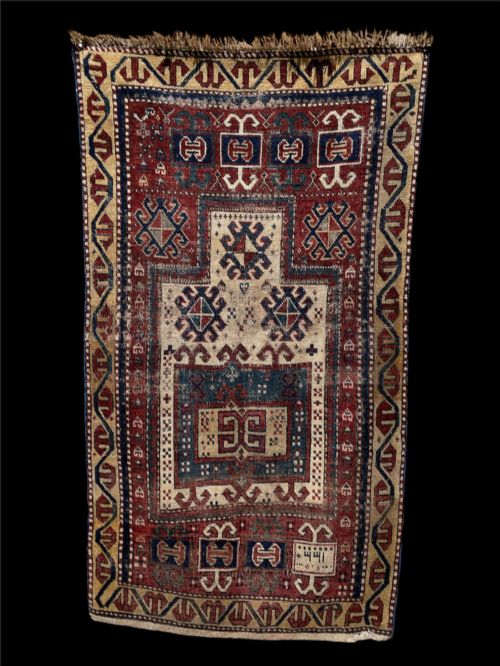
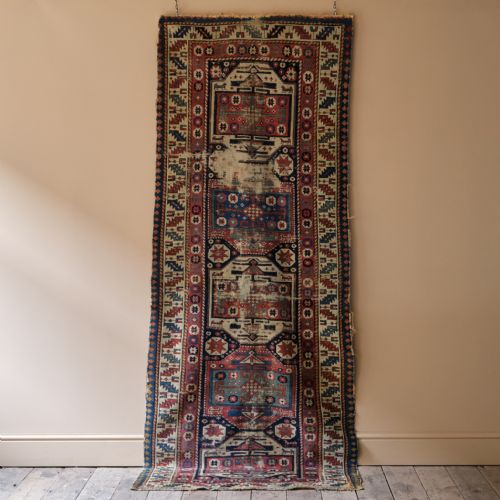
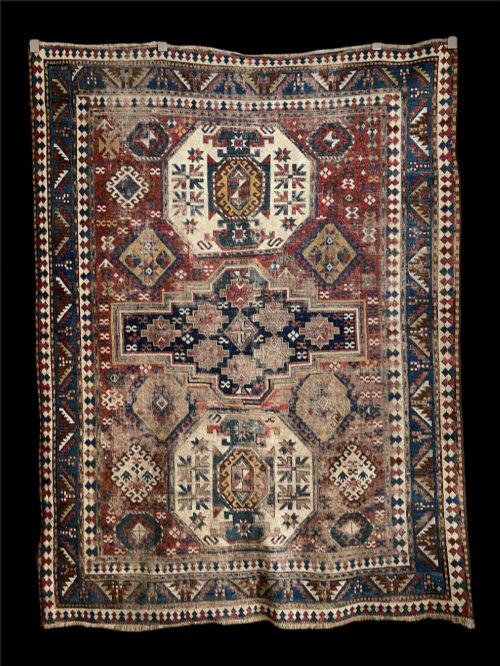
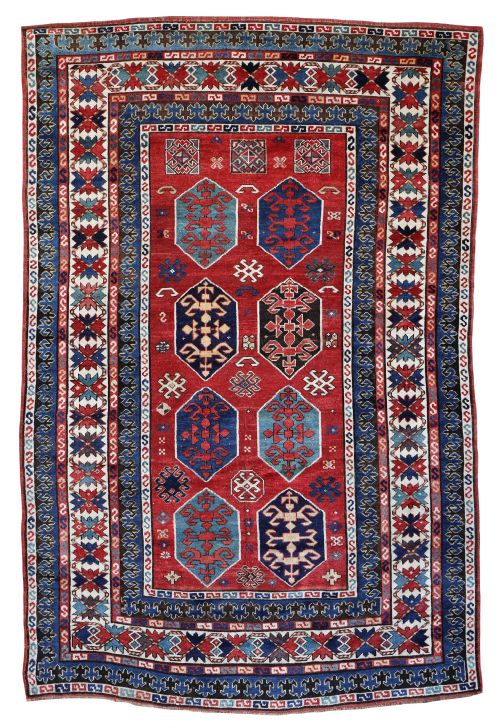
A blue wool kazak sits firmly within the tradition of Caucasian tribal rug production, taking forms from nineteenth-century weaving centres across the region. When you search this phrase, you find hand-knotted room-sized carpets, long runners, and smaller prayer rugs featuring medallion layouts and distinctive indigo grounds.
The pieces on this page span from the middle of the nineteenth century into the early decades of the twentieth, often originating from specific districts such as Fachralo, Borchalu, Gendje, and Moghan. These regional variants display characteristic tribal motifs, including hooked medallions, Memling güls, and repeating boteh patterns.
Most examples rely on village or workshop production methods rather than large-scale factory output, giving each rug an individual character. Buyers meet both square format area rugs and elongated runner formats, many retaining the dense handle typical of older Caucasian wool.
How they were made
Weavers constructed a blue wool kazak using hand-spun wool for both the pile and the foundational warps and wefts, creating a durable and weighty textile. This heavy wool holds dye securely and wears down evenly over generations of use.
Makers utilised natural dyes to achieve deep indigo blues alongside madder reds, yellows, and ivories, yielding a rich palette that mellows softly over time. The knotting technique remains sturdy, securing geometric lines and sharp polygonal medallions without losing the organic irregularity of hand-production.
Blue Wool Kazak Retail Price Guide 2026
Typical asking prices for blue wool kazak among the pieces listed under this phrase on Sellingantiques today, from the lower quarter to the upper quarter. They describe what is for sale here now, not the wider market.
Regional styles represented include Fachralo, Borchalu, Gendje, Moghan, and Karachov, appearing in formats from small prayer rugs to large carpets.
What varies in quality
The visual punch of a blue wool kazak depends heavily on the clarity of its natural dyes and the crispness of its geometric drawing. Pieces with high contrast between the indigo ground and secondary colours command attention through vibrant graphic balance.
Pile retention and structural integrity define the physical condition of surviving examples, distinguishing robust daily-use rugs from heavily depleted specimens. The precision of the tribal motifs and the regularity of the hand-spun wool foundation further separate standard village output from masterwork weaving.
The Blue Wool Kazak Glossary
- Kazak
- A term applied to rugs woven in the southern Caucasus region, known for bold geometric designs and saturated primary colours. These pieces typically display large medallions and latch-hook details.
- Boteh
- A pear-shaped or almond-shaped motif with a curved upper end, frequently seen repeating across runner formats. This ancient symbol represents a cypress tree or a floral spray.
- Medallion
- A central ornamental motif set into the field of the rug, often appearing singly or in a sequence of three. In these pieces, medallions usually take polygonal or hooked outlines.
- Warp
- The vertical threads stretched lengthwise on the loom that carry the structural weight of the carpet. The knotted pile wraps around these parallel foundational strands.
- Weft
- The horizontal threads passed back and forth across the warps after every row of knots to bind the structure together. In these rugs, wool wefts maintain the flexible body of the textile.
Blue Wool Kazak: Frequently Asked Questions
How do I clean an antique kazak?
Surface dust should be removed gently using a suction-only vacuum without a rotating brush bar. Professional textile conservators should handle deeper washing to protect the natural dyes and hand-spun wool.
Water exposure must be kept minimal during any routine maintenance to prevent dye migration or weakening of the foundation threads.
Where were these rugs made?
These textiles originate from the Caucasus region, encompassing areas that bridge Europe and Asia. Specific valleys and villages, including Fachralo and Borchalu, developed distinct local drawing styles.
Tribal and village weavers produced these pieces independently, passing specific medallion layouts and colour preferences down through generations.
Are these rugs suitable for high traffic?
The dense hand-spun wool pile provides natural resilience, allowing genuine nineteenth-century examples to handle moderate daily footfall. Placing a quality underlay beneath the piece prevents slipping and cushions the foundation against hard floors.
Extremely fragile or heavily distressed specimens deserve placement in lower-traffic zones to preserve their remaining pile.
How can I tell the age of a kazak?
Indicators of age include the composition of the hand-spun wool, the depth of shade achieved by natural dyes, and structural irregularities inherent to manual loom work. Palette shifts and minor asymmetries in the tribal motifs point away from mechanized production.
Comparing structural details against documented nineteenth-century regional types helps narrow down the probable decade of creation.