


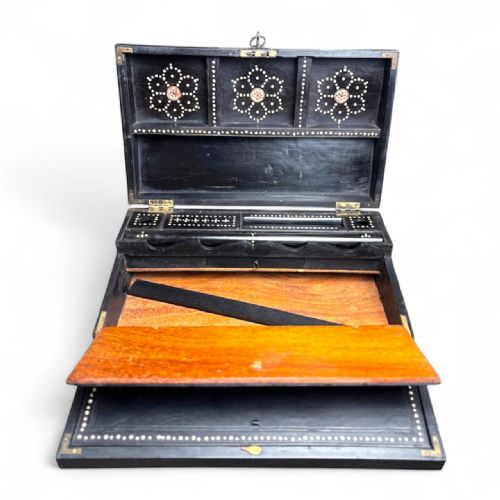


19th Century Indian Desk
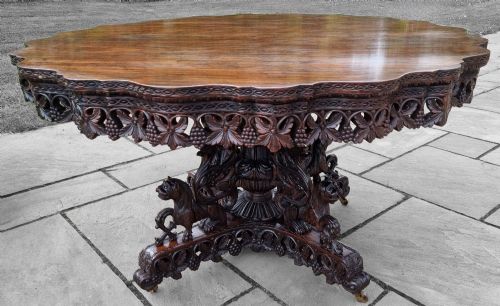
A 19th century indian desk brings dense native timbers and intricate British colonial carving into the study.
19th Century Indian Desk
A 19th century indian desk encompasses writing boxes, slope chests, partners desks and Davenport forms created during the British colonial period. These objects bridge traditional South Asian craftsmanship and European administrative furniture requirements.
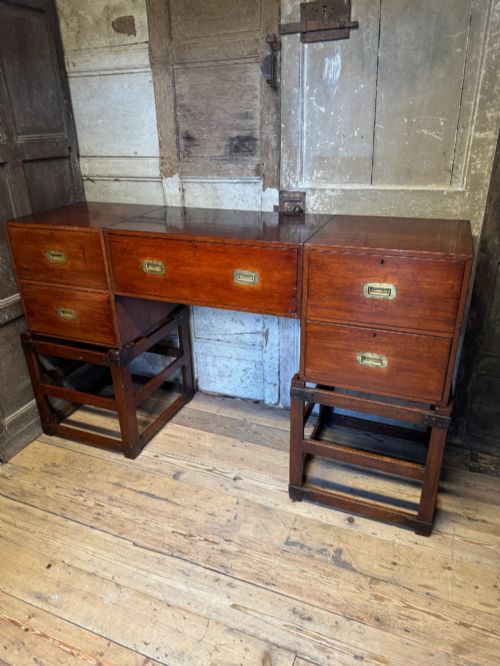
The version most commonly met on this page is the Anglo-Indian padauk or ebony partners desk, alongside smaller portable writing boxes inlaid with bone or ivory. These portable forms reflect the mobile administrative life of officials stationed abroad.
Originating across different regions including Ceylon and Kashmir, these pieces often merge local timber usage with Regency or Victorian proportions. The resulting hybrid forms carry distinct regional carving signatures developed for export.
How they were made
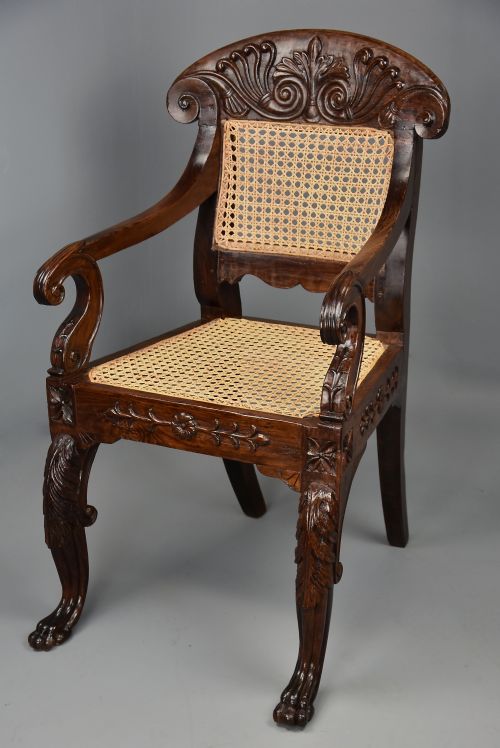
Cabinetmakers utilised dense native hardwoods such as padauk, ebony and teak, selected for their stability in humid climates. These timbers were carved deeply with floral or scrolling motifs or left smooth to show the dark grain.
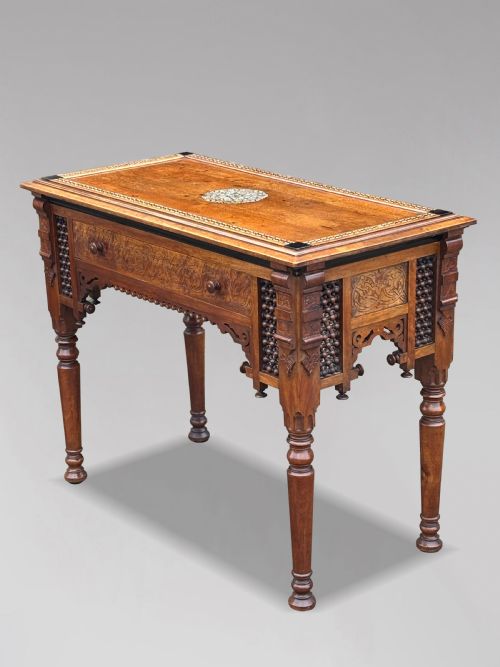
Inlay techniques combined bone, ivory, brass and local woods set precisely into dark surfaces. Papier-mâché constructions received hand-painted lacquer finishes, particularly in Kashmiri desk accessories and tidies.
Materials recorded across the archive include deer antler, horn, butterscotch amber and silver mounts alongside traditional padauk and ebony.
What varies in quality
Quality rests in the crispness of the hand-carved foliage and the tightness of the joinery in secondary woods. Superior examples maintain structural integrity without excessive shrinkage splits in the primary panels.
The refinement of internal pigeonholes, secret drawers and fitted compartments dictates the grade of smaller writing boxes. Original brass hardware and intact inlay work separate standard export goods from master-carved commissions.
Currie And Co
The 19th Century Indian Desk Glossary
- Padauk
- A heavy reddish-brown tropical hardwood favoured for carved colonial furniture and large partners desks. It darkens to a rich deep brown with age.
- Partners desk
- A large double-sided writing table designed with drawers and cupboards accessible from both faces. These were built for colonial offices and libraries.
- Writing slope
- A portable hinged box that opens to reveal a slanted writing surface and interior storage for stationery and inkwells. They were constructed for travel.
- Sadeli work
- A micro-mosaic technique using geometric slivers of horn, bone and metal to create intricate banded patterns on boxes. It originates from Western India.
- Campaign furniture
- Modular or portable furniture designed to dismantle or fold for transport by military officers and civil servants. Brass corners and recessed handles protect the edges.
19th Century Indian Desk: Frequently Asked Questions
What is an Anglo-Indian desk?
An Anglo-Indian desk is a piece of furniture made in India during the British colonial period, combining European furniture forms with local woodworking traditions.
These pieces typically utilise dense native timbers like padauk or ebony and feature deep hand-carved decoration or intricate inlay work.
How do I use a writing slope?
A writing slope opens outward to provide an inclined writing surface lined with leather or velvet. The interior contains compartments for pens, ink bottles and stationery.
Many examples include hidden drawers beneath the stationery section accessed by removing a false panel.
Are these desks made of solid wood?
The listings show pieces constructed from solid tropical hardwoods such as ebony, teak and padauk. These heavy timbers were chosen for their durability and resistance to warping.
Secondary woods may be used in drawer linings and internal framing partitions, consistent with 19th-century cabinetmaking practices.
How do I care for ebony furniture?
Ebony requires stable room humidity and protection from direct sunlight to prevent timber movement and splitting. Regular dusting with a dry cloth keeps the polished surface clean.
Avoid using silicone-based polishes or wet cloths on antique polished hardwood surfaces.
What is Sadeli work?
Sadeli work is a geometric micro-mosaic craft applied to boxes and desk accessories using tiny triangular and multi-angled pieces of bone, horn and metal.
This technique creates decorative borders and patterned panels set flush into the wooden carcass.