

Carved Writing Bureau
A carved writing bureau brings traditional drop-front workspace and hidden compartments into a room, spanning revival styles and solid timbers.
Carved Writing Bureau
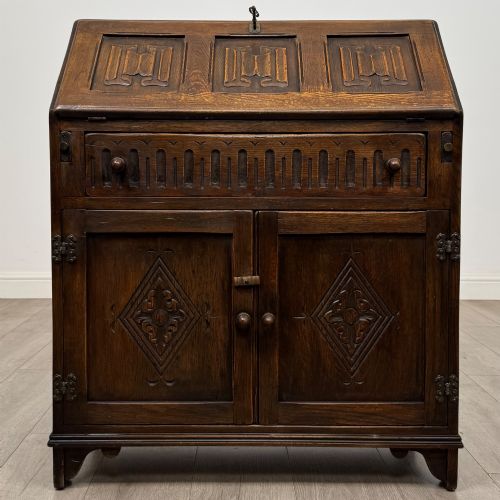
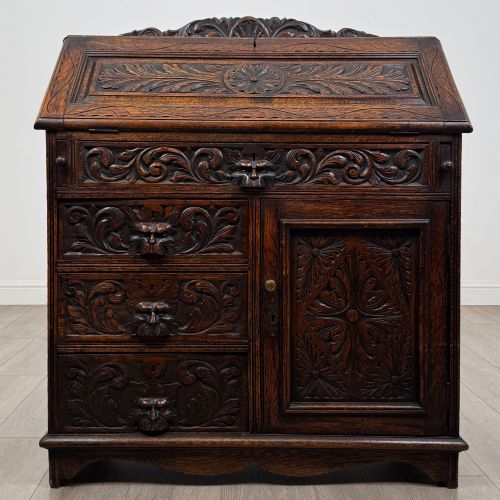
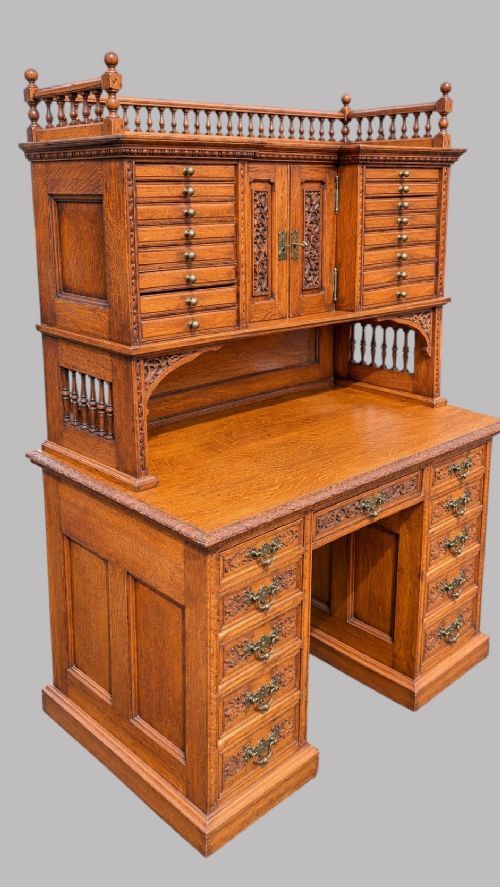
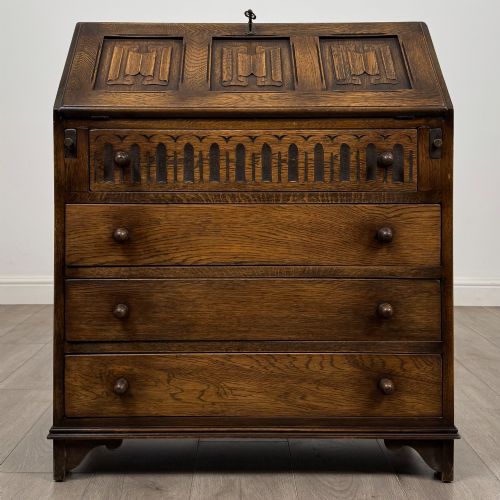
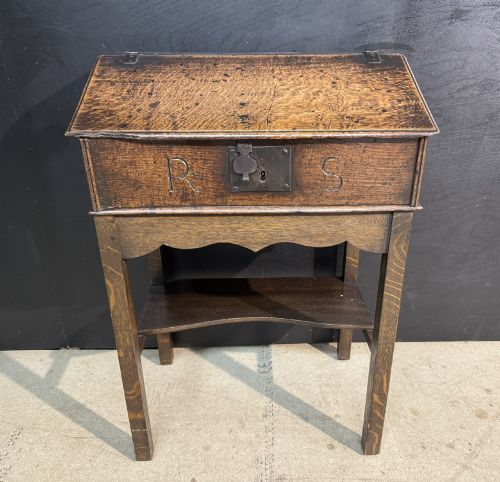
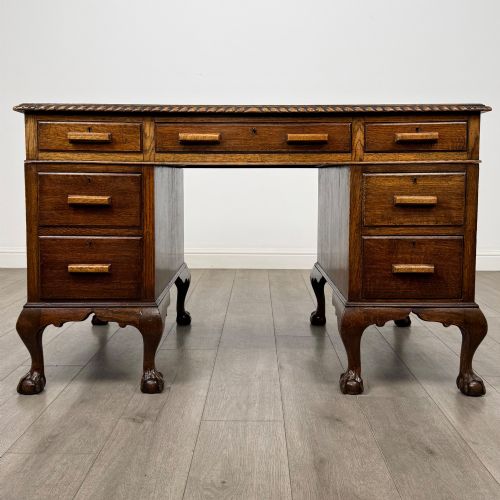
A carved writing bureau is a practical workspace featuring a hinged fall front that opens to reveal fitted pigeonholes and small drawers for correspondence and documents. Buyers searching this phrase most frequently encounter 19th-century and Edwardian examples in solid oak, often decorated with period revival motifs like linenfold panels or green man carvings.
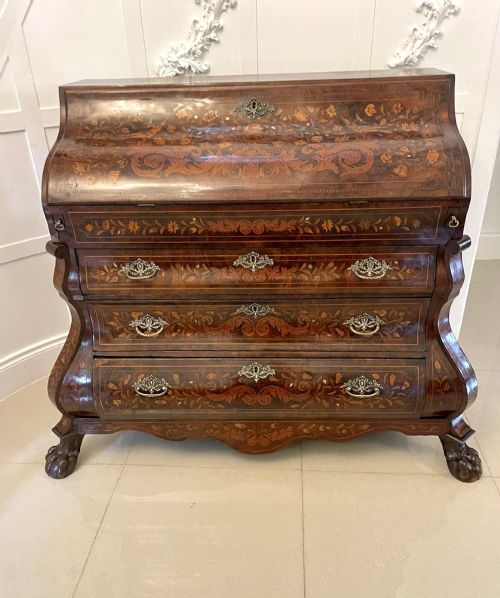
The form spans various formats from compact Edwardian oak pieces to heavier Victorian models and occasional 18th-century walnut or mahogany specimens. These desks combine enclosed writing surfaces with lower storage drawers, balancing concealed stationery organisation with domestic utility.
How they were made
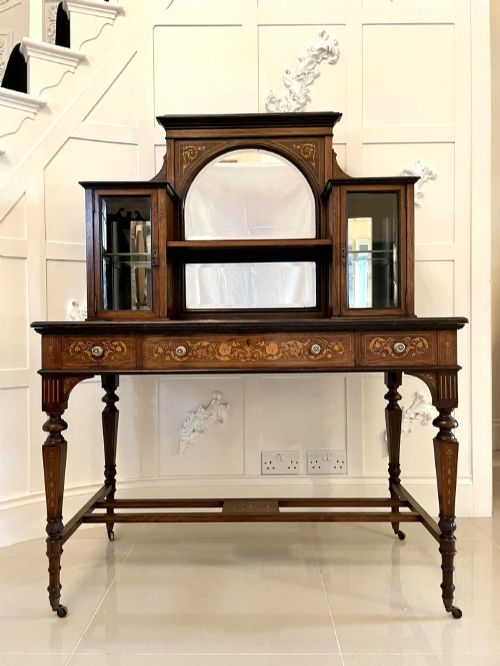
Cabinet makers built these pieces using solid timbers like oak, walnut, and mahogany, frequently applying burr walnut veneers or floral marquetry to primary display surfaces. Structural stability relied on traditional joinery methods, housing the drop-front fall on internal pigeonhole frames supported by pull-out wooden lopers.
Carving was executed by hand using gouges and chisels directly into the timber, creating relief patterns such as linenfold panels, scrolling foliage, and figural details. Secondary woods were selected for internal drawer linings, while brass handles, escutcheons, and leather writing surfaces completed the fitted interior.
Some Edwardian oak bureaux conceal miniature secret drawers behind sliding pigeonhole partitions, designed for hiding private notes and valuables.
What varies in quality
Quality separates through the crispness of the hand carving and the selection of cabinet timbers, distinguishing workshop-produced pieces from standard commercial output. Superior examples display dense, figured veneers like burr walnut or flame mahogany paired with harmonious proportions and well-figured grain matching.
Internal architecture dictates upper-tier craftsmanship, visible in secret compartments, dovetailed drawer construction, and finely turned pigeonhole dividers. Original brass hardware, stable fall-front hinges, and intact leather writing inserts further elevate the standard of preservation.
Gillows Oxford Street Workshop
The Carved Writing Bureau Glossary
- Bureau
- A desk featuring a sloping hinged lid or fall front that drops down to form a writing surface above a chest of drawers. It typically conceals a fitted interior of small drawers and pigeonholes.
- Fall front
- The hinged panel on a bureau or escritoire that lowers to provide a horizontal writing platform. It is held level by internal wooden supports called lopers.
- Linenfold
- A style of carved wooden panelling resembling folded vertical linen fabric, frequently found on Edwardian and revival oak furniture. It gained popularity during the Tudor period.
- Marquetry
- Decorative veneer patterns formed by fitting together small pieces of different coloured wood, ivory, or shell onto a solid background. It often depicts floral or geometric designs.
- Pigeonhole
- A small open compartment within a desk interior designed for sorting letters and documents. These compartments form the core of a bureau's fitted nest.
Carved Writing Bureau: Frequently Asked Questions
What is inside a bureau drop front?
Opening the fall front reveals an arrangement of small drawers, vertical pigeonholes, and occasionally a central locked cupboard or secret compartments.
This fitted interior was designed for sorting stationery, account books, and correspondence before the fall front is closed and locked to keep contents private.
How do I date a carved oak bureau?
Dating relies on combining the specific revival style, such as Jacobean or linenfold, with construction traits like drawer dovetailing and timber thickness.
Victorian and Edwardian iterations frequently feature heavy machine-assisted or hand-chased oak carving, whereas earlier 18th-century pieces show simpler raised panels and different internal layouts.
How do you care for leather writing inserts?
Leather writing surfaces require gentle dusting and occasional treatment with appropriate leather dressings to prevent drying and cracking.
Avoiding direct sunlight and excessive moisture preserves both the leather and the surrounding wood finish of the writing surface.
What is the difference between a bureau and a Davenport?
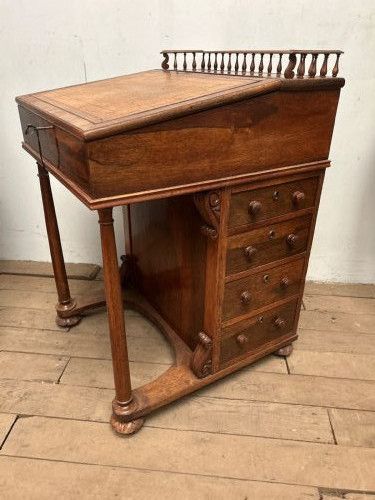
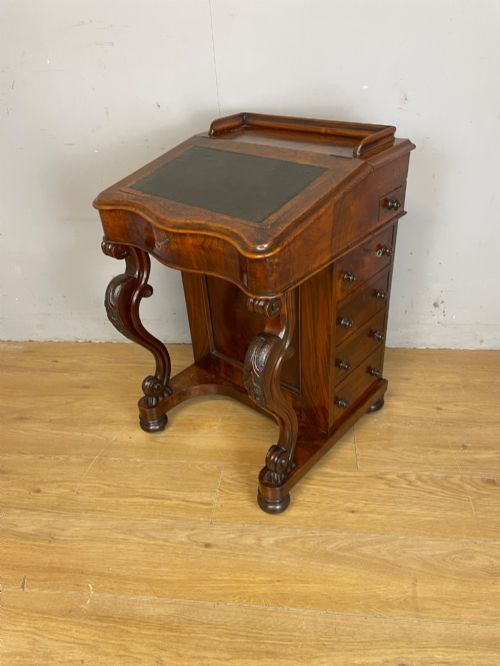
A traditional bureau provides a sloping fall-front writing surface that drops forward over a set of lower drawers. A Davenport is a compact desk form where the sloping writing surface lifts or slants upward above a pedestal of side drawers.