
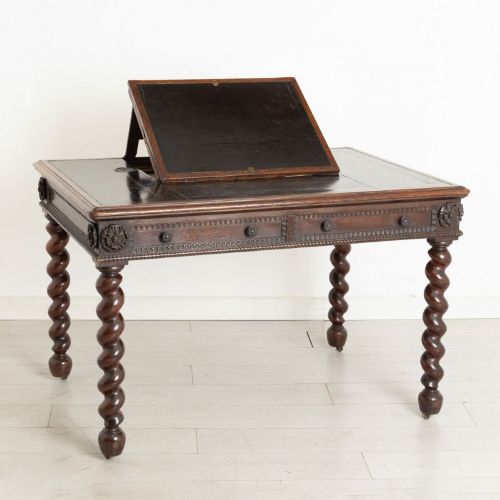


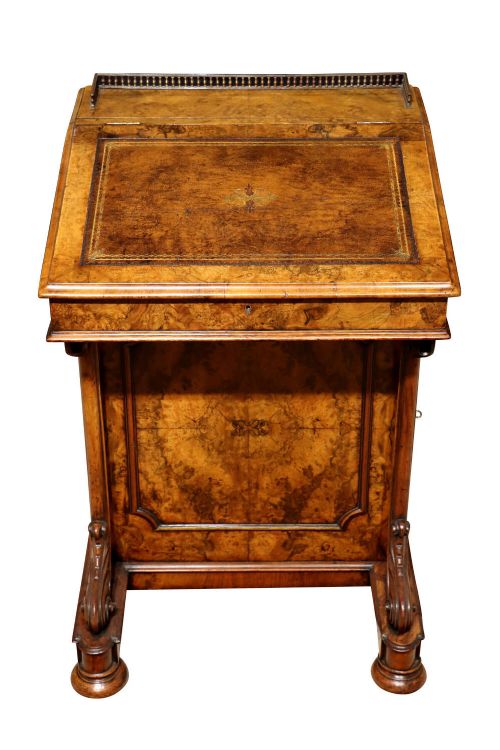


Carved Slant Top Desk
A carved slant top desk is a writing cabinet with a sloping surface, offering secret drawers and enclosed storage for daily correspondence.
Carved Slant Top Desk
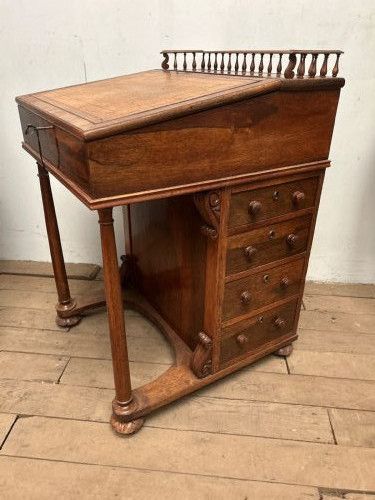
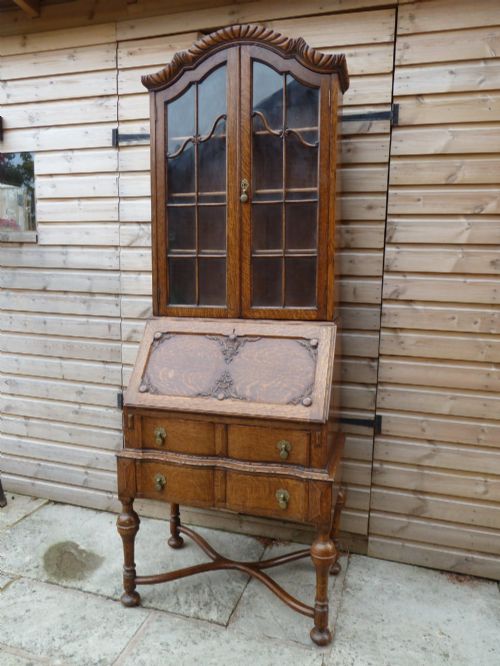
A carved slant top desk combines a writing surface with concealed compartments, appearing across periods from the 17th century to the 20th century. The form encompasses compact Davenport desks, bureau bookcases, and vernacular oak bureaux with hinged slopes.
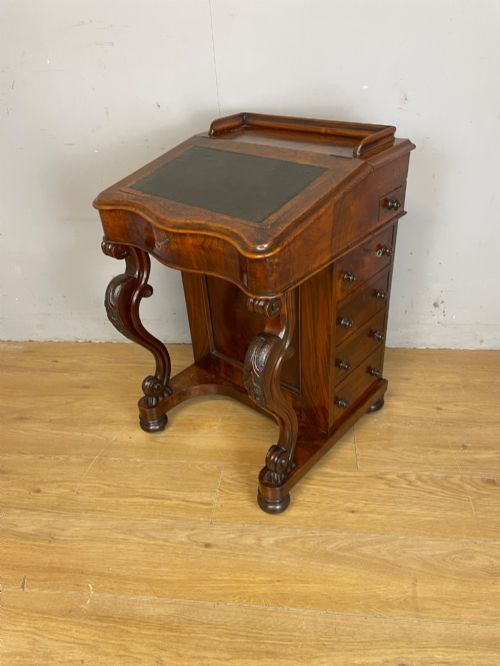
Buyers on this page most frequently encounter Victorian walnut and burr walnut Davenport desks featuring carved details and floral marquetry. Oak and mahogany examples span styles from Regency to Neo-Jacobean, reflecting diverse regional workshops.
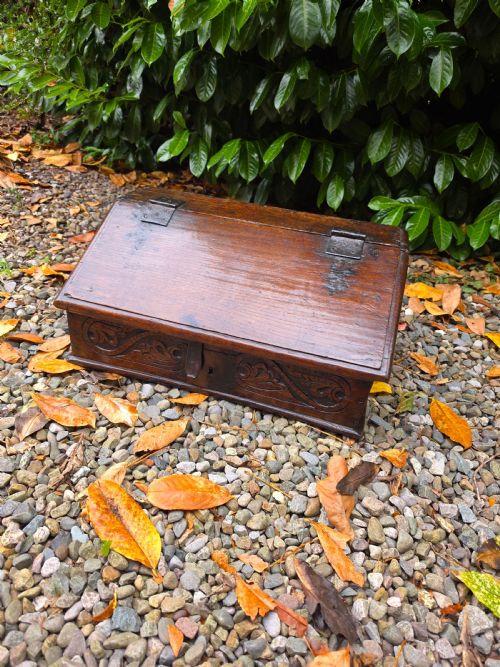
The architectural presence of these pieces ranges from modest Bible boxes on stands to large bureau bookcases and pedestal writing tables. Each variation serves the primary function of organised storage combined with a slanted writing platform.
How they were made
Cabinetmakers utilised dense timbers including oak, mahogany, rosewood, and burr walnut, often applying elaborate marquetry or satinwood interiors. Solid construction methods supported heavy use, utilising dovetail joints for drawers and panelled construction for carcases.
Carving techniques defined styles such as Jacobean Revival and Neo-Jacobean, producing figures like Green Man motifs alongside geometric panels. Secondary materials such as brass fittings, leather writing inserts, and iron hardware completed the construction.
Object forms span from 17th-century Bible boxes to Victorian piano top Davenports and large bureau bookcases.
What varies in quality
The refinement of the timber figure and the crispness of the hand carving dictate the distinction between standard and exceptional pieces. Burr walnut veneers and intricate floral marquetry require precise execution to maintain visual harmony across the sloping desk surface.
Interior configuration and secondary timber selection reveal the maker's attention to detail, separating simpler vernacular items from workshop-attributable desks. Superior examples preserve original fitted satinwood interiors, working locks, and unblemished leather writing surfaces.
Gillows Designed·James Winter And Son·Howard And Sons
The Carved Slant Top Desk Glossary
- Davenport desk
- A compact pedestal writing desk featuring a side-opening drawer section and a sloping top. This form became particularly popular during the Victorian period.
- Bureau
- A desk with a sloping hinged lid that covers a compartment of pigeonholes and small drawers. Early examples emerge in solid oak during the 17th century.
- Bible box
- A small wooden box with a slanted lid, designed to hold books or writing materials. These portable containers often rest on stands or tables.
- Marquetry
- Decorative veneer work forming pictures or patterns using various coloured woods. This technique adorns many Victorian walnut slant top desks.
- Pollard oak
- Timber taken from trees that have been pollarded, producing a knotted, highly figured grain pattern. Cabinetmakers utilised this wood for distinctive cabinet fronts.
Carved Slant Top Desk: Frequently Asked Questions
What is a Davenport desk?
A Davenport desk is a compact writing cabinet with a sloping lid on top and drawers opening to the side.
First produced in the early 19th century, this form maximised workspace in smaller rooms while providing internal storage for papers.
How do I use a slant top desk?
The sloping lid provides an ergonomic angle for handwriting and reading documents.
Lifting the hinged slope reveals inner compartments, small drawers, and pigeonholes designed for stationery and correspondence.
How do I date an oak bureau?
Dating relies on construction methods, timber grain, and carved ornamentation styles.
Seventeenth-century pieces typically display vernacular framing and hand-carved panels, whereas later revival items incorporate machine-planed boards and different hardware.
Where were these desks placed?
These desks traditionally stood in studies, libraries, or private drawing rooms.
Compact variants like Davenports fit easily into residential spaces as functional furniture pieces.