


Carved Hardwood Writing Desk
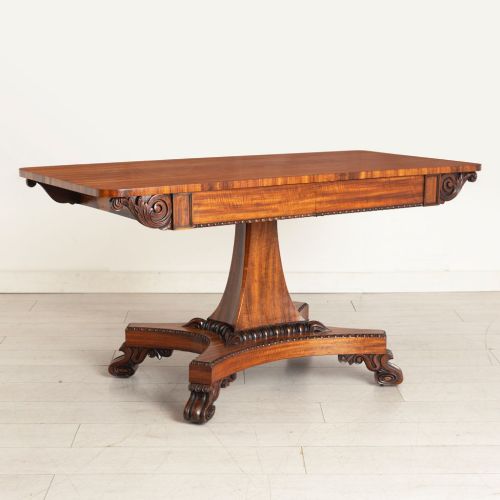
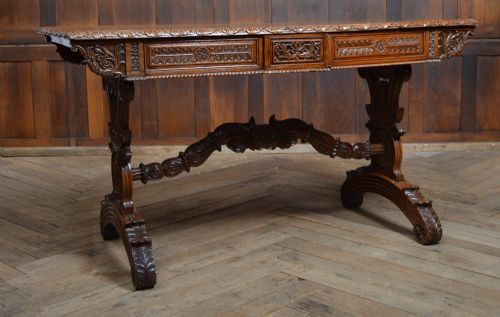
A carved hardwood writing desk brings unmistakable presence to a room through dense carving and rich timber.
Carved Hardwood Writing Desk
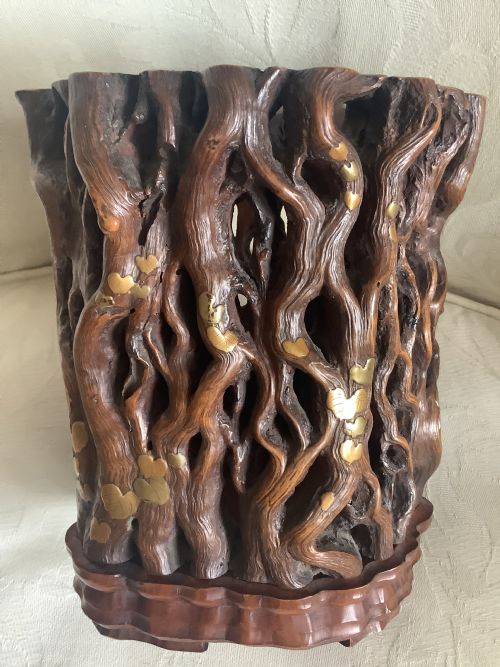
A carved hardwood writing desk is a substantial surface for correspondence and study, built from heavy timbers like padauk, teak, and elm. These pieces range from Chinese export and scholars studio forms to Anglo-Indian colonial and Japanese cylinder desks.
Buyers seeking a carved hardwood writing desk often encounter Victorian interpretations alongside items from the nineteenth century, including eighteen-eighty, eighteen-ninety, and nineteen-hundred. Bureau desks, partners desks, and library tables dominate the selections available.
The aesthetic leans heavily on traditional Chinese, Anglo-Indian, and Meiji period Japanese designs. Carved dragons, parquetry, and yosegi veneer frequently define the exterior surfaces of these functional objects.
How they were made
Cabinetmakers utilised dense hardwoods such as padauk and teak, chosen for their weight and stability. Elm also appears in construction, often paired with parquetry or yosegi veneer geometric patterns.
Brass hardware secures drawers and compartments, while hand-carved motifs adorn panels and legs. Joinery relies on traditional framing methods suited to heavy tropical timbers.
Listings feature nineteenth-century pieces alongside Victorian, eighteen-eighty, eighteen-ninety, and nineteen-hundred examples constructed from padauk, teak, elm, and brass.
What varies in quality
The depth and crispness of the hand-carving distinguish finer examples from simpler production. Relief work depicting dragons or foliage requires skilled cutting that holds sharp edges rather than soft contours.
Timber selection and grain matching across large surfaces indicate the maker's intent. Heavy padauk and teak components show superior structural integrity compared to mixed secondary woods.
Liberty Chinoiserie
The Carved Hardwood Writing Desk Glossary
- Padauk
- A heavy, durable tropical hardwood with a reddish-brown colour that darkens with age. It forms the primary structure of many colonial and export desks.
- Yosegi Veneer
- A traditional Japanese mosaic woodwork technique using different natural wood shades to create geometric patterns. It appears on cylinder desks from the Meiji period.
- Partners Desk
- A large double-sided desk designed for two people to work opposite one another. These pieces feature drawers and cupboards on both longitudinal faces.
- Parquetry
- Geometric mosaic woodwork used for decorative borders and surfaces. It relies on contrasting timber tones arranged in precise repeating patterns.
Carved Hardwood Writing Desk: Frequently Asked Questions
What is a carved hardwood writing desk?
A carved hardwood writing desk is a sturdy desk made from dense timbers like padauk, teak, or elm, featuring detailed hand-carved ornamentation. These pieces originate from traditions including Chinese export, Anglo-Indian colonial, and Meiji period Japanese design.
They serve as both functional writing surfaces and striking decorative furniture for studies or libraries. Forms range from pedestal and partners desks to cylinder desks and bureau variations.
How do I date a nineteenth-century desk?
Examine the construction methods, secondary woods, and hardware styles used within the drawers and interior compartments. Nineteenth-century pieces often display distinct regional carving traits, such as Chinese dragon motifs or Anglo-Indian colonial detailing.
Makers' marks or stamps, when present, provide specific attribution to firms or retailers like Liberty. Styles also shift across decades, moving from heavy Victorian proportions to refined Meiji period Japanese work.
Where were these desks made?
These desks were produced in various global workshops influenced by trade and colonial exchange during the nineteenth century. Production centres included China for export markets, British colonial workshops in India, and Meiji period Japan.
European firms also commissioned or imported these styles to satisfy domestic demand for exotic hardwood furniture. This international exchange created distinct stylistic overlaps across different regions.