




Burmese Carved Furniture
Burmese carved furniture brings dense, sculptural timber work into interior spaces through tables, chairs, and buffets.
Burmese Carved Furniture
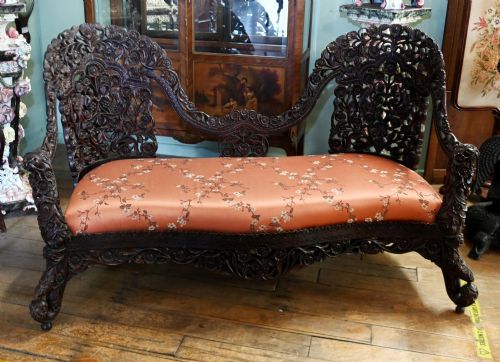
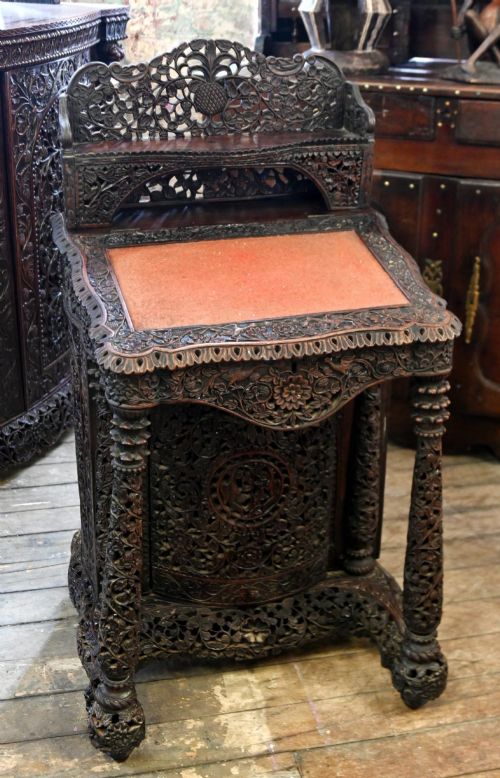
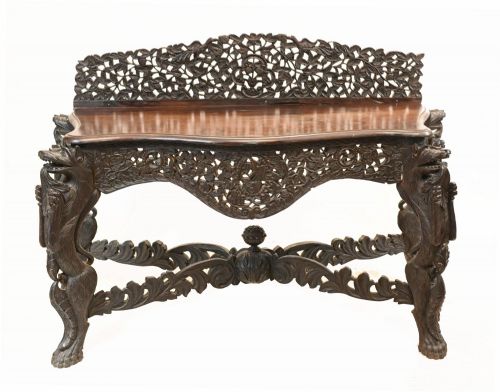
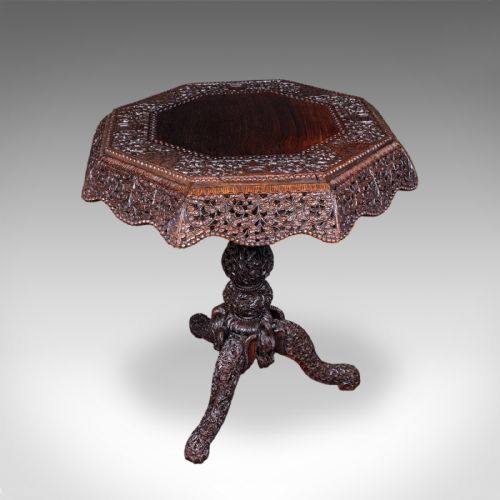
Burmese carved furniture encompasses a distinct group of wooden items originating from Myanmar and associated colonial contexts, often appearing under the designation of Burmese carved furniture. These pieces span the nineteenth century, including specific dates such as eighteen eighty, eighteen ninety, and eighteen fifty, alongside broader Victorian and eighteenth century designations. The selection on this page centres primarily on tables, from side and occasional tables to large dining and console pieces.
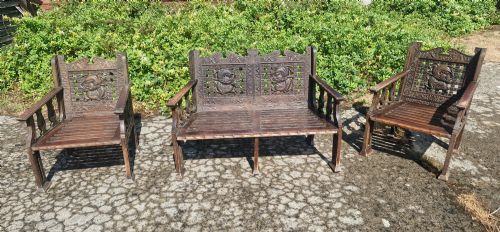
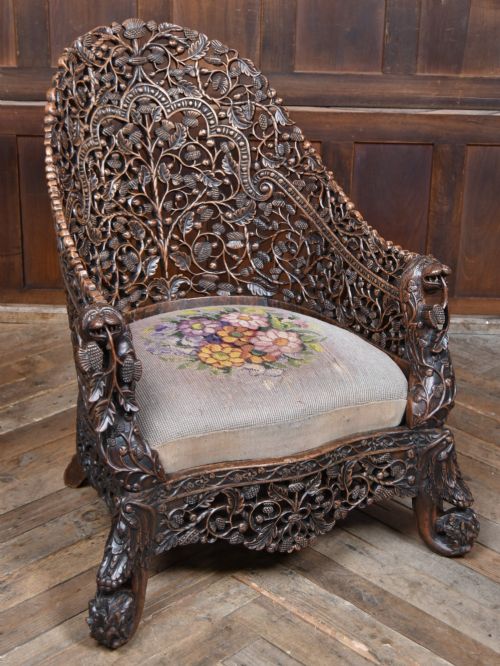
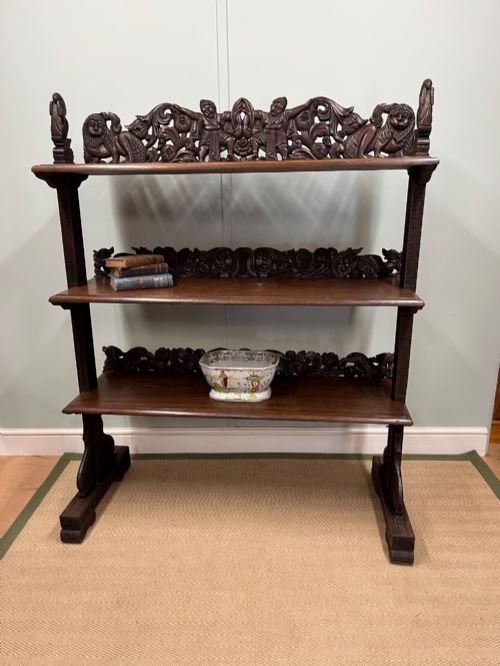
Seating forms also appear frequently, including armchairs, conservatory suites, folding chairs, and specialised pieces like harpist chairs and temple chairs. Storage and display items complete the range, notably three tier buffets, cabinets, sideboards, folio stands, and whatnots. These objects reflect both indigenous Burmese craftsmanship and Anglo-Burmese colonial styles.
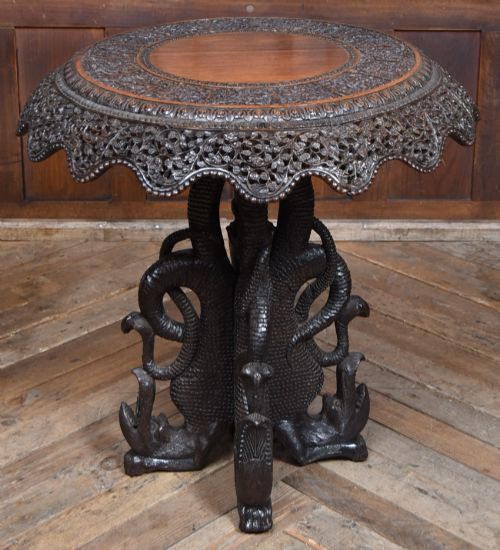
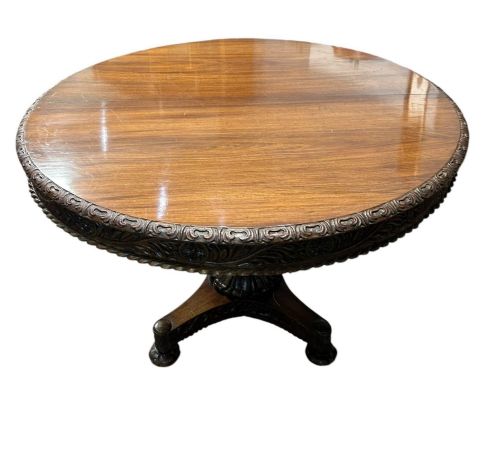
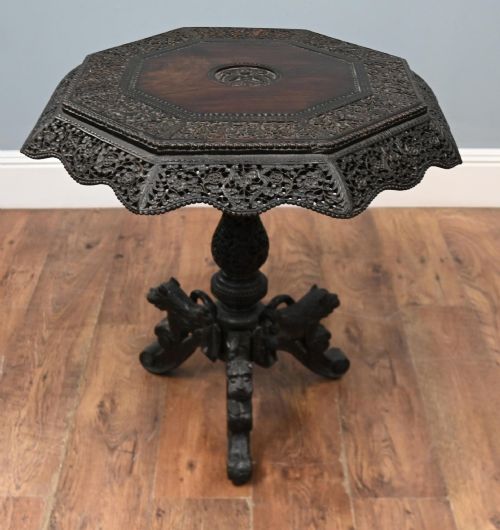
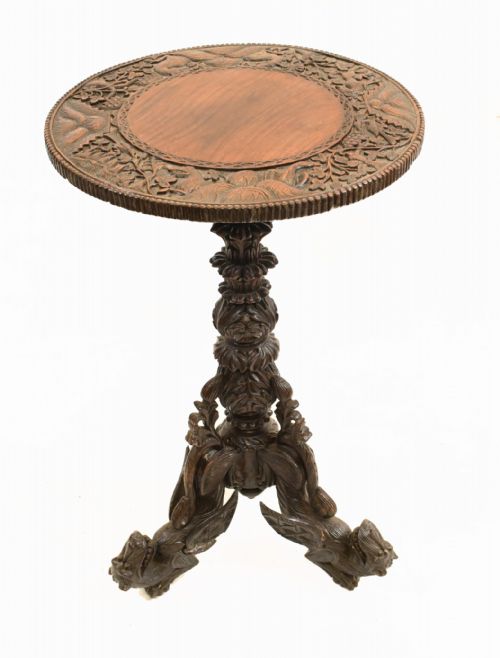
Tables often feature specific structural formats, such as octagonal tops, round shapes, tilt tops, and supports shaped as elephant legs. Seating variations incorporate distinct motifs like thistles and peacocks. The overall aesthetic relies on heavily carved surfaces executed across various domestic scales.
Standards of Execution
Depth and precision of the chisel work distinguish superior examples, where motifs remain crisp and deeply undercut rather than shallow or flat. The choice of timber also dictates grade, with heavily figured padauk wood and dense teak representing the higher tiers of production compared to standard mixed hardwoods. Proportion and stability in complex forms, such as multi-tiered buffets and folding chairs, separate master craftsmanship from standard workshop output.
The integrity of the structural joinery relative to the weight of the dense carving marks the difference between enduring functional furniture and purely decorative items. Surface preservation, particularly the preservation of original hand-carved details and polished timber patination, dictates the overall stature of each piece within its historical period.
Burmese Carved Furniture Retail Price Guide 2026
Typical asking prices for burmese carved furniture among the pieces listed under this phrase on Sellingantiques today, from the lower quarter to the upper quarter. They describe what is for sale here now, not the wider market.
Elephant legs and peafowls support and adorn these tables and armchairs, turning ordinary furniture into a menagerie of carved wildlife.
The Burmese Carved Furniture Glossary
- Padauk wood
- A heavy, dense tropical hardwood known for its rich reddish-brown colour and durability. This timber was frequently selected for high-status carved items due to its ability to hold intricate chisel work.
- Tilt top table
- A table featuring a hinged mechanism that allows the top to be pivoted into a vertical position when not in use. This form saved domestic space in nineteenth-century interiors.
- Whatnot
- A multi-tiered piece of freestanding furniture designed for displaying ornaments, books, or small objects. These open shelving units typically feature slender turned supports.
- Anglo-Burmese
- A descriptive term for furniture combining traditional Burmese carving techniques with European forms and room requirements. These items were produced during the colonial period for both export and local European residents.
- Folio stand
- A specialised rack designed to hold large newspapers, magazines, or folios of prints. These portable stands utilise upright slatted divisions supported by sturdy wooden frames.
Burmese Carved Furniture: Frequently Asked Questions
What rooms suit Burmese carved furniture best?
These heavily carved wooden items integrate well into studies, drawing rooms, and garden conservatories where their dense decoration complements traditional interiors. Tables and seating provide functional utility alongside strong visual presence.
Larger pieces like three tier buffets and cabinets anchor dining spaces or hallways, offering substantial surface area and display capacity.
How do I care for teak and padauk wood?
Maintain these dense hardwoods by dusting regularly with a dry cloth and avoiding placement near direct heat sources or strong sunlight. Proper humidity control prevents the timber from drying out.
Apply occasional applications of appropriate wood wax if the surface appears dry, following the natural grain of the hand-carved details.
Are these pieces strictly decorative or functional?
Most items served active domestic roles in nineteenth-century households, from dining tables and side tables to folding chairs and newspaper racks. Their robust construction in teak and padauk wood supports everyday use.
While the carving is intricate, the underlying joinery remains engineered for practical tasks such as serving food, holding books, or providing seating.
How are Anglo-Burmese pieces identified?
Anglo-Burmese furniture combines traditional Burmese relief carving with familiar European furniture shapes such as Victorian side tables, console tables, and armchairs. The integration of local motifs with Western forms defines this category.
Examine the construction methods and wood types, typically teak or padauk, alongside stylistic markers from the nineteenth century.