





19th Century Imari Dish
A 19th century imari dish brings rich iron-red and cobalt tones to a table, combining Japanese export artistry with English porcelain adaptations.
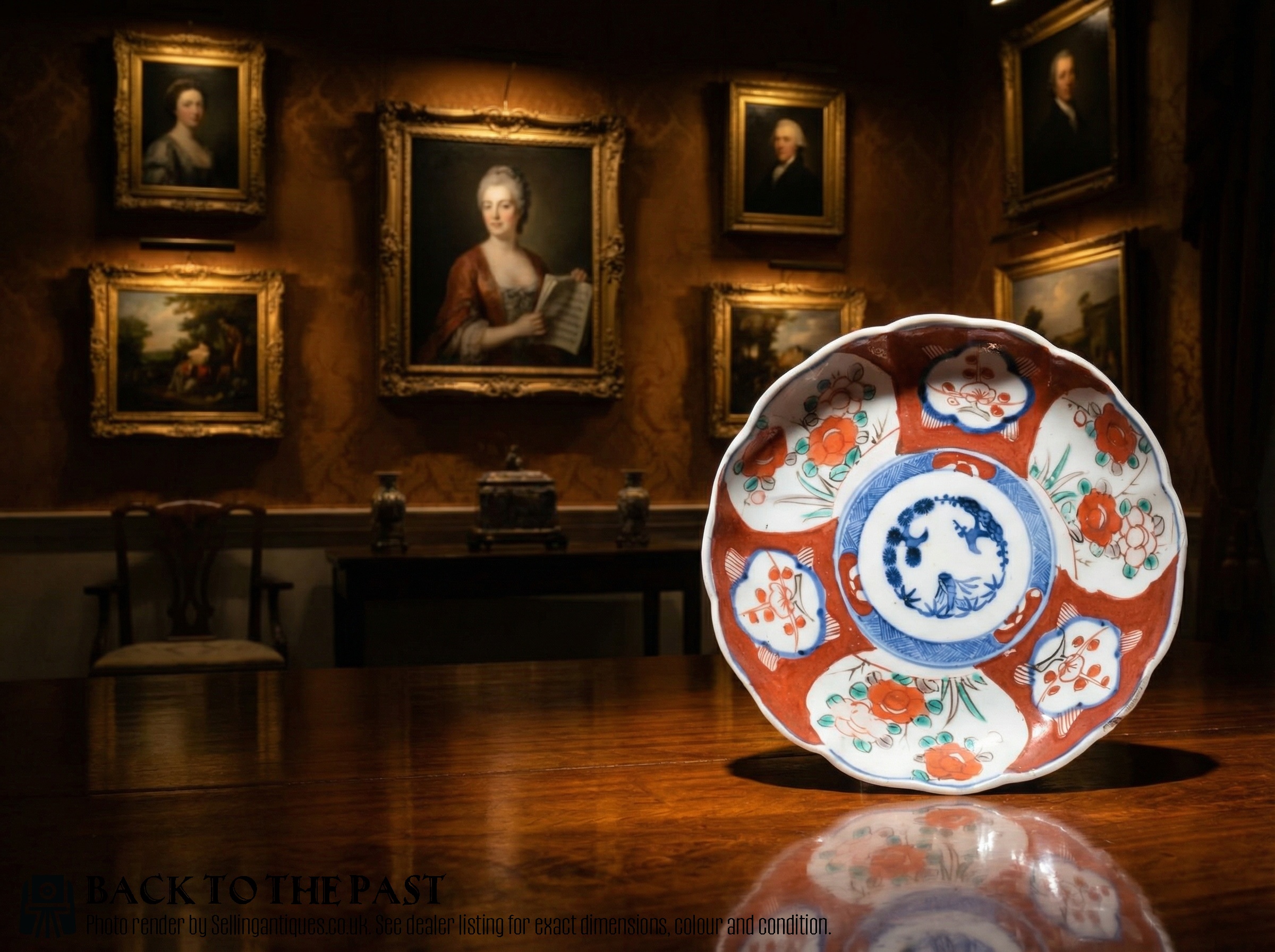
19th Century Imari Dish
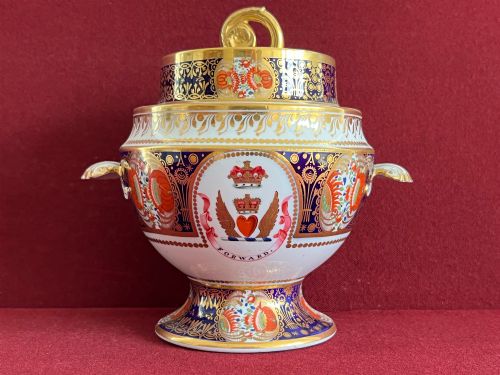
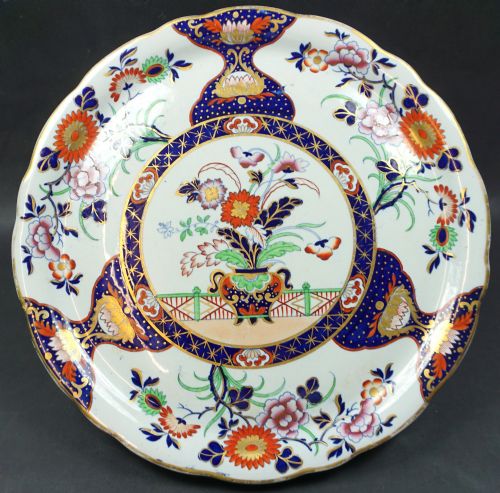
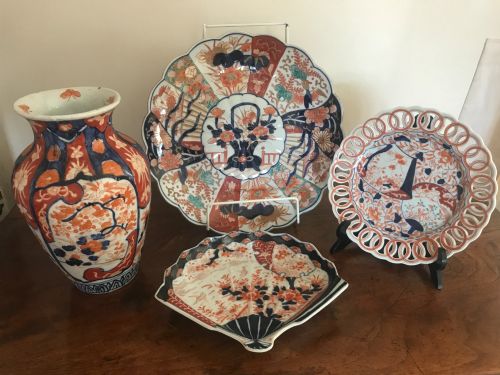
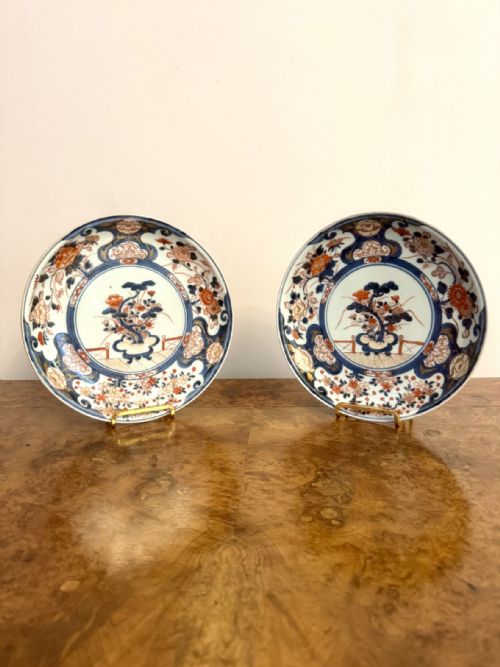
A 19th century imari dish encompasses large decorative chargers, plates, and serving vessels produced during the Edo and Meiji periods in Japan alongside English interpretations from factories such as Worcester, Derby, and Mason's. The selection on this page leans heavily toward Japanese porcelain chargers and plates dated between eighteen-eighty and nineteen-hundred, together with English ironstone and porcelain services employing the characteristic palette.
Forms range from intimate dessert plates and scallop-edged dishes to massive wall chargers exceeding twenty inches in diameter. English makers adapted the aesthetic onto ironstone body types, producing tureens, jugs, and basin sets alongside standard flatware.
The aesthetic bridges two distinct ceramic traditions, uniting traditional East Asian motifs with nineteenth-century European dining table requirements.
What varies in quality
Quality rests upon the precision and density of the hand-painted brushwork, the richness of the enamel colours, and the generosity of the gold leaf application. Finer pieces demonstrate crisp separation between the cobalt underglaze outlines and the overlaid enamel pigments without bleeding.
The weight, throwing consistency, and preservation of the gilded edges differentiate standard utilitarian service wares from exhibition-grade chargers and cabinet plates.
Several plates feature fierce dragons and kylins guarding the dessert service.
Hicks & Meigh·Flight, Barr & Barr·John Ridgway·Chamberlain Worcester·Old Derby·Coalbrookdale
The 19th Century Imari Dish Glossary
- Imari
- A style of Japanese export porcelain originating from the port of Arakawa, characterised by a palette of cobalt blue, iron-red, and gilt. European factories extensively copied these motifs throughout the nineteenth century.
- Charger
- A large decorative plate or platter typically measuring over twelve inches in diameter, used primarily for display on walls or sideboards rather than dining. Nineteenth-century examples often feature scalloped rims and dense compartmentalised patterns.
- Ironstone
- A patented heavy earthenware body invented in nineteenth-century England to imitate porcelain durability. It accepts enamel colours and gold gilding readily.
- Kakiemon
- A refined style of Japanese ceramic decoration featuring asymmetrical arrangements of flowers, birds, and quail motifs in soft enamels. Old Derby factories frequently adopted this palette.
- Tureen
- A deep covered serving vessel for soup or sauce, frequently supplied with a matching ladle and undertray. These pieces often feature ornate gilt handles and decorative finials.
19th Century Imari Dish: Frequently Asked Questions
How do I distinguish Japanese Imari from English Imari?
Japanese pieces generally utilise a finer porcelain body with slight potting imperfections underneath, whereas English equivalents often employ heavier ironstone or refined bone china.
English factories such as Worcester and Derby frequently incorporated European crests or specific earthenware body stamps on the reverse.
Were chargers meant for dining?
Large chargers served primarily as decorative centerpieces or wall display items due to their substantial diameter and elaborate hand-painted surfaces.
Smaller plates within the same palette saw active use on nineteenth-century dining tables for dessert or serving courses.
What is the Meiji period?
The Meiji period spans from eighteen-sixty-eight to nineteen-and-twelve, marking an era of major artistic output and international export for Japanese ceramics.
Pieces from this era often bear complex hand-painted borders and vibrant enamel combinations.