




Scalloped Porcelain Serving Dish
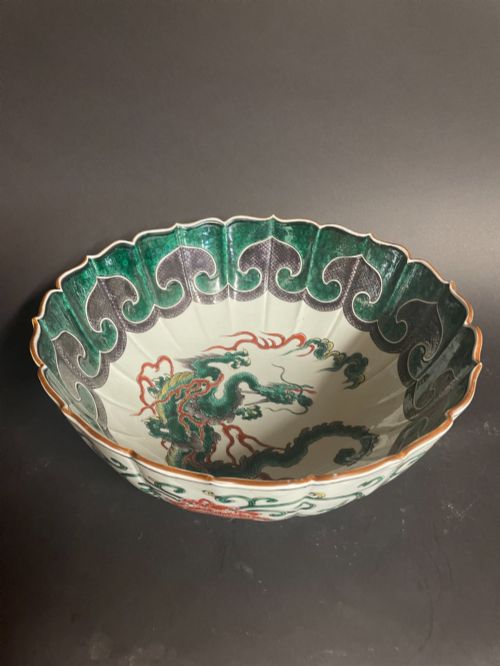
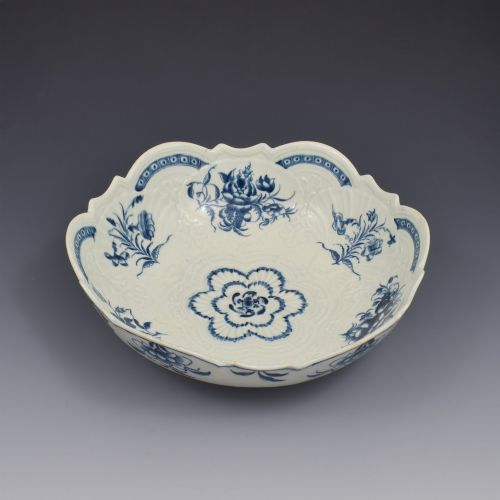
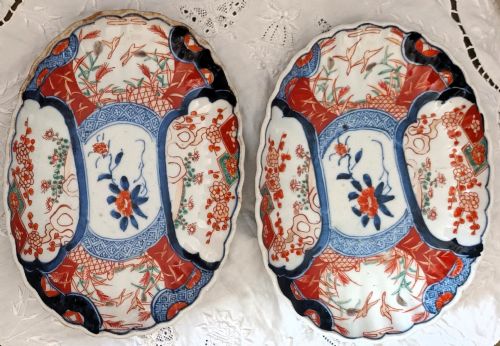
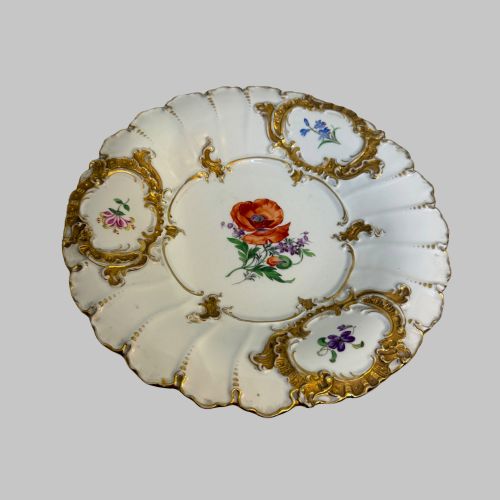
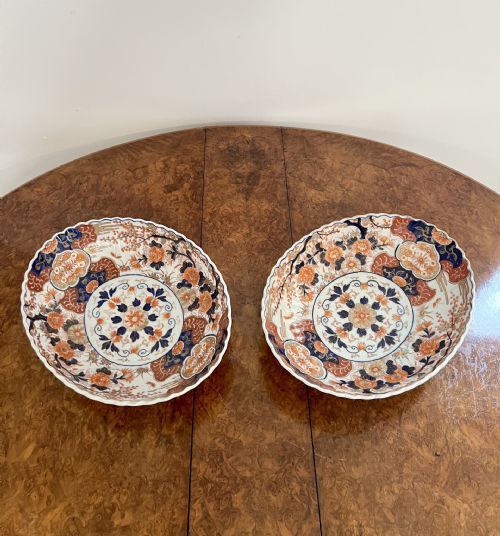
These scalloped porcelain serving dish examples bring hand-painted floral motifs and shaped edges directly to the dining table.
Scalloped Porcelain Serving Dish
A scalloped porcelain serving dish bridges the gap between functional tableware and decorative display, taking forms such as oval dishes, bowls, and chargers. When searching for a scalloped porcelain serving dish, collectors encounter diverse aesthetic traditions ranging from Georgian English factories to Japanese Meiji period workshops.
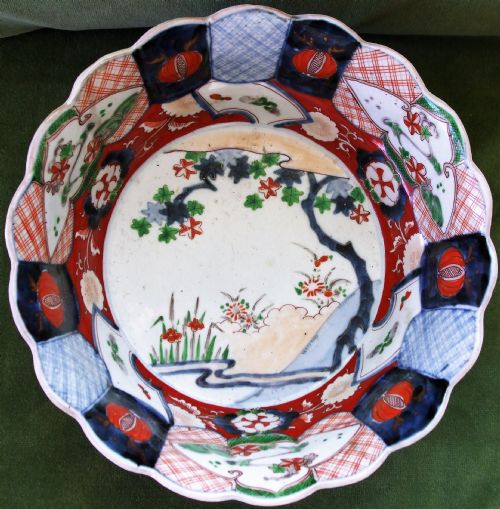
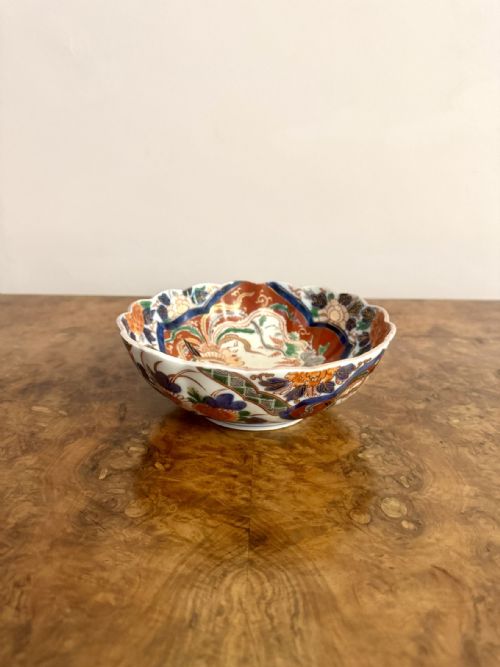
The pieces appearing on this page span the eighteenth, nineteenth, and early twentieth centuries, reflecting changing tastes in table presentation. English factory work sits alongside Japanese Imari wares, offering buyers a choice of blue and white patterns or vibrant polychrome enamels.
Vessels with shaped and lobed edges dominate the selection, often featuring hand-painted floral and bird designs. These items served distinct roles in historic dining services, functioning as dessert dishes, junket dishes, or large centrepieces.
Materials and production methods
Makers utilised hard-paste and soft-paste porcelain bodies, shaping them into fluted, lobed, and scalloped profiles while leather-hard or through specialised moulding techniques. Glaze application followed, providing the smooth foundational surface necessary for subsequent decoration.
Decoration relied on hand-painted mineral pigments, occasionally augmented with gold leaf and gilding applied over or under the glaze. Japanese Imari pieces combined underglaze blue with overglaze iron red and enamels, whereas English manufactories often employed intricate blue and white transfer printing or delicate enamel painting.
Listings feature porcelain pieces spanning the eighteenth century, the Georgian era, the Regency period, and the Japanese Meiji epoch.
Assessing craftsmanship and finish
Quality reveals itself in the precision of the hand-painting and the crispness of the moulded or shaped rim. Superior examples display confident brushwork and consistent enamel application without excessive pooling or fading.
The purity of the porcelain body and the evenness of the glaze further distinguish standard production from exceptional work. Finer items retain crisp definition along the scalloped edges and sophisticated integration of gilding.
Dr Wall Worcester·Meissen·Rockingham Pottery·Derby Porcelain·KPM·Barr Flight And Barr
The Scalloped Porcelain Serving Dish Glossary
- Porcelain
- A ceramic material made by heating raw materials, generally including clay in the form of kaolin, in a kiln. It fires at high temperatures, resulting in a vitrified, non-porous body.
- Imari
- A type of Japanese porcelain traditionally exported from the port of Imari. These wares typically feature a palette of underglaze blue, iron red, and gold.
- Soft-paste porcelain
- An artificial porcelain composition developed in Europe to replicate Chinese hard-paste porcelain. It fires at lower temperatures and possesses a characteristic warm, slightly porous body.
- Junket dish
- A shallow bowl or dish traditionally used for serving junket, a sweet milk-based dessert curd. They frequently feature decorative moulded or scalloped rims.
- Gilding
- The application of gold leaf or gold powder to the surface of porcelain. It highlights rims, handles, and painted borders.
Scalloped Porcelain Serving Dish: Frequently Asked Questions
What were scalloped porcelain serving dishes used for?
These vessels held desserts, fruit, or specialist dishes as part of large multi-course dining arrangements. Their decorative rims suited them for prominent placement on formal tables.
Over time, many transitioned from active dining service to display pieces within cabinets or on walls.
How do I care for antique porcelain?
Wash pieces gently by hand using mild detergent and lukewarm water, avoiding abrasive sponges or modern dishwashers. Protecting the overglaze enamels and gold leaf prevents gradual loss of detail.
Store or display the dishes on stable surfaces away from high-traffic edges where accidental knocks might occur.
How can I tell eighteenth century porcelain apart from later pieces?
Eighteenth century items often exhibit the distinctive weight, body texture, and glaze characteristics of early European soft-paste or specific Oriental export periods. Handle examination reveals clues about period firing methods and kiln furniture marks.
Stylistic cues, such as Rococo revival forms or specific factory palette choices, also guide period attribution.
What is Japanese Imari porcelain?
Japanese Imari porcelain originates from the Edo period and later Meiji eras, defined by distinct decorative schemes. The palette relies heavily on cobalt blue underglaze combined with iron red and gold.
These pieces were widely exported to Europe, where Western dining rooms enthusiastically adopted them.