


19th Century Copper Cookware
These 19th century copper cookware pieces bring warmth and robust utility to a kitchen, shaped by centuries of practical culinary work.
19th Century Copper Cookware
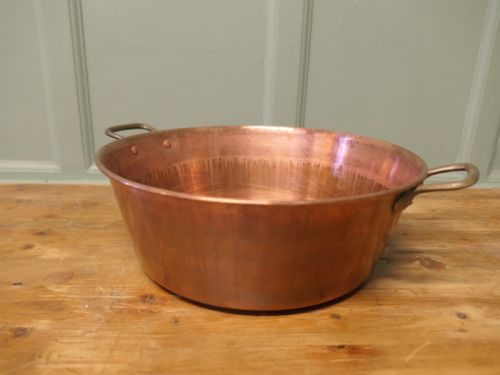
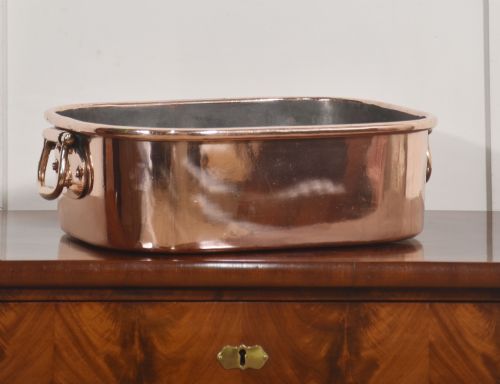
When you search for 19th century copper cookware, you encounter a robust selection of utilitarian kitchen objects shaped by Victorian, Georgian, and French country traditions. These items range from large preserving pans and jam pans to specific items like fish kettles, jelly moulds, and kettles designed for heavy hearth or stove use.
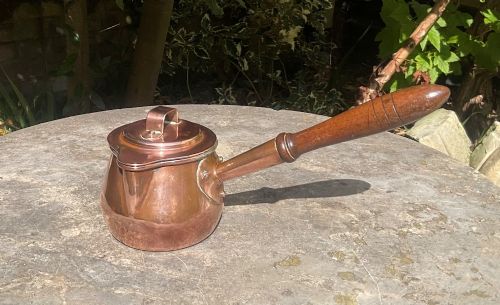
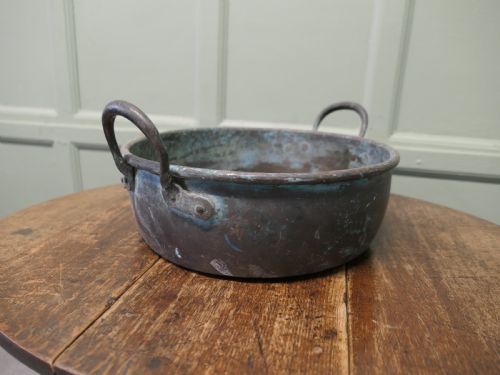
You are most likely to meet heavy copper pans and preserving vessels on this page, often found as single large items or matching sets of four pans. Alongside these, smaller kitchenalia such as ice cream moulds, brandy warmers, and embossed cooking pots appear, reflecting both English and French origins.
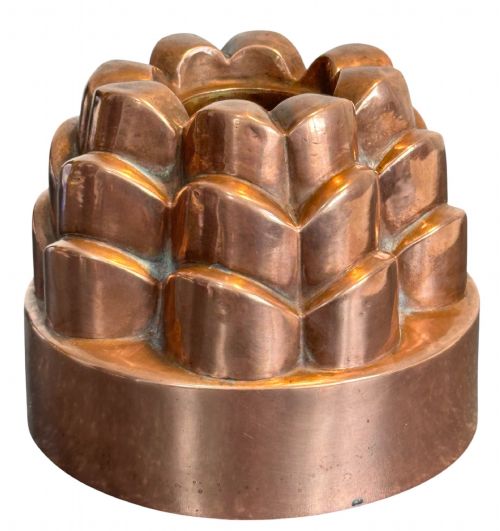
The objects combine sheer weight with utilitarian function, utilising materials like brass handles, iron fittings, and wooden components alongside heavy gauge copper. Their forms vary from plain, utilitarian bowls to decorative jelly moulds featuring castle tops.
Materials and Construction
The primary material across all pieces is heavy gauge copper, chosen for its exceptional thermal conductivity in culinary tasks. This metal is frequently paired with brass handles, iron fittings, and wooden grips to facilitate lifting heavy boiling vessels and pans from heat sources.
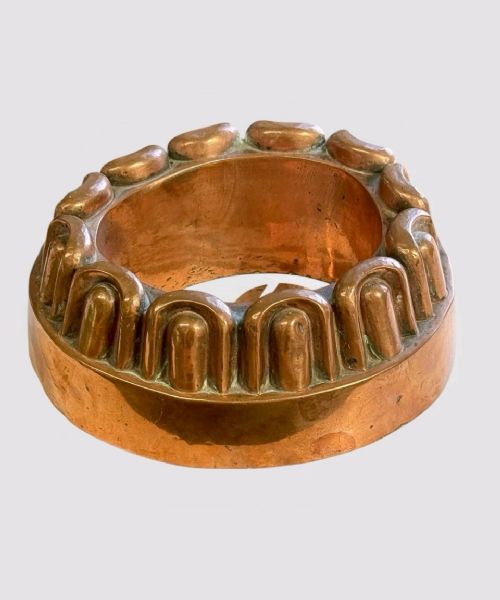
Interiors of cooking vessels and jelly moulds are typically tin lined to prevent direct contact between food and copper. Exterior surfaces sometimes feature embossed decorative work, particularly on jelly moulds and specific cooking pots, while larger jam pans rely on plain, hand-beaten metal construction.
Castle-topped jelly moulds turn ordinary blancmange into miniature fortifications.
Judging Quality in Copper Ware
Thickness of gauge and weight set the standard for quality in these kitchen objects, with heavier pans and preserving vessels indicating robust commercial or domestic utility. Thicker metal withstands warping over direct heat and retains structural integrity through generations of use.
The integrity of construction details, such as securely riveted brass handles, well-fitted lids on ice cream moulds, and intact interior tin linings, separates working culinary tools from purely decorative items. Matched sets and pieces bearing retailer marks like Harrods demonstrate higher original provenance and sustained preservation.
The 19th Century Copper Cookware Glossary
- Jam Pan
- A large, open copper vessel with handles, designed for boiling fruit and sugar over a heat source. These pans possess wide mouths to allow rapid evaporation during preserving.
- Tin Lined
- A protective coating of metallic tin applied to the interior surface of copper cookware. This layer prevents harmful reactions between acidic foods and the copper metal.
- Jelly Mould
- A rigid metal form used to shape chilled desserts, often featuring intricate architectural designs like castle tops. They require careful release techniques to preserve the moulded pattern.
- Fish Kettle
- An elongated oval cooking vessel equipped with a lid and internal draining rack. This specific shape allows whole fish to be poached evenly without breaking apart.
19th Century Copper Cookware: Frequently Asked Questions
Can I still cook with antique copper pans?
Many of these pieces were built for heavy kitchen use, but modern cooking depends on the condition of the interior tin lining. If the protective tin layer remains intact, the vessels can generally still be used for food preparation.
For pieces with worn or absent linings, professional re-tinning is typically required before culinary use. Alternatively, many collectors choose to display them as decorative kitchenalia.
How do I clean antique copper?
Maintenance involves removing tarnish using specialised copper cleaners or traditional mild acidic pastes. Scrubbing should remain gentle to preserve the original surface texture and any remaining maker marks.
Harsh abrasives must be avoided because they thin the copper over time. Regular gentle polishing maintains the warm metallic lustre without damaging the metal.
What is the difference between English and French copper?
English pieces often reflect robust domestic or farmhouse utility, seen in heavy jam pans and brandy warmers. French copper cookware frequently includes balanced sets of graduated pans designed for refined stove cooking.
Both regional traditions utilise heavy gauge metal and tin linings, but handle styles and specific vessel forms often reveal their country of origin.