


Polished Copper Pans
Polished copper pans are heavy kitchen vessels bringing warmth and utility to hearth and stove.
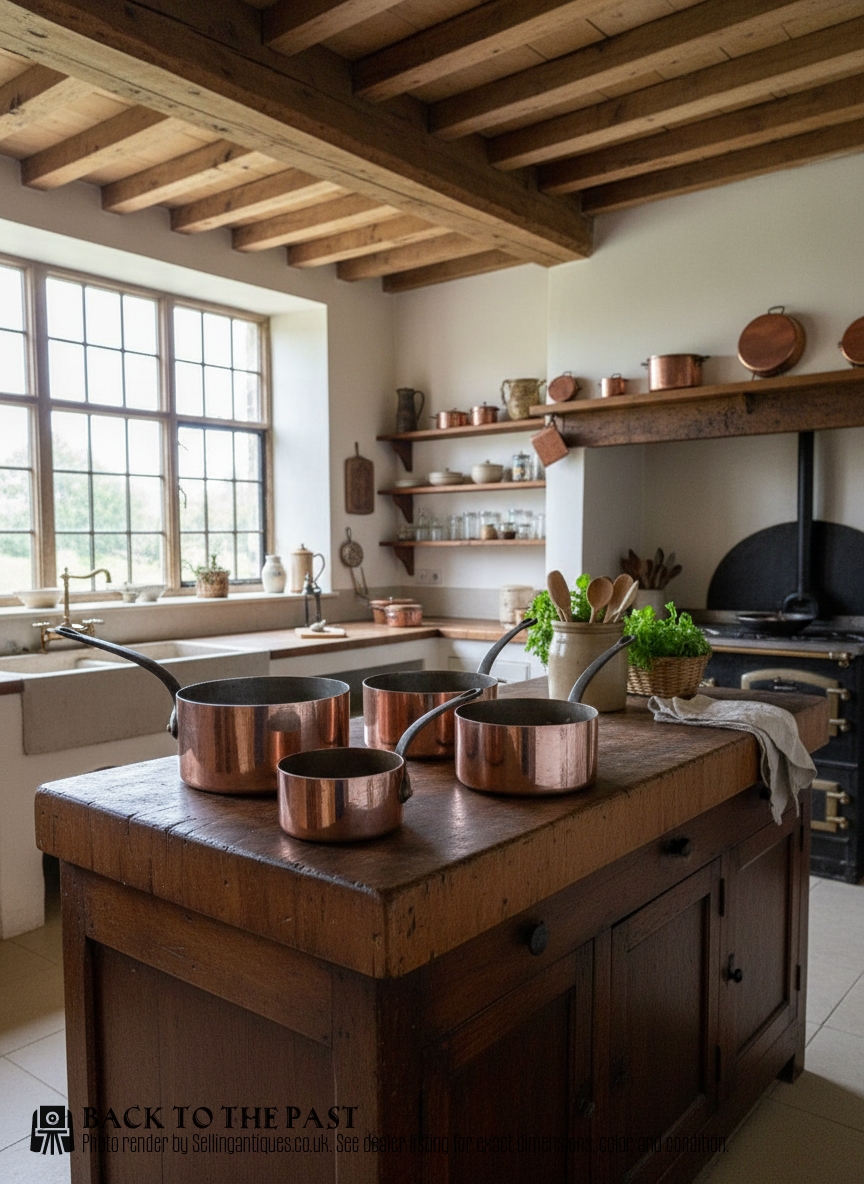
Polished Copper Pans
Polished copper pans combine utility with warmth, originating primarily from the Georgian and Victorian eras. These kitchen vessels appear as individual saucepans, large preserving pans, cream setting pans, and warming pans.
The versions most frequently encountered on this page belong to the nineteenth century, including matching sets of varying sizes and single large examples. Their origins span English workshops and French country kitchens alike.
How they were made
Craftsmen hammered heavy copper sheets into form, joining seams and attaching handles forged from brass, iron, or wood. Tin linings protected the cooking surface from the reactive metal beneath.
Handles often feature secure riveting to the body, ensuring durability for heavy daily culinary use in period households.
The listings span the Georgian and Victorian periods, incorporating materials such as copper, brass, cast iron, wood, iron, and tin.
What varies in quality
Substantial metal gauge distinguishes superior examples from lighter pieces, ensuring even heat distribution and lasting structural integrity across the pan wall and base. Heavy vessels hold their shape through decades of heavy use.
Refined handle attachment and careful finishing set the best makers apart, alongside the original integrity of the interior tin lining and the balanced weight of the assembled pan.
Hodges and Sons
The Polished Copper Pans Glossary
- Preserving pan
- A wide, deep vessel designed for boiling fruit and sugar, typically featuring a single long handle or dual grip handles for steady pouring.
- Cream setting pan
- A shallow domestic vessel used in dairy preparation to let cream rise to the surface of milk before skimming.
- Warming pan
- A long-handled covered pan utilised for heating bed linen with hot embers, distinct from kitchen cookware.
- Tin lining
- A protective metallic layer applied to the interior of copper cookware to prevent chemical reactions between acidic foods and the copper.
Polished Copper Pans: Frequently Asked Questions
Can I cook with antique copper pans?
These pans were built for practical kitchen use over open fires and early stoves. Many retain their utility once the interior tin lining is checked.
Modern cooks often use them carefully on traditional ranges, though some prefer to display them for their warm metallic tone.
How do I clean polished copper?
Polishing requires specialised creams or traditional pastes to remove natural oxidation without scratching the metal. Regular maintenance keeps the surface bright.
Avoid abrasive scourers that thin the historic metal over time.
How do I date an old copper pan?
Dating relies on handle construction, dovetail seams, and maker marks stamped into the metal. Georgian and Victorian pieces show distinct hand-forging traits.
Earlier pieces often feature heavier handles and more primitive shaping methods compared to later Victorian sets.
What is a cream setting pan?
A cream setting pan is a specialised dairy vessel designed with a wide surface area. It allowed milk to rest so cream could separate easily.
These pieces are shallower and broader than standard saucepans.