




Copper Saucepan
These copper saucepan pieces offer heavy gauge metal and hand-beaten form, bringing warmth and utility straight from 19th century kitchens to modern display.
Copper Saucepan
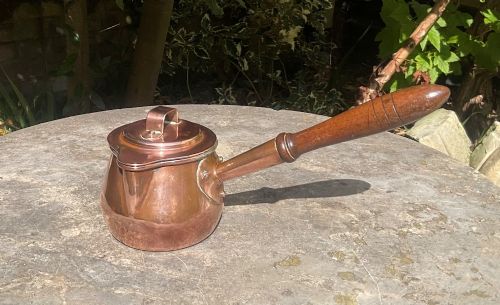
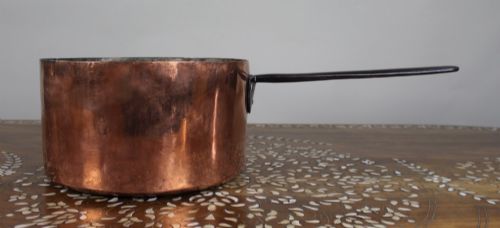
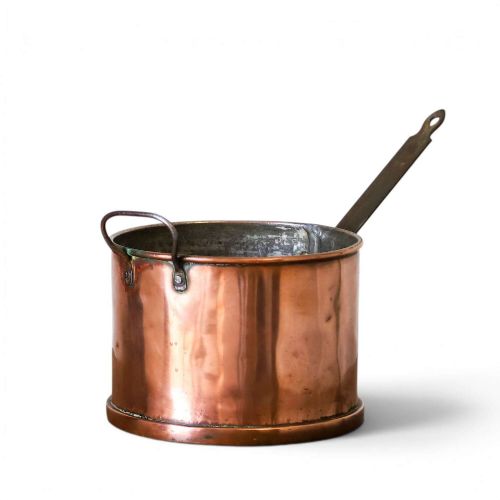
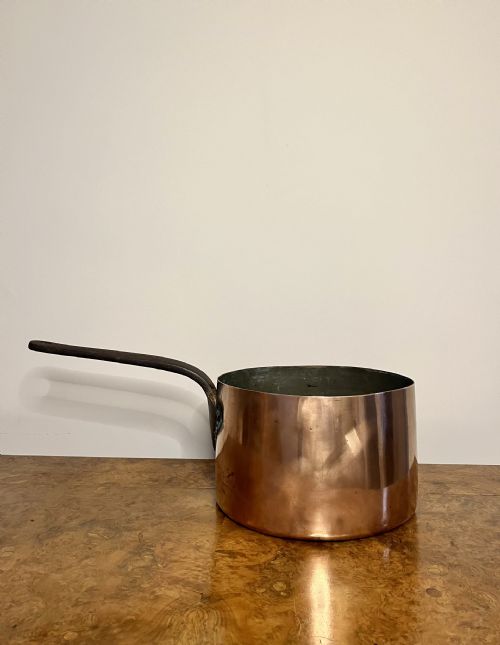
A copper saucepan is a traditional piece of kitchen cookware designed for heat distribution, featuring prominent metal vessels with fitted handles. When exploring this selection, buyers encounter single vessels alongside matched sets spanning Georgian and Victorian periods, as well as 19th century French origins.
The objects take several forms, ranging from pint-sized milk pans and brandy warmers to large lidded saucepans and massive shipping line vessels. Many appear as graduated sets of three, four, five, or seven pieces designed to nest together for storage.
English and French examples dominate the selection, showing distinct handles and construction methods suited to domestic hearths and professional ranges alike. These items bridge decorative arts and practical culinary history, appealing to collectors of antique kitchenalia.
How they were made
Makers formed the body of each copper saucepan from heavy gauge sheet metal, often shaping the walls with hand-beaten marks and joining the seams with hand dovetailing. Interiors required a protective lining of tin to prevent chemical reactions with food during cooking.
Handles utilised sturdy wrought iron, cast iron, or brass, secured firmly to the copper body with heavy rivets. Lids often featured matching copper construction with small brass or iron rings and handles for lifting.
Listings feature copper, iron, brass, and wood, spanning George III, Georgian, and Victorian periods alongside 19th century French styles.
What varies in quality
Quality rests primarily on the thickness of the metal gauge and the integrity of the original construction methods, such as hand dovetailing on the body. Heavier saucepans retain heat more evenly and show superior survival rates through centuries of use.
The presence of maker marks, stamps from retailers, or specific institutional commissioning adds historical weight to individual pieces. Matching sets that retain their original graduation and covers command greater interest than assembled harlequin groups.
Hodges & Sons·Liptons·Griffiths·Elkington and Co·Duval·Mores
The Copper Saucepan Glossary
- Heavy gauge
- A measurement indicating thicker sheet metal used in construction. This thickness provides structural rigidity and durability for daily kitchen service.
- Hand-beaten
- A manufacturing technique where hammers shape the metal vessel by hand. This leaves subtle surface indentations characteristic of 19th century production.
- Dovetailed
- A joint method where interlocking fingers of metal join the sides of the pan. It forms a secure mechanical bond before soldering or finishing.
- Tin lining
- A protective internal coating applied to copper cookware. Tin prevents copper from leaching into acidic food during preparation.
- Graduated set
- A collection of pans sized in decreasing dimensions to fit inside one another. These sets allowed efficient storage in historic kitchens.
- Brandy warmer
- A small specialised vessel with a long handle used for heating spirits. These items represent the smaller scale of domestic copperware.
Copper Saucepan: Frequently Asked Questions
Are antique copper saucepans safe for cooking?
Most antique copper saucepans require a fresh tin lining before modern food preparation can safely take place. Historic linings wear thin over decades of cleaning and use.
Many collectors prefer to use these pieces strictly for display or styling within a traditional kitchen setting rather than daily culinary tasks.
How do I distinguish Georgian from Victorian copper pans?
Georgian copper saucepans often display distinct hand dovetailing along the body and simpler, heavier iron handle attachments. The construction reflects earlier workshop methods before industrial stamping became widespread.
Victorian examples frequently incorporate standardised components, stamped maker marks, and refined shaping while maintaining heavy gauge metal walls.
What is a harlequin set of pans?
A harlequin set is a collection of saucepans assembled together after their original manufacture. The individual pieces share general periods and materials but lack identical maker origins.
These groupings offer a graduated display of copper cookware without requiring a matched factory set from a single workshop.
How should I clean antique copper?
Gentle polishing with specialised copper cream removes tarnish without erasing the historic character or hand-beaten surface texture. Avoid harsh abrasive pads that scratch the soft metal.
Maintaining a warm natural patina is often preferred by collectors over a bright, mirror-like finish.