




19th Century Bronze Stands
These 19th century bronze stands bring substantial weight and classical form to a room, offering both decorative presence and functional support.
19th Century Bronze Stands
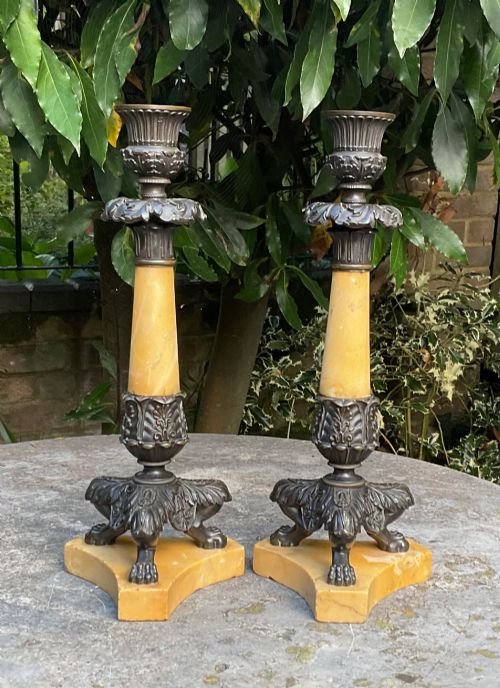
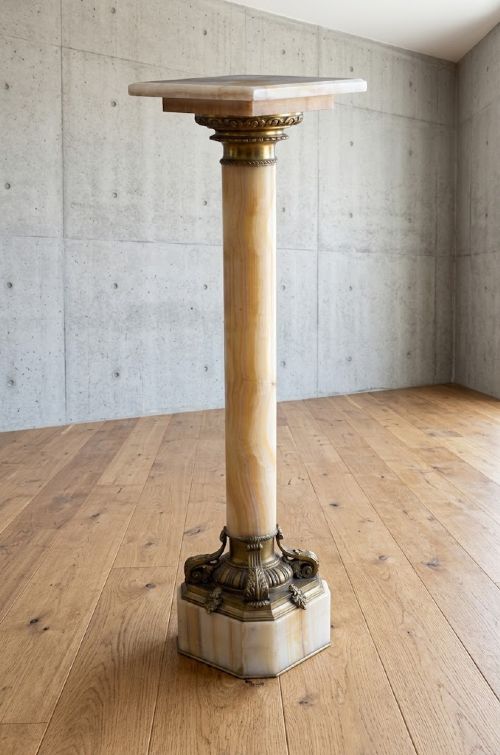
When searching for 19th century bronze stands, collectors encounter a diverse range of objects designed to hold, elevate, or illuminate, spanning from candlesticks and candelabra to desk accessories and floor-standing torcheres. The selections on this page predominantly reflect French Empire, Regency, and Victorian aesthetics, where cast metal meets contrasting materials like white marble, onyx, and glass.
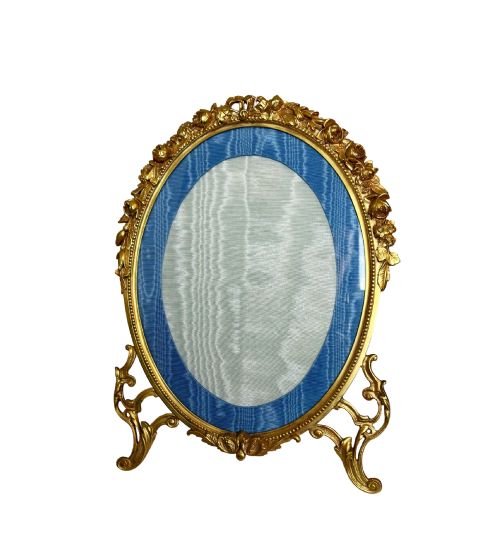
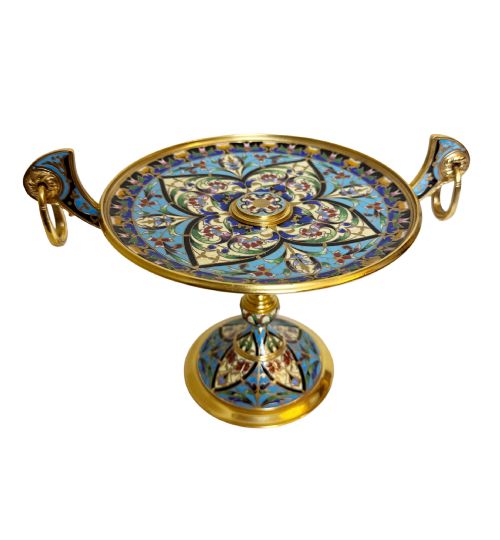
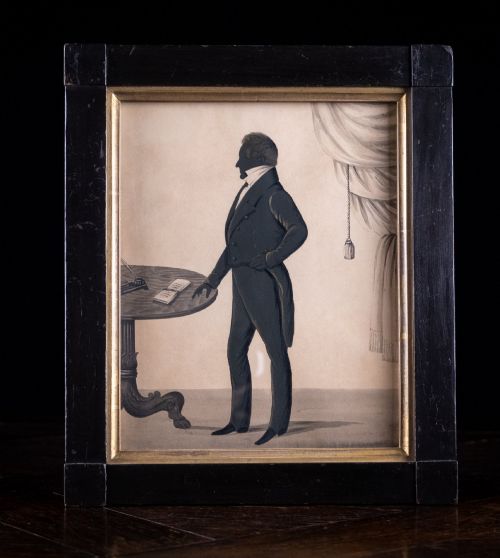
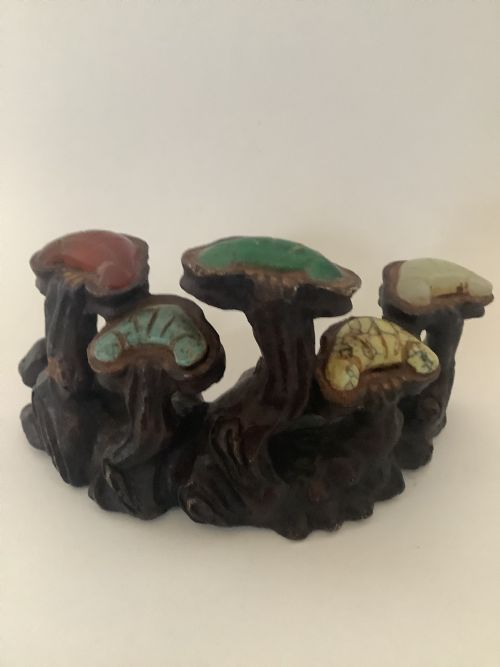
The category extends beyond simple pedestals to encompass elaborate centrepieces, tazzas, and picture frames mounted on structural bases, alongside scholar's brush rests and occasional tables with gilt bronze mounts. Pieces from this era often display international influences, including Japanese bronzes and Thai sculptural figures, reflecting the varied trade and design interests of the period.
Materials and construction methods
The foundational structure of these pieces relies on metal casting, utilising bronze, patinated bronze, and cast brass, frequently finished with fire gilding known as ormolu. This metalwork is often combined with carved white marble, onyx, or crystal elements, anchored by pinned joints and threaded screws appropriate to the period.
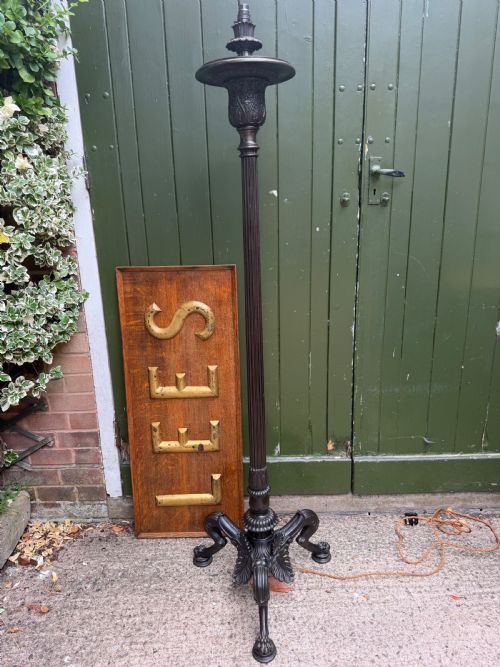
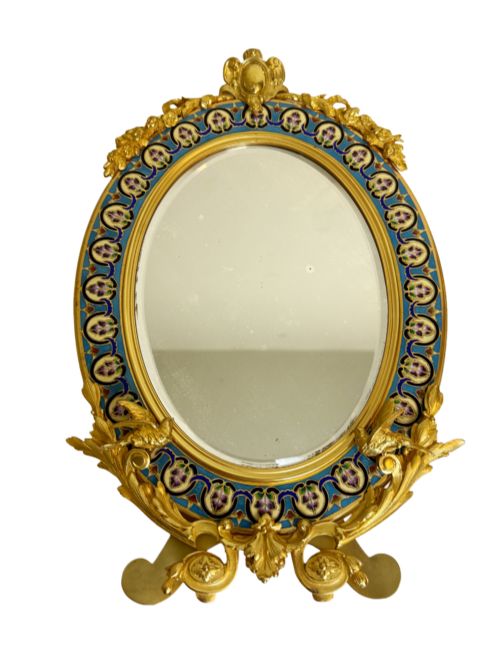
Decorative surface details are achieved through chasing, engraving, and the application of champlevé enamel with coloured glass pastes. Ebonised wood, mahogany, and satinwood components occasionally appear alongside the metal frames, particularly in torcheres and occasional stands.
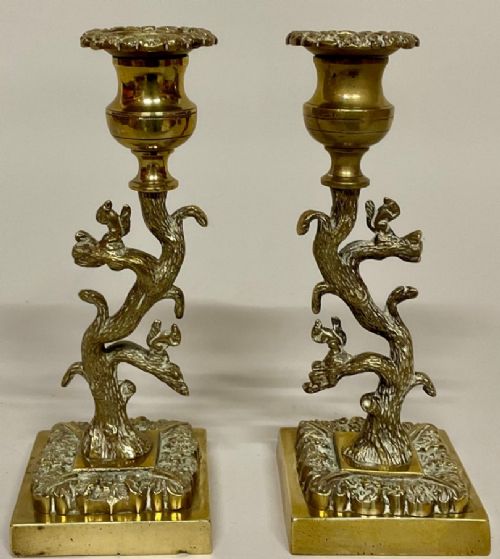
Squirrels frolic amongst bronze tree branches on Regency candlesticks, bringing woodland life straight to the dining table.
Assessing craftsmanship and execution
Quality in these pieces rests upon the crispness of the cast and the depth of the subsequent hand-chasing, which separates sharp, defined drapery and foliage from softer, more generalized production. The fidelity of the gilding and the preservation of the original patination dictate the visual integrity of the surface.
The integration of mixed media, such as the precise fit of marble bases and the clean alignment of champlevé enamel cells, reveals the standard of workshop assembly. Superior examples demonstrate a weight and balance in their construction that reflects careful engineering behind the ornamental design.
Pierre Philippe Thomire·Gabriel Viardot·PJ Mene·P Granet·Dopmeier
The 19th Century Bronze Stands Glossary
- Ormolu
- Gilded bronze produced by applying a mercury and gold amalgam to a bronze base and heating it to vaporise the mercury. This technique creates a durable, warm golden finish characteristic of French decorative arts.
- Champlevé
- An enamelling technique where troughs or cells are hollowed out of the metal surface and filled with vitreous enamel powder before firing. It is frequently seen on nineteenth-century desk accessories and mirrors.
- Torchere
- A tall stand or pedestal originally designed to carry a torch or candle, later adapted for lamps. Nineteenth-century examples often employ classical column forms in wood or patinated metal.
- Patination
- The surface alteration of metal resulting from age, wear, or chemical treatment. A stable patinated bronze surface preserves the underlying metal while showing natural darkening in recessed areas.
- Campana
- A vase-shaped sconce or candle cup resembling an inverted classical bell. This form appears frequently on Regency and Empire candelabra.
19th Century Bronze Stands: Frequently Asked Questions
How do I clean nineteenth century bronze?
Dust gently with a soft, dry brush to prevent the accumulation of debris in recessed chased details. Avoid commercial metal polishes, which can strip original ormolu gilding and alter the historical patination.
Keep pieces away from direct moisture and handling acids from bare hands. A microcrystalline wax can be applied very sparingly by experienced collectors to protect exposed metal surfaces.
Were these stands made for candles or lamps?
Many surviving examples were originally manufactured for tallow or wax candles, configured as single sticks or multi-branch candelabra. Others served as architectural pedestals, plant stands, or desk supports.
Some floor-standing torcheres and table pieces were later adapted for electrical wiring during the twentieth century. Inspecting the internal channels and sconce fittings reveals the original lighting configuration.
How can I tell French Empire from Regency style?
French Empire pieces, heavily influenced by Napoleon's campaigns, feature strict classical motifs like sphinxes, laurel wreaths, and deep ormolu contrasts against dark patinated bronze. Regency designs in Britain share classical roots but often incorporate whimsical elements such as carved animals or lighter giltwood and mahogany combinations.
Both styles emerged concurrently in the early nineteenth century but reflect distinct national interpretations of antiquity. Regional casting marks and assembly methods often help confirm the origin.
What is the difference between bronze and spelter?
Bronze is a robust alloy of copper and tin that accepts crisp chasing and supports significant weight without distortion. Spelter, an alloy based on zinc, is softer and heavier relative to its strength, often used as a cheaper substitute for sculptural figures.
Examination of the underside or base usually reveals the harder, heavier nature of bronze compared to softer spelter. Patination also ages differently, with spelter frequently showing greyish pitting beneath worn paint or plating.