
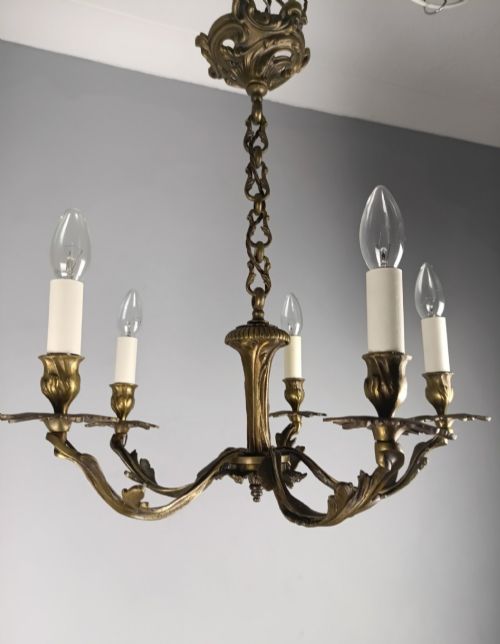
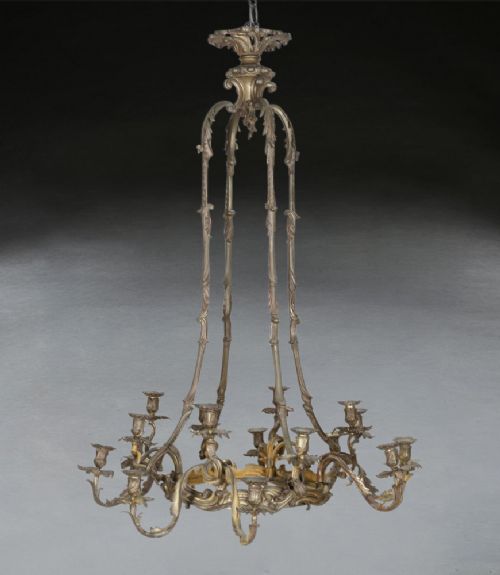


Cast Bronze Light Fittings
These cast bronze light fittings bring weight and warmth to a room, offering enduring metalwork designed to illuminate traditional and period interiors.
Cast Bronze Light Fittings
You are most likely to encounter French Rococo, French Neoclassical, and Victorian Gothic Revival styles on this page. Formats range from grand sixteen-light chandeliers down to pairs of wall sconces and individual table lamps. The metal surfaces often display dark bronze, silvered bronze, or gilded finishes.
How they were made
These fittings rely fundamentally on metal casting techniques to achieve their rigid structures and ornamental detail. Molten bronze and brass are poured into moulds, capturing ornate curves and architectural motifs before undergoing manual finishing.
Surface treatments define the visual identity of these pieces, employing applied gilding, silvering, and dark patination. Gilt metal and gilded bronze provide a reflective sheen, whilst untreated cast bronze develops a deep, stable tone over time.
The listings span the Victorian era, the nineteenth century, and the decades up to 1930, using bronze, brass, and silvered bronze.
What varies in quality
Quality rests primarily in the crispness of the casting and the depth of the chased surface detail. Finer pieces retain sharp definition in foliage, scrollwork, and figural elements, whereas lesser examples show softened contours from worn moulds.
The choice of finish and secondary materials also distinguishes the work. Heavy cast bronze with durable silvered or gilded applications stands apart from simpler brass fabrications and lightweight metal components.
The Cast Bronze Light Fittings Glossary
- Cast bronze
- An alloy of copper and tin poured into a mould to form a rigid, durable object. This technique allows for complex sculptural shapes and heavy structural components.
- Gilded bronze
- Bronze metal coated with a thin layer of gold leaf or gold powder. This finish adds a bright, reflective quality that resists tarnishing.
- Chandelier
- A branched, suspended light fitting designed to hold multiple illumination points. These large fixtures typically anchor the centre of a room.
Cast Bronze Light Fittings: Frequently Asked Questions
How do I clean cast bronze light fittings?
Dust the metal gently with a soft dry cloth to prevent dirt accumulation. Avoid harsh chemical cleaners that can strip away original patination or gilding.
Heavily patinated surfaces require minimal intervention to preserve their historic character. Professional conservation is recommended if deeper cleaning becomes necessary.
Can these antique lights use modern bulbs?
Most historic fixtures accept modern candle-style lamps, provided the internal wiring meets current safety standards. An electrician should inspect the bulbholders and circuits before installation.
Matching the wattage to the capacity of the original fittings ensures safe daily use. LED alternatives help reduce heat output near delicate metal components.
Where should I hang a bronze chandelier?
Suspended fixtures suit high-ceilinged reception rooms, dining areas, and entrance halls where they command adequate space. Ensure the ceiling structure supports the substantial weight of cast metal.
Placement height matters for both safety and visual balance within the room. Dining tables and open walkways require careful clearance measurements.
How do I identify a Victorian gothic style?
Victorian gothic fittings incorporate architectural motifs inspired by medieval ecclesiastical buildings, such as pointed arches and trefoils. Brass and bronze are frequently combined to create striking contrast.
These pieces often feature heavy framework and candelabra configurations reminiscent of church lighting. The aesthetic values sturdy construction and dark, solemn metal tones.