




Vintage Bronze Candleholders
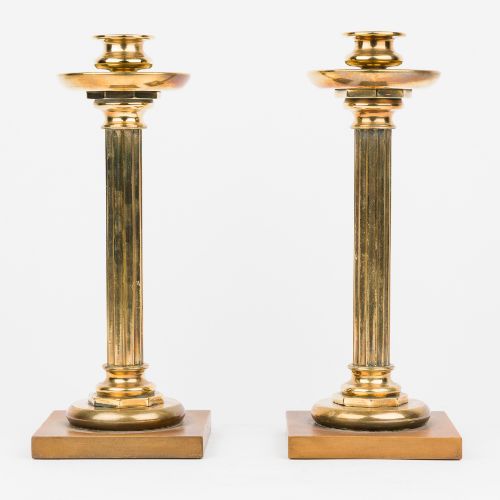
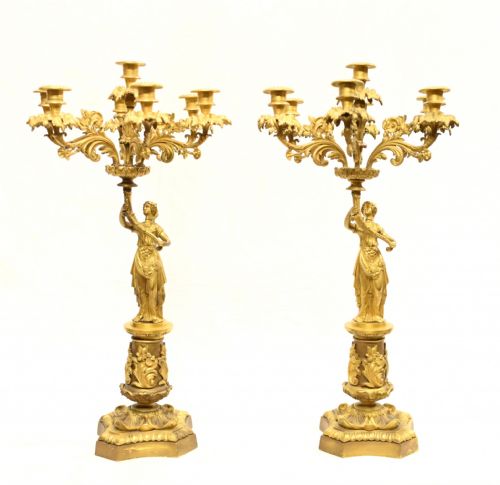
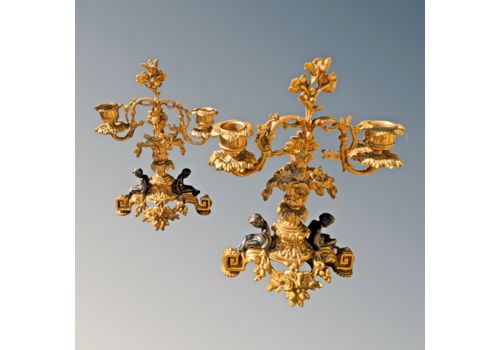
These vintage bronze candleholders bring nineteenth-century weight and surface texture to a room, offering cast detail and patinated metal.
Vintage Bronze Candleholders
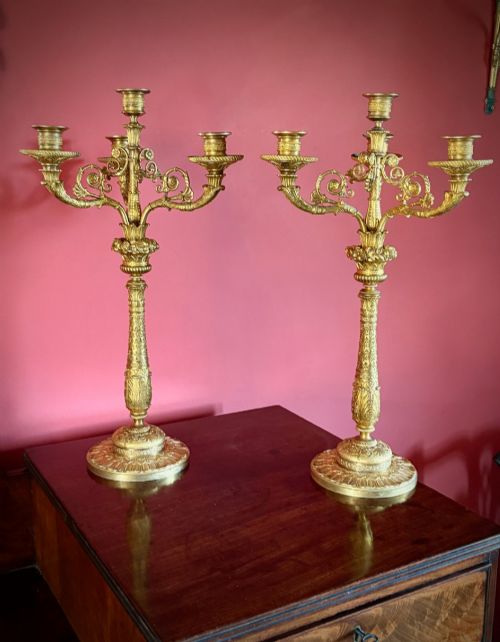
When you search for vintage bronze candleholders, you encounter cast metal items intended to support candles securely while adding sculptural presence to a surface. The examples gathered here span the nineteenth century through the early twentieth century, taking the form of single candlesticks, multi-branched candelabra, wall sconces, and table lights.
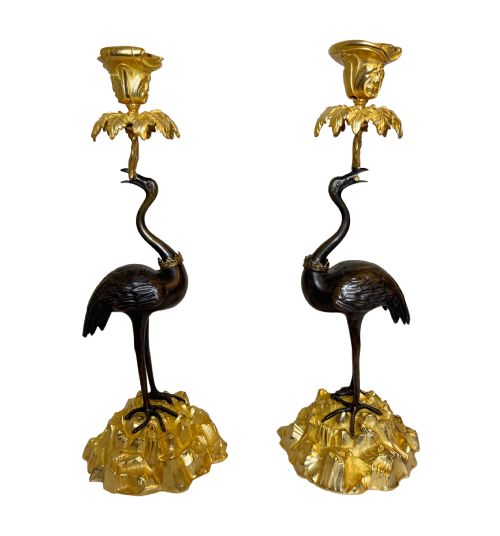
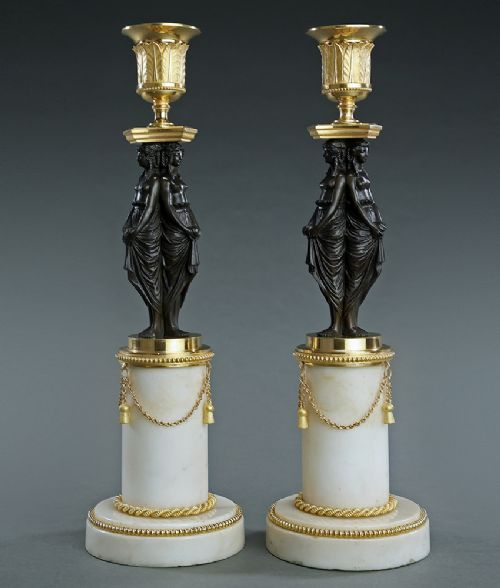
French Rococo Revival, Louis XVI, and Neoclassical styles dominate the selection, alongside Victorian, Amsterdam School, and Art Nouveau expressions. Pairs predominate, often featuring figural motifs such as caryatids, cherubs, birds, and serpents executed in cast bronze, ormolu, and patinated metal.
Materials and Construction
The objects rely primarily on cast bronze, gilt bronze, and ormolu, frequently combined with secondary materials like marble, porphyry, porcelain, and glass. Foundational casting methods produce heavy, rigid forms with substantial physical presence.
Surface treatments range from bright mercury gilding and gilt bronze to dark patination and polished brass. Details are chased, engraved, or applied, with components held together by threaded rods and internal fixings.
The listings here incorporate pieces utilising marble and porphyry bases beneath cast metal stems.
Distinctions in Quality
The choice of secondary materials and the weight of the metal also determine grade. Solid cast elements paired with genuine marble or porphyry bases indicate higher production standards than lighter, hollow assemblies.
Liberty·Dugourc
The Vintage Bronze Candleholders Glossary
- Ormolu
- Gilded bronze produced by applying a mercury and gold amalgam to a bronze base and firing it. This technique yields a durable, warm metallic lustre found on nineteenth-century French lighting.
- Candelabra
- A multi-branched lighting device designed to hold more than one candle at once. These fixtures often feature removable branches to convert them into single candlesticks.
- Caryatid
- A sculpted female figure serving as an architectural support or as the stem of a candlestick. This Neoclassical motif derives from ancient Greek design.
- Pricket
- A sharp metal spike set in the drip pan of a candlestick to impale the base of a candle. This form appears on Amsterdam School and ecclesiastical pieces.
- Girandole
- An ornamental bracket wall light featuring multiple branches with reflective backplates. These fixtures amplify candlelight through polished metal surfaces.
Vintage Bronze Candleholders: Frequently Asked Questions
How do I clean vintage bronze candleholders?
Dust the surface gently with a soft dry brush to prevent accumulation in recessed chasing. Avoid abrasive commercial metal polishes that strip original patination and gilding.
Keep moisture away from any incorporated marble or porcelain bases. A microfiber cloth suffices for routine maintenance.
Are these candleholders suitable for daily use?
Most antique pieces function well with standard taper candles, provided the sockets remain clean and stable. Ensure the candle diameter matches the nozzle to prevent tilting.
Extinguish candles before the flame reaches the metal rim to protect antique lacquer and wax residues.
How do I identify Louis XVI style pieces?
Louis XVI style lighting relies on classical symmetry, straight fluted columns, and motifs like ribbons, urns, and caryatids. The proportions remain balanced and architectural.
Compare the cast details against known nineteenth-century interpretations of eighteenth-century French design.
What is the difference between bronze and ormolu?
Bronze is an alloy of copper and tin used structurally for casting the body of the candleholder. Ormolu refers specifically to the applied gold-mercury surface finish on that bronze.
Many pieces combine areas of dark patinated bronze with bright ormolu highlights to create visual contrast.