


Antique Bronze Candle Bases
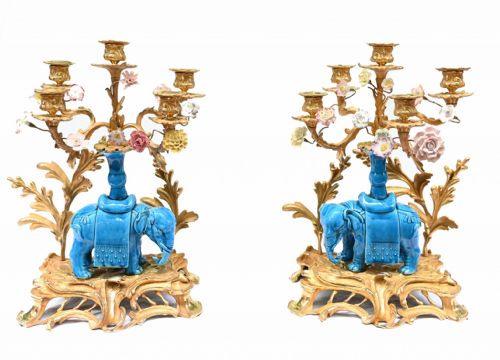
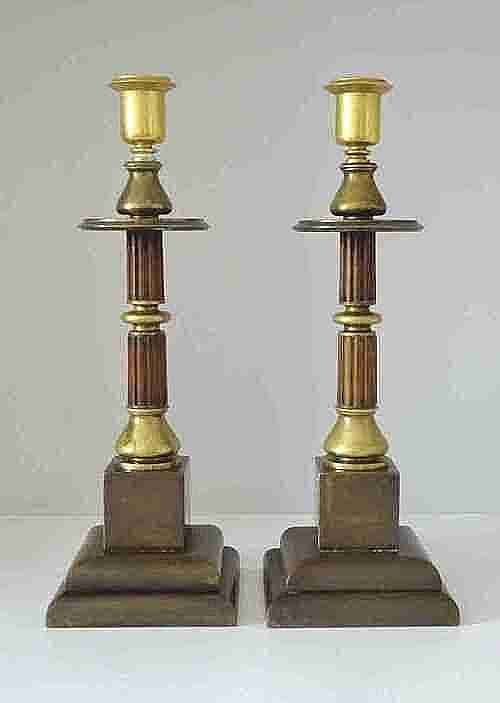
Antique bronze candle bases bring heavy metal, marble, and gilt detail into a room, offering functional light through classical forms and sculptural figures.
Antique Bronze Candle Bases
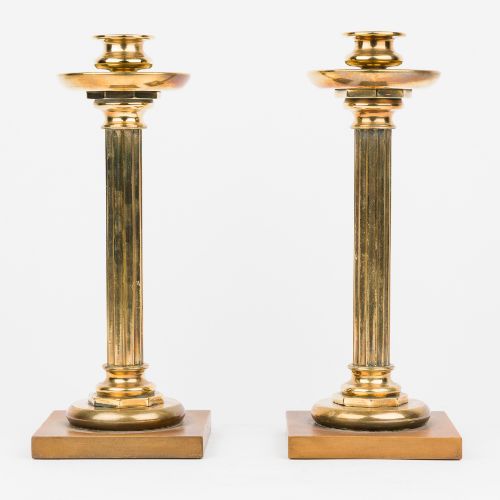
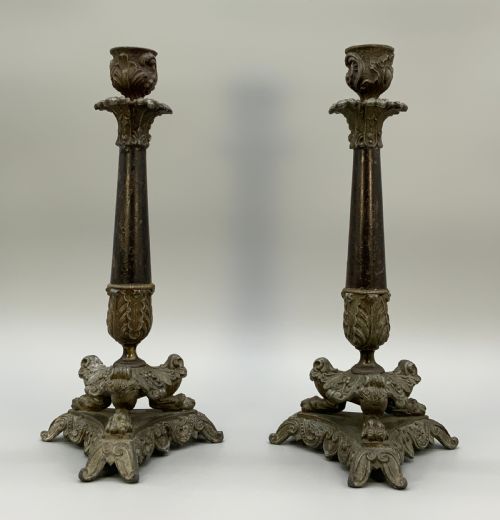
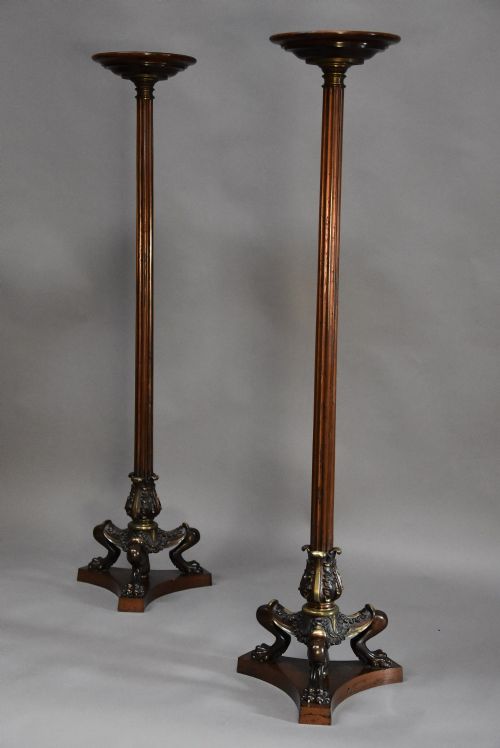
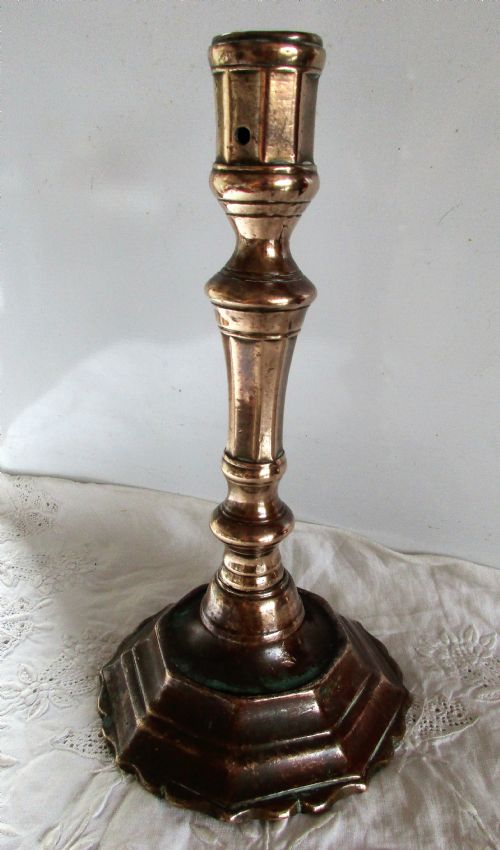
When searching for antique bronze candle bases, buyers encounter pairs of candlesticks, candelabra, and torcheres designed to hold candles or support lamps. The selection on this page leans heavily toward nineteenth-century French and Regency examples, alongside Georgian and Art Deco pieces.
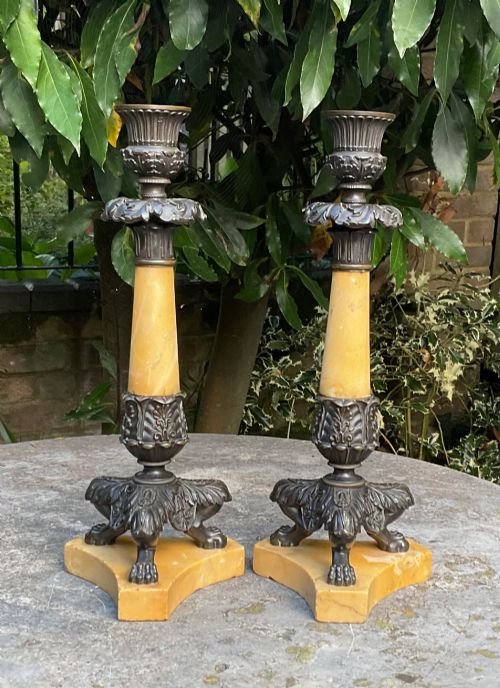
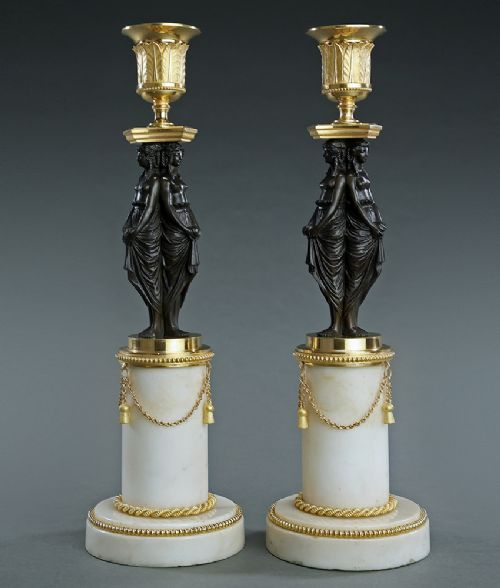
Many of these objects incorporate sculptural elements such as putti, cherubs, caryatids, dolphins, and trees cast in bronze. They frequently stand on bases made of marble, onyx, or mahogany, combining metalwork with heavy stone plinths.
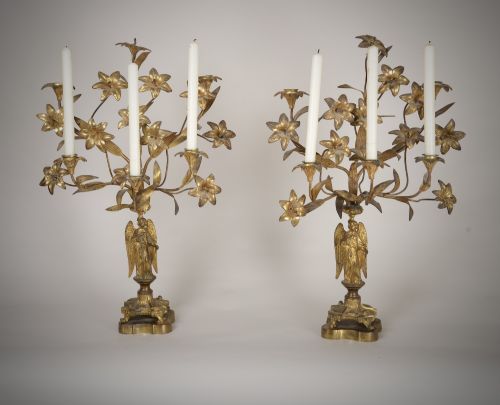
The styles span French Empire, Louis XVI, Neoclassical, Gothic Revival, and Greco-Roman designs. Buyers will find both simple patinated bronze shafts and elaborate multi-branch candelabra accented with gilt bronze and ormolu.
Materials and construction methods
The pieces are primarily produced through metal casting, utilising bronze, brass, cast iron, and gilt metal. Molten metal is poured into moulds to create intricate figural components, foliage, and campana sconces.
Makers combine patinated bronze with contrasting gilt bronze or ormolu to highlight specific details on the figures and bases. Gilding involves applying a gold layer or gold amalgam to the bronze surface for a brilliant finish.
Stonework such as white marble, onyx, and porphyry serves as structural plinths for the metal figures. Components are often secured with threaded rods and nuts, joining the heavy metal upper sections to the stone bases.
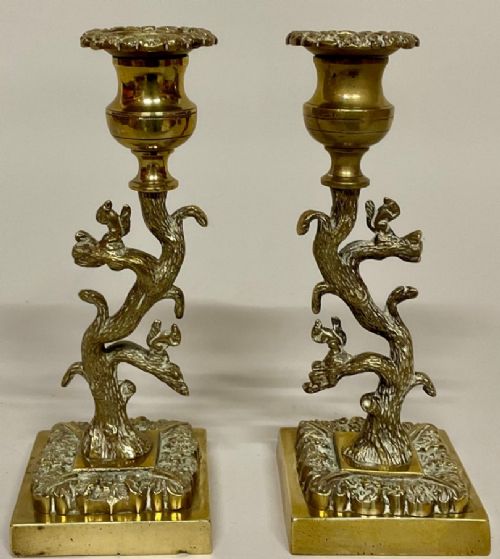
Squirrels climb branches amongst campana sconces on Regency tree-form candlesticks.
Factors determining quality
The integration of mixed materials dictates overall refinement, particularly the fit between bronze figures and their marble or onyx plinths. Superior examples employ dense stones with rich natural veining and secure joinery.
The preservation of original surface finishes, whether patinated dark bronze, parcel gilt accents, or bright ormolu, determines visual depth. Untouched patination with natural oxidation demonstrates greater historical integrity than modern refinishing.
George Smith·Thomas Hope·Claude Clodion
The Antique Bronze Candle Bases Glossary
- Ormolu
- Gilded bronze produced by applying a mercury and gold mixture to a bronze base and heating it. This technique creates a durable, bright golden finish characteristic of French decorative arts.
- Candelabra
- A branched candlestick holding multiple candles or lights from a central stem. These often feature removable arms or elaborate figural supports.
- Torchiere
- A tall stand or candlestick designed to elevate a light source above furniture level. Examples in this category pair bronze figures with wooden or stone columns.
- Patinated bronze
- Bronze that has been treated chemically or aged naturally to produce a dark surface colour. This finish protects the metal and highlights sculptural contours.
- Campana
- A candle socket shaped in the form of an inverted classical bell. It forms the uppermost section where the candle sits.
Antique Bronze Candle Bases: Frequently Asked Questions
How do you date nineteenth-century bronze candle bases?
Dating relies on stylistic clues, such as the symmetrical restraint of Regency and Louis XVI designs versus the ornate revival forms of the later nineteenth century.
Material combinations, casting techniques, and mounting methods also help place an object within specific decades like the 1860s or 1880s.
Were these objects used purely for lighting?
While originally designed to illuminate rooms with candlelight, many were also decorative display objects for mantlepieces and side tables.
Grand Tour pieces and sculptural figures served as symbols of classical learning and refined taste for travellers.
What is Grand Tour bronze?
Grand Tour bronze refers to sculptural pieces and candle bases acquired by travellers visiting classical sites in Italy during the nineteenth century.
These items often depict mythological figures, putti, or architectural ruins associated with Greco-Roman antiquity.
How should marble and bronze bases be cleaned?
Dusting with a dry, soft cloth prevents the accumulation of grime on both the metal surfaces and the stone plinths.
Harsh chemical polishes must be avoided to protect the original patination and the delicate gilt layers on the bronze.