

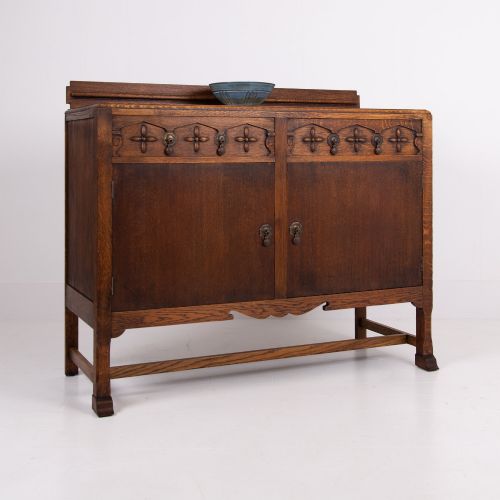
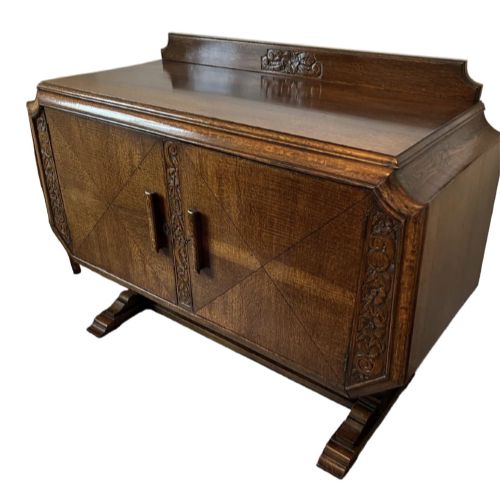
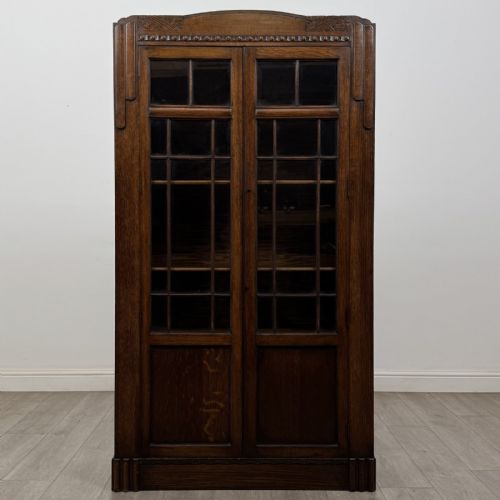
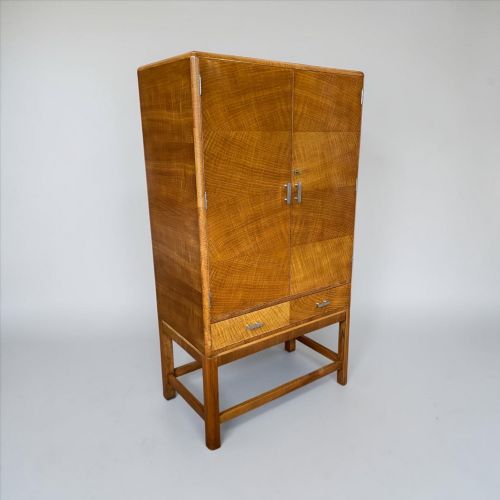
1930s Oak Cabinet
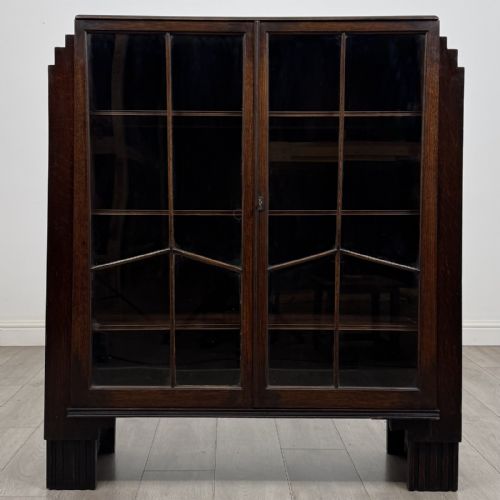
A 1930s oak cabinet brings robust interwar craftsmanship and striking geometric lines into a modern room.
1930s Oak Cabinet
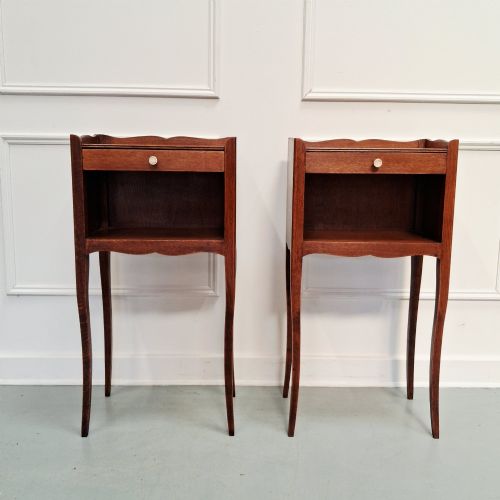
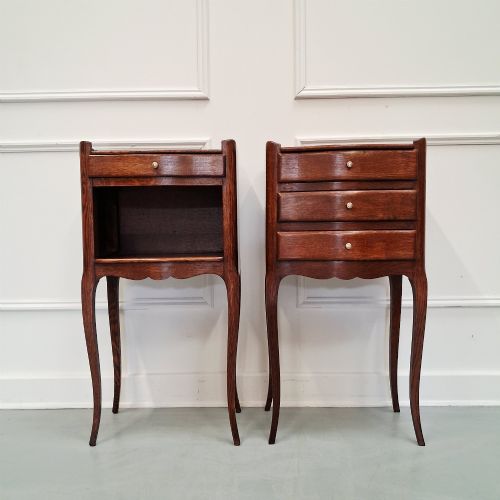
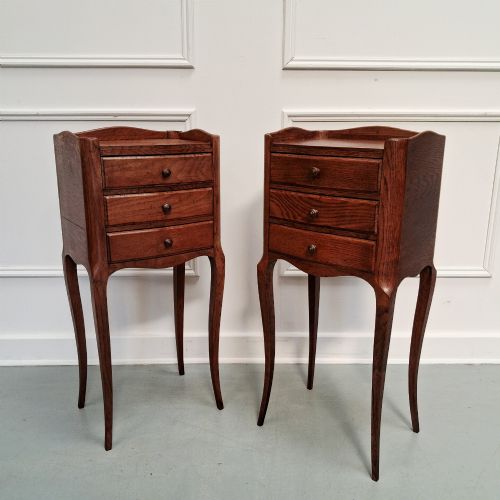
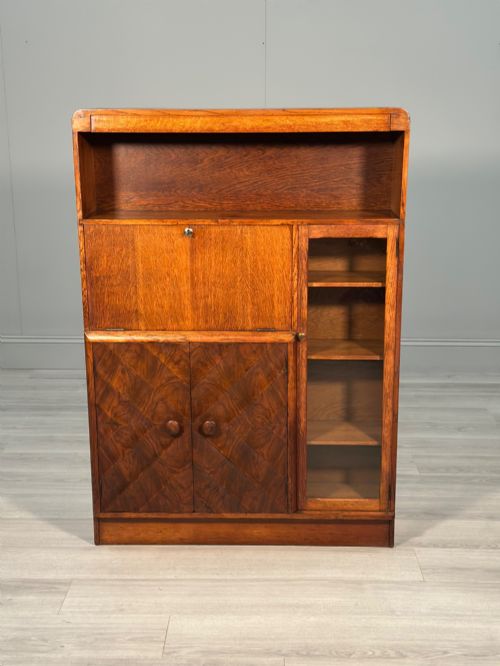
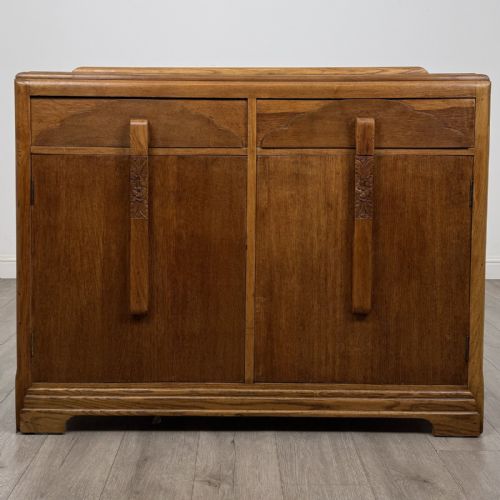
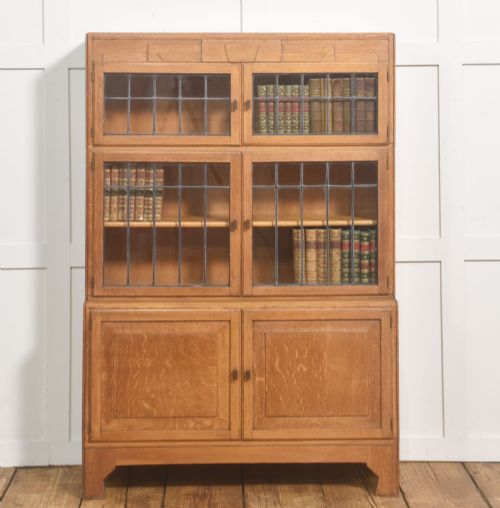
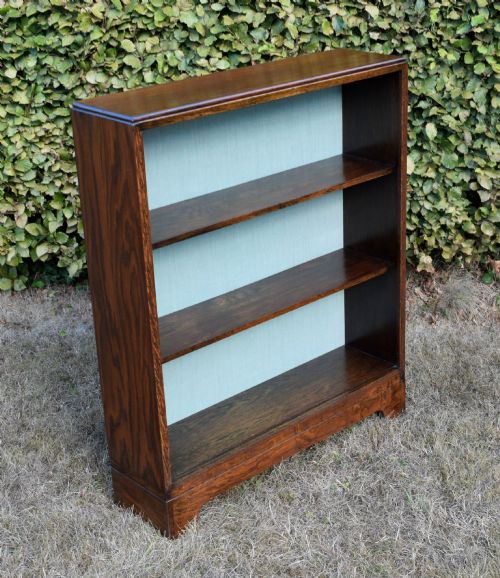
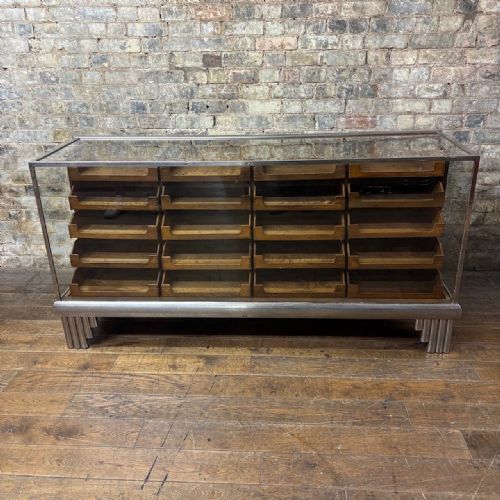
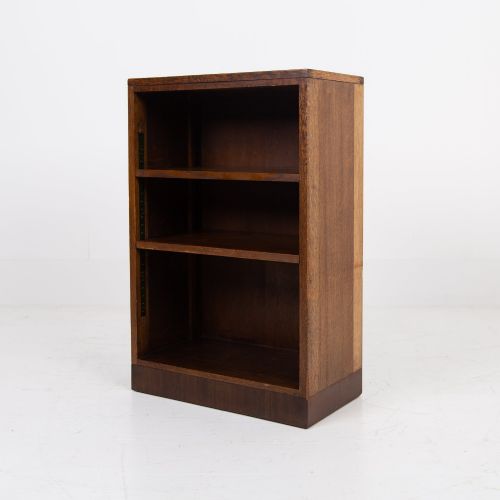
A 1930s oak cabinet encompasses a diverse group of interwar utility and display furniture, ranging from domestic bookcases and bedside cupboards to commercial haberdashery counters and office filing units. The selection on this page leans heavily towards domestic storage forms, alongside specialised workshop and shop display pieces.
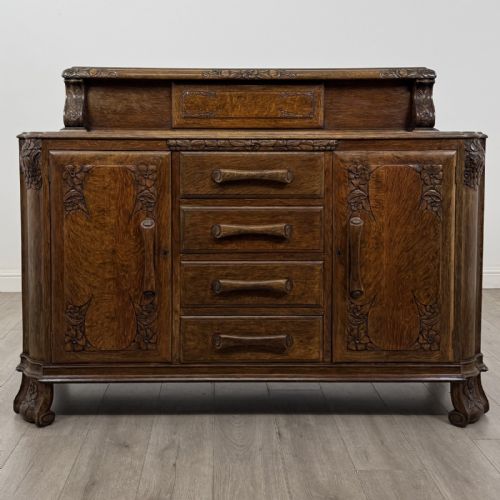
Makers working within the Arts and Crafts tradition, the Cotswold School, and the Art Deco movement utilised the timber to create functional pieces with distinct architectural character. Buyers frequently encounter glazed bookcases, compact bedside tables, and robust sideboards dating from this specific decade.
How they were made
Makers constructed these pieces primarily from solid English or French oak, frequently incorporating decorative elements such as leaded glass, brass handles, bakelite fittings, and chrome accents. Select workshops employed limed finishes or contrasting burr walnut veneers to accentuate the natural grain of the wood.
Construction techniques balanced traditional joinery with emerging industrial methods, visible in the tambour slats of office filing units and the stepped geometric silhouettes of modernist sideboards.
1930s Oak Cabinet Retail Price Guide 2026
Typical asking prices for 1930s oak cabinet among the pieces listed under this phrase on Sellingantiques today, from the lower quarter to the upper quarter. They describe what is for sale here now, not the wider market.
Several cabinets spent their youth organising school supplies and haberdashery ribbons before retiring to the living room.
What varies in quality
The distinction between standard commercial output and exceptional workshop production lies in the handling of the timber and the refinement of the hardware. Pieces bearing maker stamps or attribution to notable designers display superior execution in joinery and proportion.
The integrity of secondary materials, such as original bronze or brass handles, leaded glass panes, and working tambour mechanisms, dictates the overall standing of an individual piece.
Gomme·Dudley & Co·Peter Waals·Stanley Webb Davies·Bryn Mawr·Betty Joel·Gordon Russell
The 1930s Oak Cabinet Glossary
- Tambour
- A flexible shutter door formed of narrow wooden slats glued to a canvas backing, commonly found on office filing cabinets.
- Limed oak
- A wood finishing technique that leaves a white or pale pigment in the grain pores to create a lighter appearance.
- Cotswold School
- An Arts and Crafts design movement centred around skilled manual woodworking and honest construction methods.
- Haberdashery counter
- A shop display unit featuring multiple small drawers or glass compartments designed for retail storage.
1930s Oak Cabinet: Frequently Asked Questions
Where were these cabinets used?
These versatile pieces served in domestic bedrooms, living rooms, and studies as bookcases or bedside storage. Commercial variants populated drapers shops, offices, and school art departments.
Industrial and institutional versions were built for heavy daily use, featuring practical compartments like tambour fronts and haberdashery drawers.
How do I care for oak furniture?
Maintain the timber by dusting regularly with a soft, dry cloth and avoiding placement near direct heat sources or strong sunlight. This prevents the oak from drying out or splitting.
Occasional application of appropriate wax polish nourishes the surface and preserves the sheen of the wood without building up a heavy residue.
What styles influenced 1930s design?
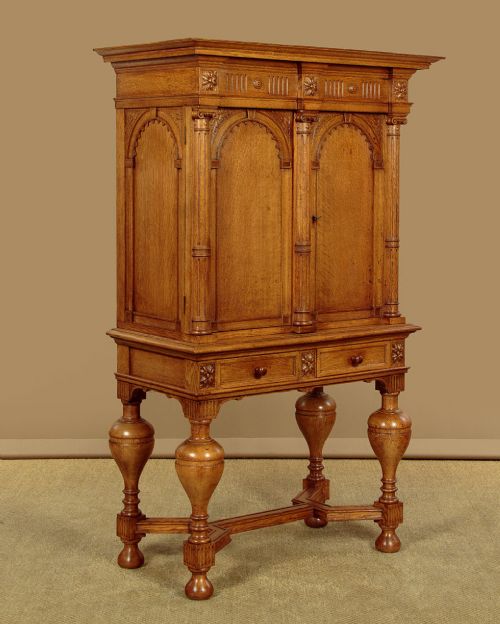
Designers during this period drew inspiration from Art Deco modernism, traditional Arts and Crafts principles, and Dutch Renaissance Revival forms. This blend resulted in both streamlined geometric pieces and honest, handcrafted furniture.
Makers adapted these varied aesthetic traditions to suit both compact urban apartments and larger country houses.