
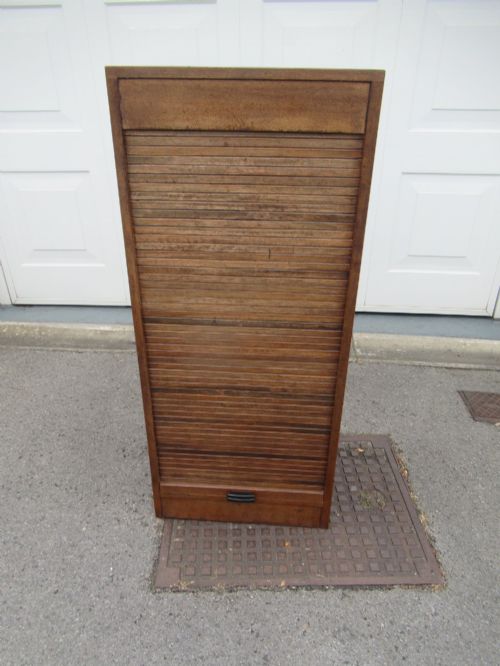


Roll Shutter Cabinet
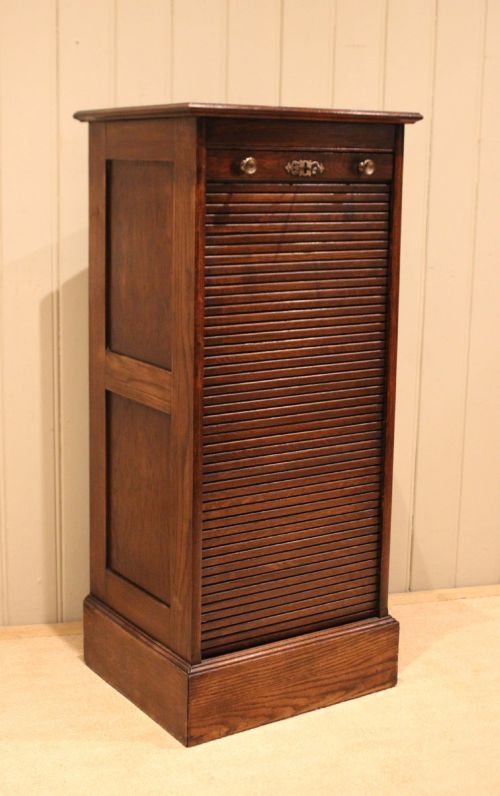
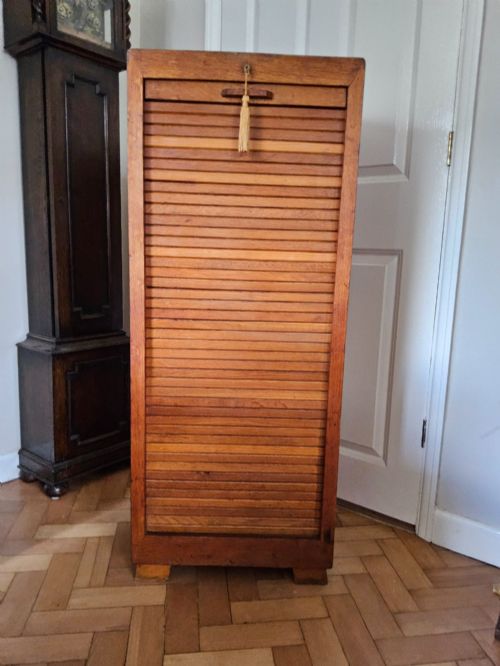
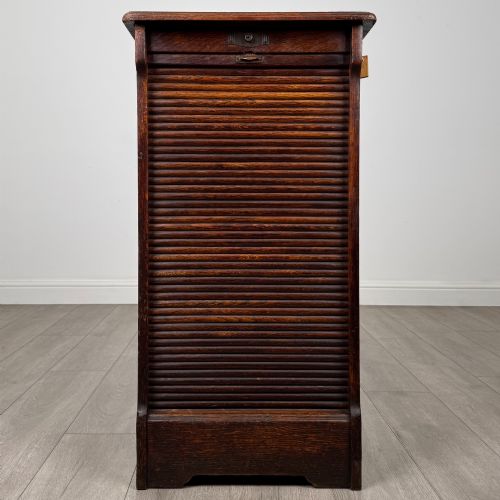
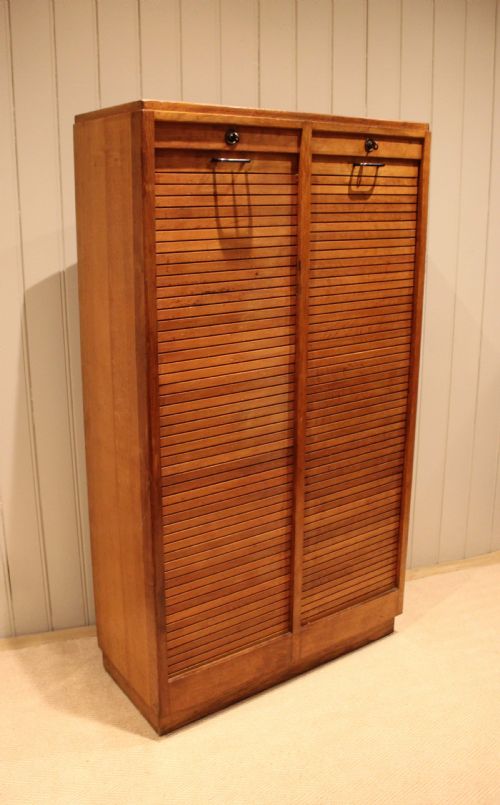
A roll shutter cabinet uses flexible wooden slats to conceal internal file storage, offering a compact office solution.
Roll Shutter Cabinet
A roll shutter cabinet combines practical storage with a sliding slat door mechanism. The listings show examples spanning the Edwardian era through the nineteen forties, alongside pieces dated to nineteen ten, nineteen twenty, nineteen thirty, and nineteen forty.
Most items on this page take the form of office filing cabinets or general cabinets. The primary styles include Edwardian, French Utility, Art Deco, and early twentieth century designs.
Buyers will encounter single and double tambour front formats designed for workspace organisation. These pieces primarily function as storage units for files and documents.
How they were made
The construction relies on solid timbers such as oak, mahogany, and pine, paired with flexible backing materials like canvas to form the sliding shutter. Cabinet makers mounted individual wooden slats onto textile strips so the door could curve around a track.
Metal and brass components appear in the hardware, handles, and internal mechanisms that operate the doors and drawers. These materials ensure durability for daily office use.
Listings feature oak, mahogany, and pine cabinets produced across the Edwardian era and the early twentieth century.
What varies in quality
The choice of primary wood distinguishes standard utility pieces from finer examples. Oak and mahogany versions demonstrate superior joinery compared to basic pine carcases.
The smooth operation of the tambour shutter mechanism dictates the standard of execution. Well made slats glide seamlessly along their tracks without catching.
The Roll Shutter Cabinet Glossary
- Tambour
- A flexible door or shutter constructed from narrow strips of wood glued to a canvas or fabric backing. This allows the panel to curve around tracks when opened.
- Edwardian
- A stylistic period spanning the reign of King Edward the Seventh, noted for lighter proportions in furniture design. Pieces from this era often feature clean lines in oak.
- French Utility
- A functional design movement originating in France, prioritising practical construction and straightforward forms. Cabinets from this style focus on utility over ornamentation.
- Art Deco
- A design style characterised by sleek geometric shapes and stylised motifs, prominent during the interwar period. It appears in select office furniture from the nineteen thirties.
Roll Shutter Cabinet: Frequently Asked Questions
What is a roll shutter cabinet?
A roll shutter cabinet is a storage unit featuring a flexible slatted door that slides up and down on a track. This mechanism conceals the interior contents while saving space in a room.
Such units were traditionally utilised in offices to store files and documents securely within a compact footprint.
How do I date a tambour cabinet?
Dating relies on stylistic clues, timber choices, and construction methods associated with specific periods like the Edwardian era or the nineteen thirties. Edwardian pieces often display lighter oak tones and traditional brass handles.
Later models from the nineteen forties reflect more utilitarian French designs or distinct Art Deco influences.
What woods were used for these cabinets?
The listings show that oak and mahogany are the predominant timbers utilised for these storage units. Pine also appears in Edwardian office furniture.
Canvas backing is commonly employed behind the wooden slats to give the shutter its flexibility.
Are these cabinets suitable for modern offices?
These pieces provide practical document storage and compact organisation for contemporary workspaces. Their traditional aesthetic adds character to modern interiors.
The sliding shutter mechanism remains a space-saving solution for smaller rooms.