


Oak Roll Top Cabinet
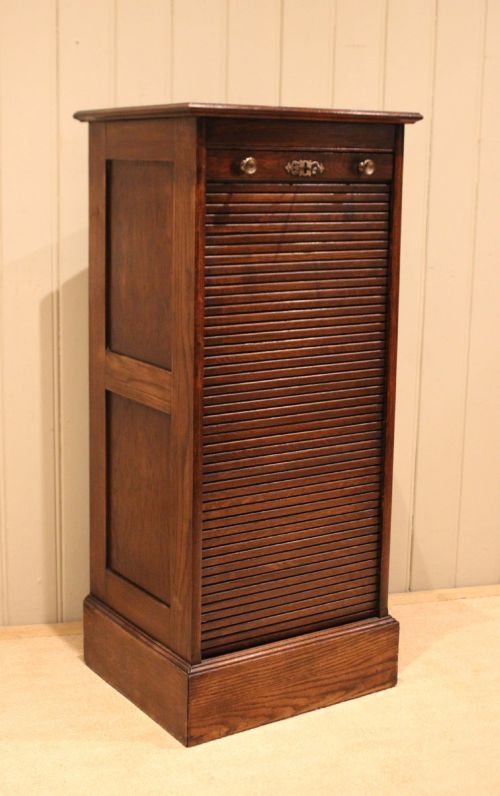
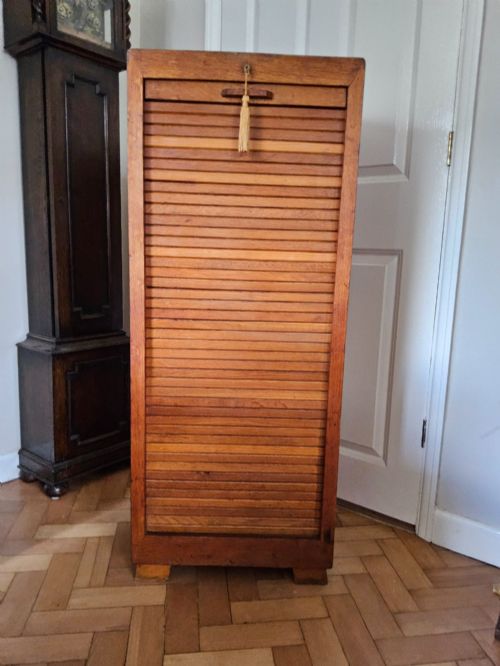
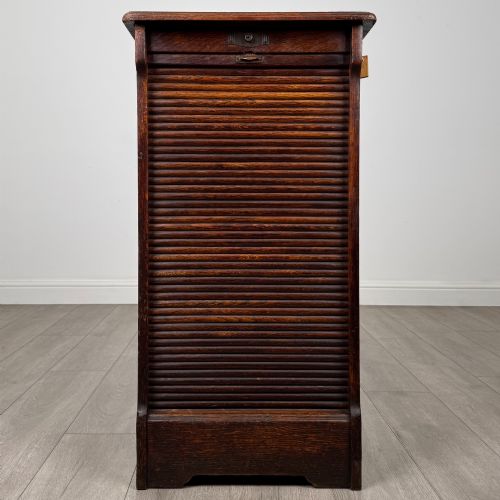
These oak roll top cabinet pieces bring neat organisation to papers and books, offering sliding tambour doors that conceal your daily work with timeless style.
Oak Roll Top Cabinet
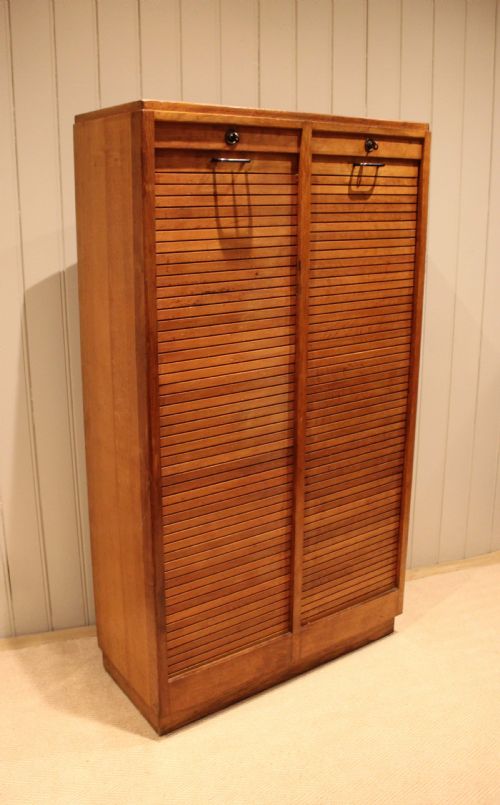
When you search for an oak roll top cabinet, you encounter compact stationery boxes, single and double tambour filing cabinets, and substantial desks or bureau bookcases. The selection spans periods from the late Victorian era through Edwardian designs into the 1930s, 1940s, and Art Deco styles, showing diverse origins including French examples.
The forms extend beyond simple storage to incorporate bureau bookcases and 'S' shaped roll-top desks designed for dedicated workspace utility. Each piece reflects the functional requirements of Victorian and twentieth-century offices and studies.
How they were made
Makers utilised solid oak and oak veneers for the primary carcass and the flexible tambour shutters, pairing the timber with brass handles, hinges, and occasional lead or glass components. The sliding slat mechanism relies on canvas backing or metal tracks to allow the slatted shutter to glide smoothly around curves.
Construction methods combine traditional cabinetry with the specialised joinery needed to seat individual wooden slats into continuous flexible curtains. Brass hardware secures locking mechanisms and drop fronts, while paper labels or metal fittings occasionally note internal dates and indices.
Some stationery cabinets hold forgotten adjustable dates inside, ready to reset to a century past.
What varies in quality
The distinction between standard office storage and finer pieces rests on the weight of the solid oak used and the precision of the tambour mechanism. Superior examples feature seamless operation of the slatted shutter without binding or sagging along its track.
Internal configuration and secondary materials also set pieces apart, distinguishing simple shelving from elaborate stationery interiors fitted with adjustable dates and matched brass hardware. The richness of the oak grain and the integrity of the original finish determine the visual presence of the piece.
The Oak Roll Top Cabinet Glossary
- Tambour
- A flexible shutter formed of narrow wooden slats glued to canvas or set on metal backing, allowing the door to curve around the side of a cabinet.
- Stationery cabinet
- A desk top box or small piece designed to hold writing paper, envelopes, and documents, often featuring pigeonholes and small drawers.
- Bureau bookcase
- A combination of a writing desk with a sloped or roll top lid and an upper section enclosed by glass or wooden doors for books.
- S shaped roll top
- A desk profile where the tambour shutter follows a distinct curved path reminiscent of the letter S from side view.
- French Utility
- A designation reflecting utilitarian furniture production standards, often associated with mid-twentieth-century designs from France.
Oak Roll Top Cabinet: Frequently Asked Questions
What is an oak roll top cabinet used for?
These cabinets serve to store stationery, files, and books while keeping paperwork concealed behind a flexible wooden shutter. They provide compact organisation for a study or office space.
Historically, businesses and homes utilised them to secure sensitive documents and correspondence out of sight when not in active use.
How do tambour doors work?
Tambour doors consist of many narrow wooden slats fastened to a flexible canvas backing or guided by metal tracks. This construction allows the entire shutter to slide smoothly around a curved corner into the body of the cabinet.
Good operation depends on clean tracks and intact backing material that keeps each slat aligned during movement.
How do I date an oak cabinet?
Dating relies on stylistic clues, construction methods, and materials such as brass hardware, oak grain patterns, and internal paper dates. Edwardian pieces often display golden oak finishes and lighter proportions.
Victorian and later 1940s examples show shifts in hardware design, timber selection, and overall heft that correspond to their respective manufacturing eras.
Where should I place one at home?
An oak cabinet fits well in a home office, study, or living room where it can function as a desk companion or bookcase. Ensure the room has stable humidity to protect the oak timber and the moving tambour tracks.
Allow sufficient clearance beside the unit if the sliding shutter requires lateral space to retract fully into the carcass.