

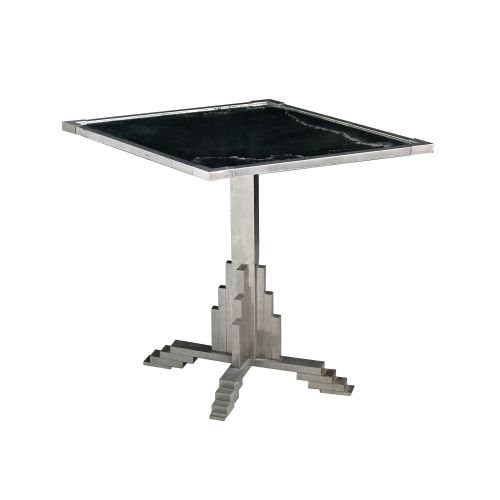


1930s Chrome Table Lamp
A 1930s chrome table lamp brings brilliant industrial shine and sharp geometric lines straight to a desk or sideboard.
1930s Chrome Table Lamp
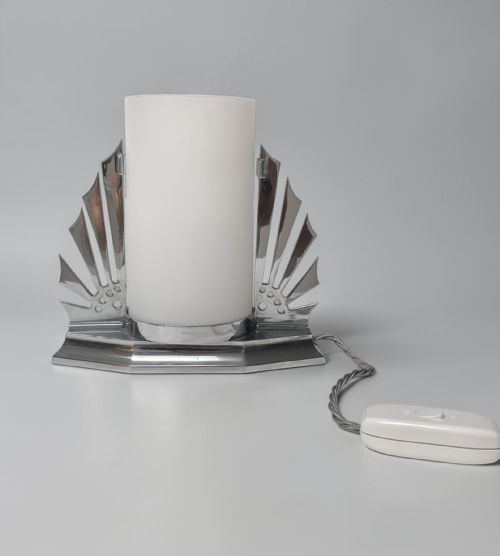
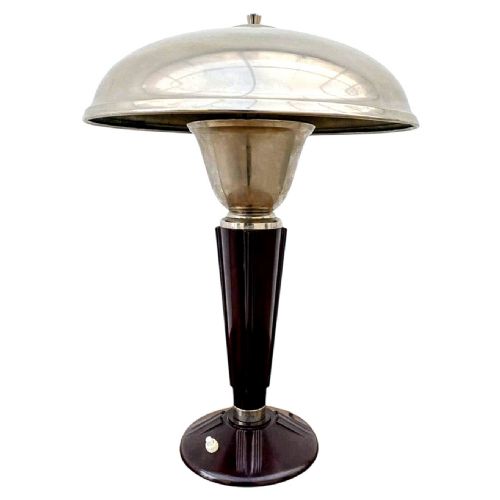
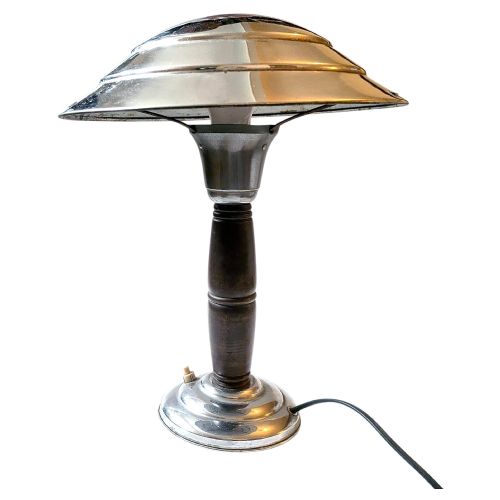
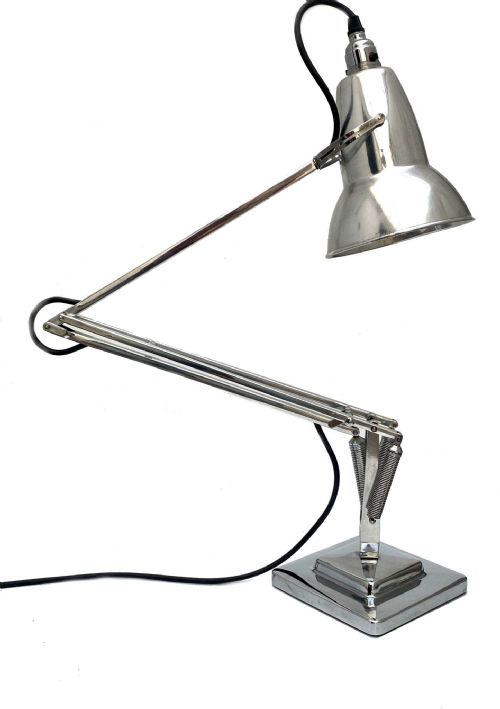
A 1930s chrome table lamp embodies the sleek modernist ideals of the interwar period through polished metallic surfaces and clean geometric forms. Buyers searching for a 1930s chrome table lamp will encounter functional desk lights, adjustable task lamps, and decorative figural pieces depicting athletes or nudes. Most examples belong to the Art Deco and Machine Age styles, originating from England, France, and America.
Materials and Construction
These lamps rely on a sturdy core of metal, brass, or white metal coated in a bright chrome finish to achieve their signature reflective sheen. Many designs pair this polished metal with contrasting elements like dark Bakelite, Catalin phenolic resin, and rich walnut wood.
Lighting diffusion is achieved through specialised glass components, including frosted panels, mirrored glass, and pink or blue glass shades. Structural rigidity often involves weighted bases and articulated joints to support adjustable arms.
Several athletes and cherubs hold balls aloft, proving that 1930s lighting took its sports and celestial duties very seriously.
Distinctions in Quality
Quality rests upon the purity of the metallic plating, the integrity of the underlying structure, and the sophistication of the silhouette. Superior examples display precise engineering in their adjustable joints and substantial weight in their bases.
Artistic execution distinguishes standard production items from exceptional pieces, particularly in figural castings depicting human forms or complex geometric arrangements. The integration of specialty materials like coloured glass or high-grade Bakelite elevates the standard of a piece.
Eileen Grey·Herbert Terry·Pirouette
The 1930s Chrome Table Lamp Glossary
- Chrome
- An electrolytic coating of chromium applied over a base metal to provide a hard, corrosion-resistant, and highly reflective surface. This finish defines the gleaming aesthetic of interwar modernist design.
- Bakelite
- An early thermosetting plastic valued for its durability and rich dark lustre. It frequently forms the insulating bases and switch housings on period desk lamps.
- Machine Age
- An American design aesthetic spanning the 1920s and 1930s that celebrated industrial efficiency, smooth streamlining, and metallic finishes. It heavily influenced the creation of functional task lighting.
- Catalin
- A cast phenolic formaldehyde resin developed in 1927 that offered vibrant translucent colours compared to traditional opaque plastics. It appears in colourful decorative accents on select modernist lamps.
1930s Chrome Table Lamp: Frequently Asked Questions
How do I clean a chrome lamp?
Use a soft, dry microfibre cloth to remove dust from the metallic surfaces without scratching the plating.
Avoid abrasive chemical cleaners that can strip the vintage chrome finish or damage adjacent Bakelite and glass elements.
What bulbs do these lamps require?
Most desk and table lamps utilise standard screw or bayonet fittings appropriate for their era and geographic origin.
Select low-heat LED bulbs that match the vintage wattage limits to protect delicate glass shades and coloured plastics from heat damage.
How do I identify Art Deco lighting?
Look for symmetrical geometric shapes, stepped bases, zig-zag motifs, and smooth metallic finishes that reflect the glamour of the 1930s.
Materials such as chrome, frosted glass, and contrasting plastics usually indicate authentic interwar production.