





Vintage Dancer Lamp
A vintage dancer lamp brings expressive movement into a room, capturing the sleek glamour of the early twentieth century.
Vintage Dancer Lamp
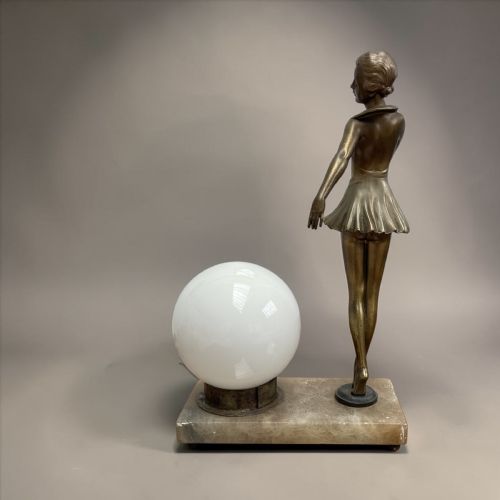
A vintage dancer lamp combines functional lighting with figural sculpture, typically taking the form of a female dancer or nude figure rendered in an Art Deco style. These table lamps serve as striking focal points, drawing the eye with their dynamic postures and theatrical presence.
Most examples found on this page date from the nineteen-thirties, with earlier pieces extending back into the nineteen-twenties and nineteen-forties. The figures often hold spheres or balance athletic poses, capturing the energetic spirit of the interwar period.
Originating primarily from British workshops, these figural pieces reflect the prevailing tastes of their era through stylised representations of the human form. Collectors seek them out for their distinct silhouette and period charm, which integrate effortlessly into both traditional and modern interiors.
How they were made
Makers utilised a variety of metallic mediums to cast the figural bases, including bronze, brass, spelter, chrome, and silver plate. These metals allowed for intricate detailing of the dancer's anatomy, drapery, and posture before receiving patination or polished finishes.
Vintage Dancer Lamp Retail Price Guide 2026
Typical asking prices for vintage dancer lamp among the pieces listed under this phrase on Sellingantiques today, from the lower quarter to the upper quarter. They describe what is for sale here now, not the wider market.
One particularly spirited dancer even holds a ball aloft, balancing mid-air for eternity.
What varies in quality
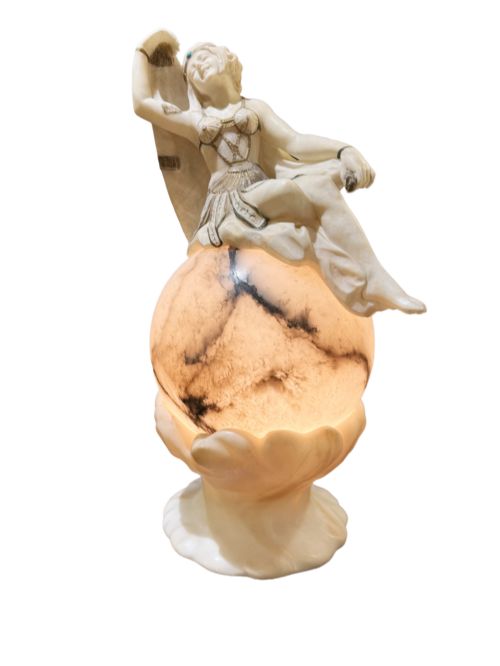
The choice of secondary materials significantly influences the overall character of the piece. Lamps incorporating genuine alabaster or high-grade patinated bronze sit firmly at the sophisticated end of the range, contrasting with simpler plated base materials.
The Vintage Dancer Lamp Glossary
- Art Deco
- A design style spanning the twenties and thirties characterised by sleek lines, geometric shapes, and stylised representations of the human form. It remains the defining aesthetic for figural lighting of this period.
- Spelter
- A zinc alloy commonly utilised as a cost-effective alternative to bronze for casting decorative figures during the early twentieth century. It often received a bronze or patinated surface treatment to mimic more expensive metals.
- Opaline glass
- A milky, semi-translucent glass used for lamp shades to diffuse light evenly across a room. It adds a soft luminous quality that complements polished metal bases.
- Alabaster
- A fine-grained, translucent stone carved into bowls and shades for vintage lighting. Its natural veining ensures that each illuminated panel possesses a distinct pattern when lit.
Vintage Dancer Lamp: Frequently Asked Questions
What periods do these lamps date from?
These decorative lamps predominantly originate from the nineteen-twenties, thirties, and forties. This timeframe captures the height of the Art Deco movement.
Design choices evolved subtly across these decades, shifting from early brass and silver plate work to streamlined chrome figures of the thirties and athletic forms into the forties.
How were these lamps used originally?
They functioned primarily as decorative table lamps designed to provide ambient illumination in reception rooms and parlours. Their sculptural qualities meant they served as art pieces by day.
By incorporating glowing spheres or illuminated backdrops, the figures cast dramatic light that enhanced the sophisticated interiors of the interwar home.
How do I style a figural lamp at home?
Place the lamp on a sturdy sideboard, desk, or low table where the figural details can be appreciated from multiple angles. Pairing it with restrained furnishings allows the dynamic sculpture to stand out.
Keep surrounding decor complementary to the metallic finish, whether that involves polished chrome, warm brass, or patinated bronze.
How do I identify Art Deco features?
Look for symmetrical lines, stylised bodily proportions, and streamlined poses that emphasise motion and modernism. The figures often interact with geometric elements like spheres or hoops.
Materials such as frosted glass, chrome, and patinated spelter further reinforce the distinct aesthetic of the interwar decades.