
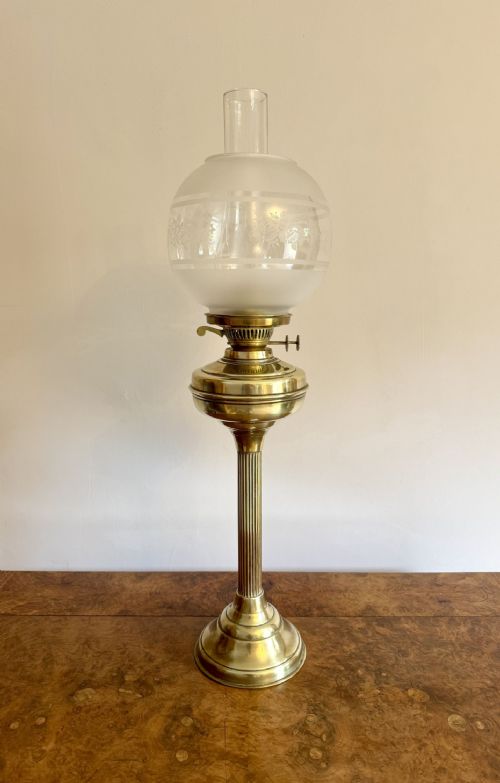


Frosted Glass Table Lamp
A frosted glass table lamp brings soft diffusion and sculptural presence to a room, spanning periods from Victorian oil burners to sleek Art Deco designs.

Frosted Glass Table Lamp
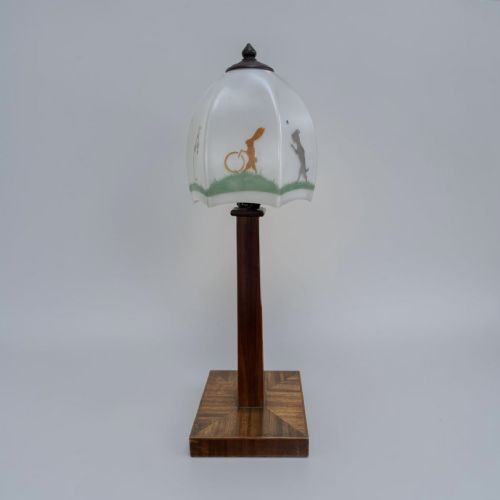
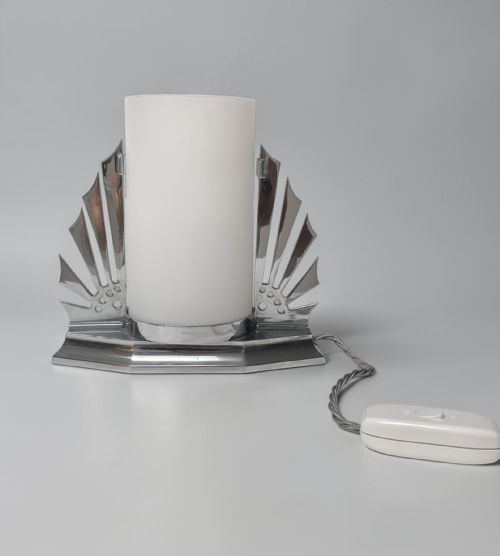
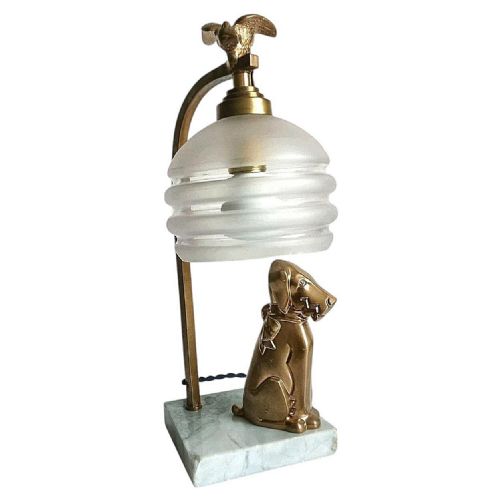
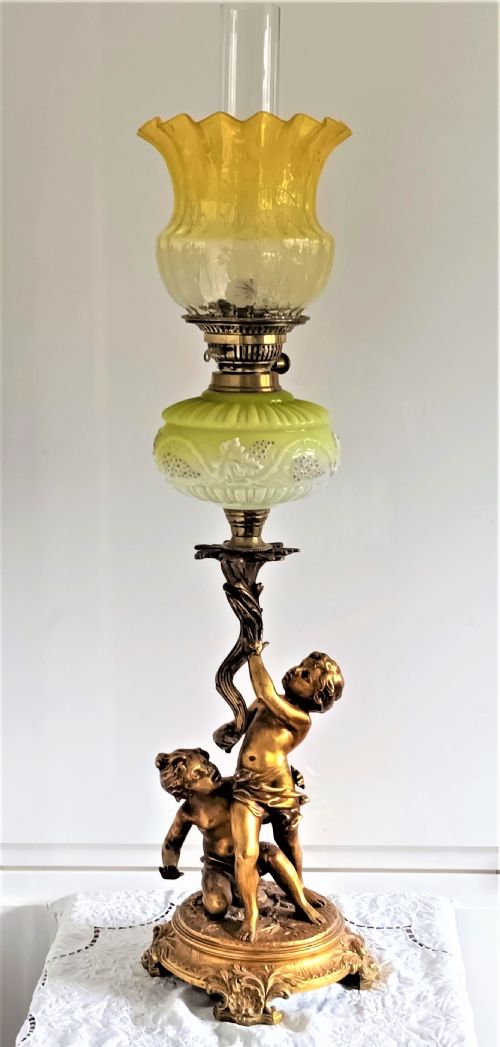
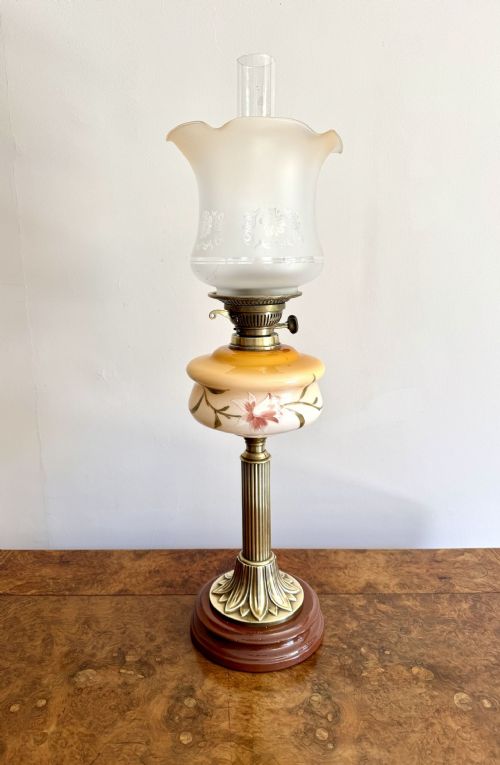
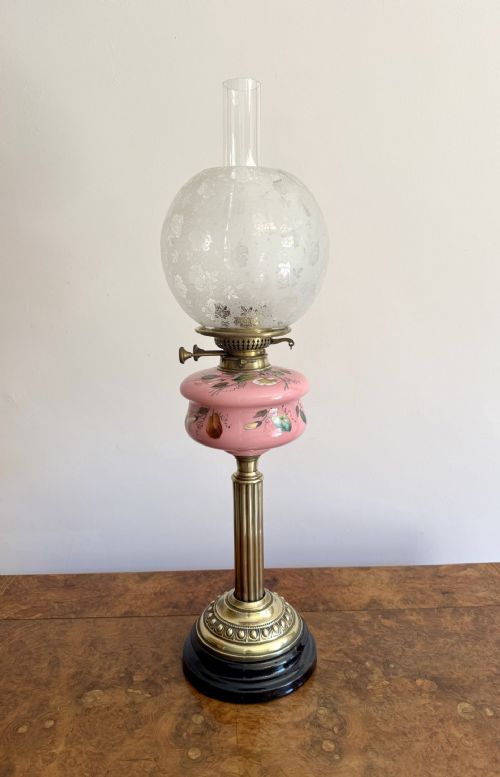
When you search for a frosted glass table lamp, you encounter pieces that range from nineteenth-century Victorian and Edwardian oil conversions to nineteen-thirties Art Deco lighting. The most frequent examples on this page date from the Art Deco era and the Victorian period, appearing as table lamps, desk lamps, and converted oil lamps.
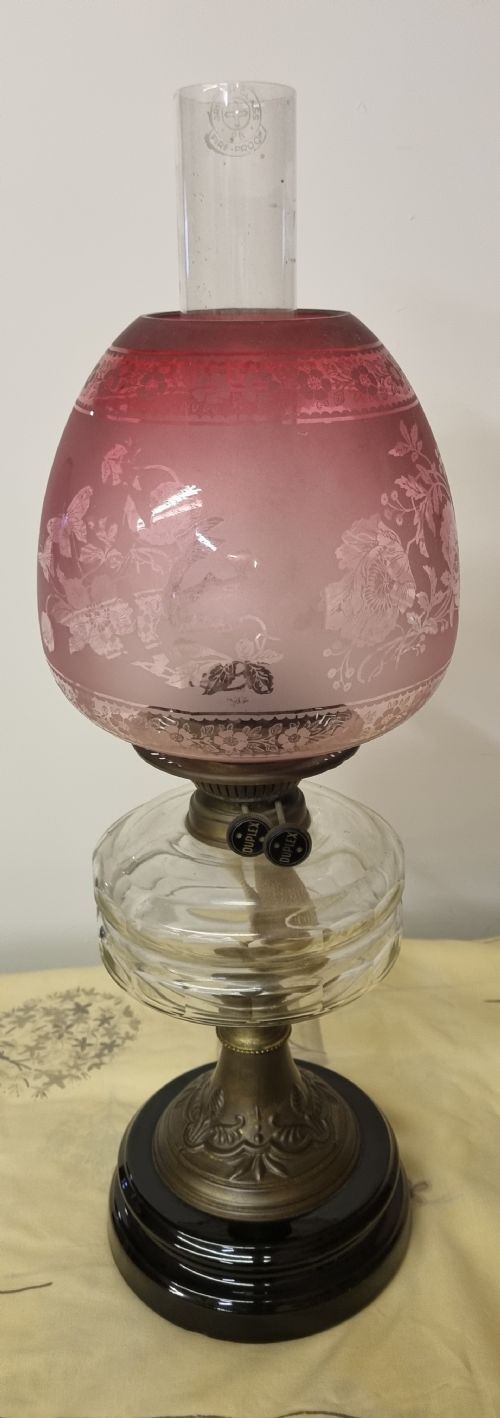
Victorian and Edwardian versions often combine brass columns, ceramic fonts, and coloured glass shades, while twentieth-century examples lean towards chrome, wrought iron, and moulded or enameled glass domes.
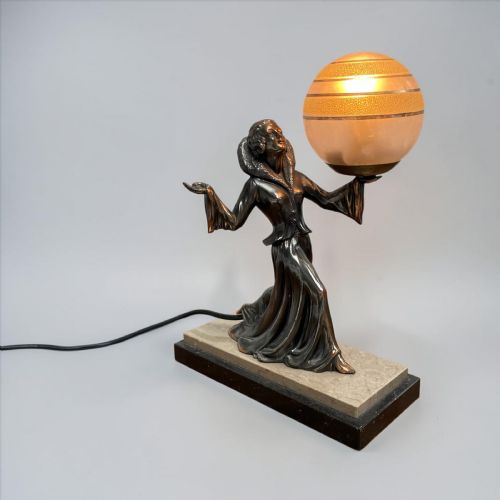
French and English origins dominate the selection, bringing distinct regional interpretations to the materials. You find figural lamp bases depicting animals, human figures, and classical motifs alongside simpler structural forms.
How they were made
Maker techniques rely on combinations of cast brass, bronze, spelter, and wrought iron paired with blown or acid-etched glass shades. Metal components are frequently gilded, nickel-plated, or silver-plated to achieve contrasting surface textures.
Glass elements receive their frosted finish through sandblasting, chemical etching, or acid treatment, which diffuses the internal light source evenly across the surface. Specialised glasshouses shape these shades into domes, figurative sculptures, and geometric panels.
Frosted Glass Table Lamp Retail Price Guide 2026
Typical asking prices for frosted glass table lamp among the pieces listed under this phrase on Sellingantiques today, from the lower quarter to the upper quarter. They describe what is for sale here now, not the wider market.
Listings span the nineteenth and twentieth centuries, uniting Victorian brass oil lamps with nineteen-thirties French Art Deco figural lighting.
What varies in quality
Quality rests in the crispness of the metal casting and the artistic execution of the glass shade. Superior pieces show sharp detail in figural bases and heavy gauges of brass, bronze, or wrought iron.
The distinction between standard production and fine work lies in signed glass elements from notable makers, balanced proportions, and integrated material pairings such as marble and spelter.
Anton Buschelberger·Karl Ens·Emile Picault·Muller Bros·Degue
The Frosted Glass Table Lamp Glossary
- Frosted glass
- Glass treated to scatter light and create a translucent, matte surface. Acid etching and sandblasting are the primary methods used to achieve this texture.
- Spelter
- An alloy of zinc and other metals used as a cheaper alternative to bronze for casting lamp bases. It is frequently painted or electroplated to resemble heavier metals.
- Art Deco
- A design style from the nineteen-twenties and thirties characterised by streamlined geometric forms, stylized figures, and modern industrial materials like chrome.
Frosted Glass Table Lamp: Frequently Asked Questions
How do I convert an old oil lamp?
Most antique oil lamps seen here have already been converted to electricity by previous owners. If you acquire an unconverted piece, a professional electrician can wire a bulb fitting through the existing burner collar without altering the antique reservoir.
This preserves the original brass or ceramic font while making the lamp safe and functional for modern daily use.
What is the difference between Art Deco and Victorian lamps?
Victorian lamps typically feature heavy brass columns, reeded stems, and ornate oil fonts paired with ruffled or etched glass shades. They rely on classical revival styles and floral motifs.
Art Deco lamps favor streamlined symmetry, stylized human or animal figures, and geometric frosted glass shades held by wrought iron, chrome, or marble bases.
How do I clean frosted glass shades?
Dust the exterior regularly with a soft, dry cloth to prevent grime from settling into the matte texture. For deeper cleaning, use lukewarm water and mild soap, avoiding harsh abrasives that could polish away the frosted finish.
Ensure the glass is completely dry before reattaching it to the metal base or turning on the lamp.
Where were these lamps manufactured?
The pieces listed originate primarily from workshops and factories in England and France. French pieces often showcase distinct artistic movements such as Art Nouveau and Art Deco.
English production frequently emphasises sturdy brass construction and practical desk or table forms suited for period interiors.