
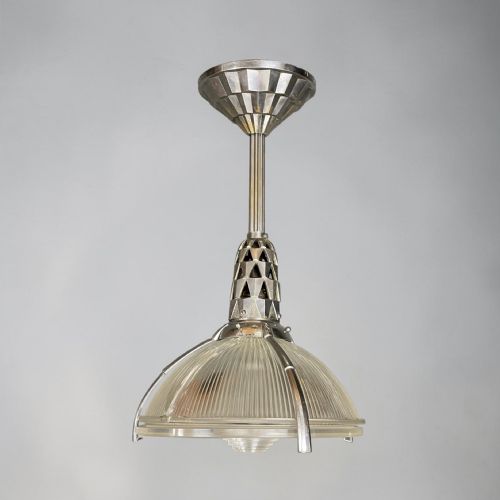


Geometric Glass Shade Lamp
A geometric glass shade lamp brings striking Art Deco character into a room through clean lines and robust materials.
What these lamps are
When you search for a geometric glass shade lamp, you are looking at table lamps produced during the nineteen thirties that embody the distinct aesthetic of the period. These pieces combine structured illumination with decorative bases, often incorporating figural elements alongside the primary light source.
The most likely version you will meet on this page is an Art Deco table lamp featuring moulded or pressed components from the interwar era. Such examples frequently pair coloured or frosted glass with contrasting metalwork to create a balanced silhouette.
How they were made
The construction of these items relies on a combination of industrial and decorative materials typical of the early twentieth century. Chrome provides a polished, reflective finish for the structural supports and bases.
Shades are fashioned from glass, utilising pressed, frosted, or peach-toned varieties to diffuse light evenly. Bakelite elements appear frequently, providing durable electrical housings and switch components characteristic of nineteen thirties manufacturing.
Retail Price Guide 2026
Typical UK retail prices for geometric glass shade lamp, calculated from the Sellingantiques database of over a million retail prices indexed since 2003. This retail price guide relies exclusively on Sellingantiques data; no external sources or auction records are used, so the figures do not describe the wider market.
Some shades come in peach glass, proving that nineteen thirties lighting knew how to blush under pressure.
What varies in quality
The distinction between standard examples and superior pieces rests upon the finesse of the glasswork and the complexity of the mountings. Finer production involves sophisticated moulding techniques that yield crisp angles and nuanced colouration within the glass.
The integration of materials also defines the hierarchy, where robust chrome plating and solid bakelite fittings demonstrate careful assembly. Pieces that incorporate figural metalwork alongside the shade display a higher level of sculptural ambition.
Walther and Sohne
The Geometric Glass Shade Lamp Glossary
- Art Deco
- A design style spanning the nineteen twenties and nineteen thirties characterised by stylised motifs, geometric symmetry, and modern industrial materials. It dominates the aesthetic of these table lamps.
- Bakelite
- An early synthetic thermosetting plastic known for its durability and rich dark lustre. It is commonly found in the switches and housing components of period electrical items.
- Pressed glass
- Glass formed by placing molten material into a metal mould and pressing it with a plunger. This technique allows for complex geometric patterns and textured surfaces.
- Frosted glass
- Glass treated to create a translucent surface that softens illumination. It is utilised on shades to reduce glare while maintaining a bright, even glow.
Frequently Asked Questions
What periods do these lamps come from?
The pieces available originate exclusively from the nineteen thirties, capturing the height of the Art Deco movement.
Production techniques and material choices from this era define every example listed on the page.
What materials are used in these lamps?
Construction relies heavily on chrome, glass, and bakelite, reflecting the industrial capabilities of the interwar period.
Shades utilise pressed or frosted glass, sometimes in peach tones, supported by polished metal and durable plastic fittings.
How do I style a geometric glass shade lamp?
These table lamps function well as accent pieces on sideboards, desks, or occasional tables where their distinct silhouette can be appreciated.
Their structured forms complement both vintage interiors and modern spaces that embrace nineteen thirties design principles.
Are all these lamps table lamps?
Every item featured in this selection is built specifically as a table lamp rather than a ceiling fixture or floor standing light.
They are designed to sit upright on horizontal surfaces to provide localized illumination.