

Glass Globe Lamp
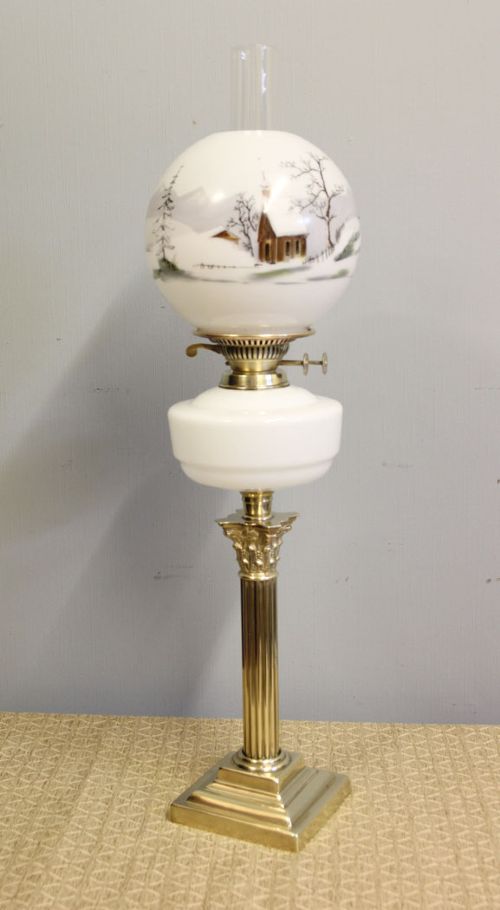
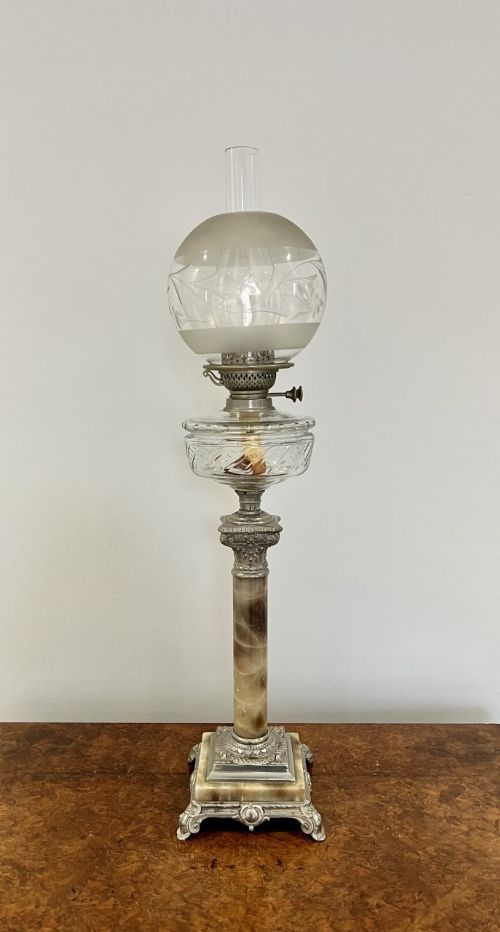
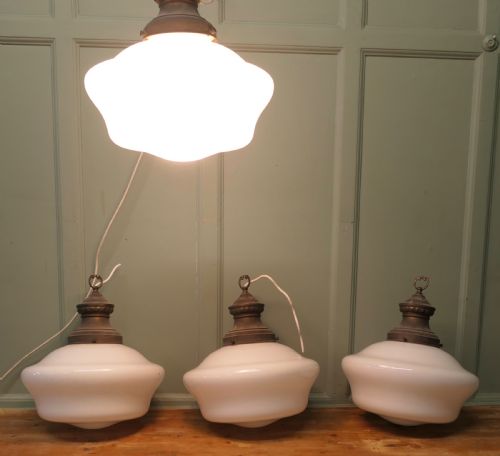
These glass globe lamp designs span Victorian oil burners to Art Deco pendants, bringing authentic period illumination and character to a room.
Glass Globe Lamp
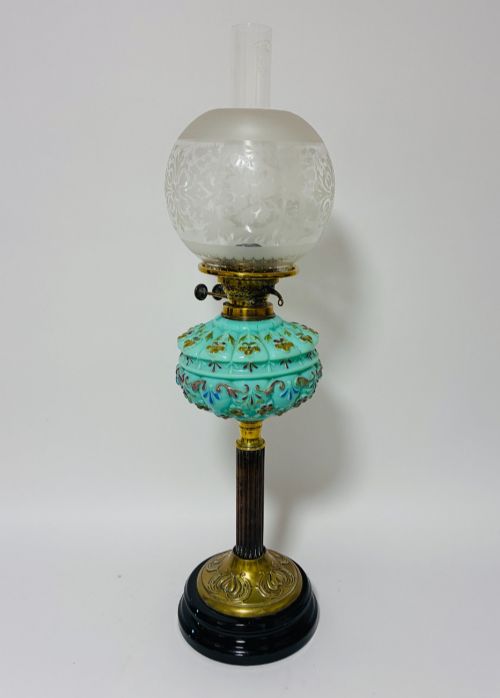
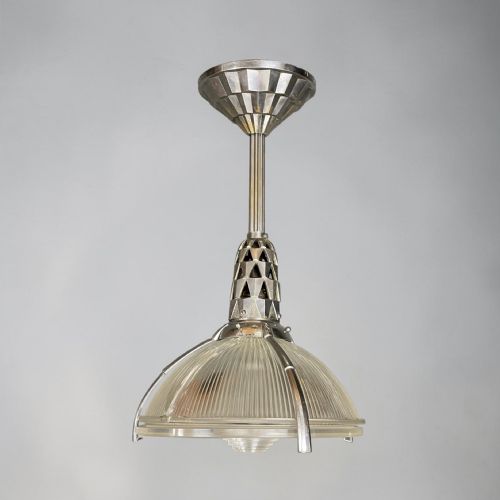
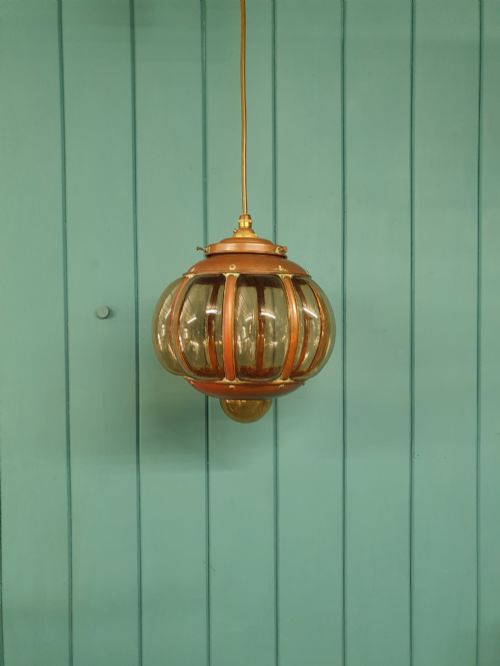
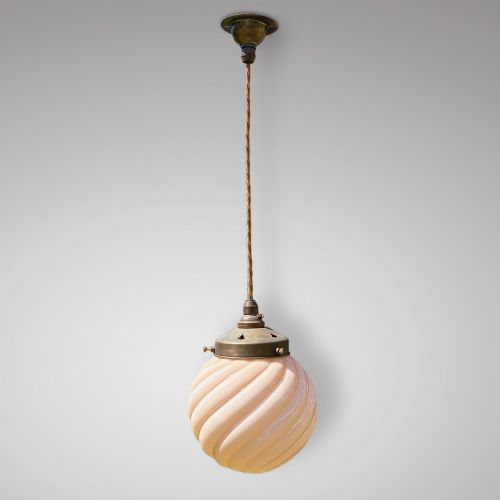
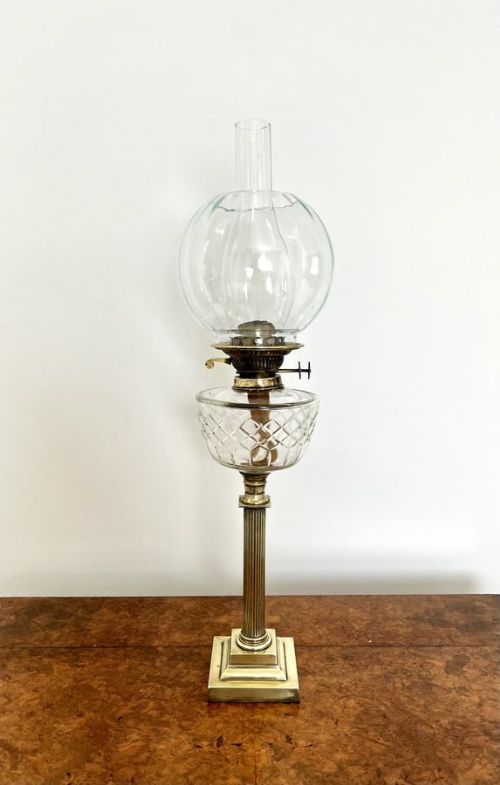
A glass globe lamp unites a spherical glass shade with a supportive base or suspension fixture, serving as both functional lighting and decorative art. The selections here span the Victorian era, Edwardian period, and Art Deco years, capturing diverse historical interior aesthetics.
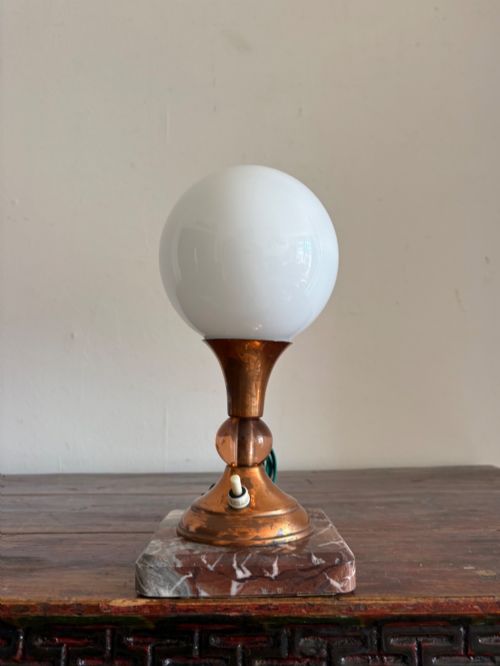
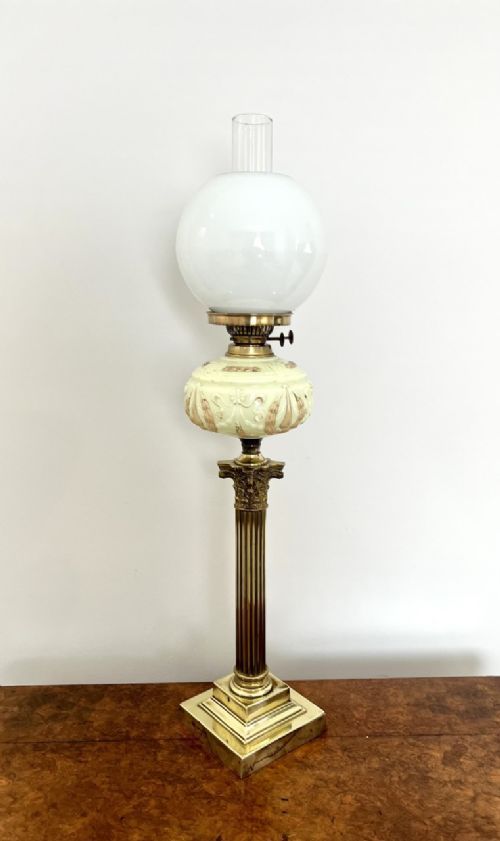
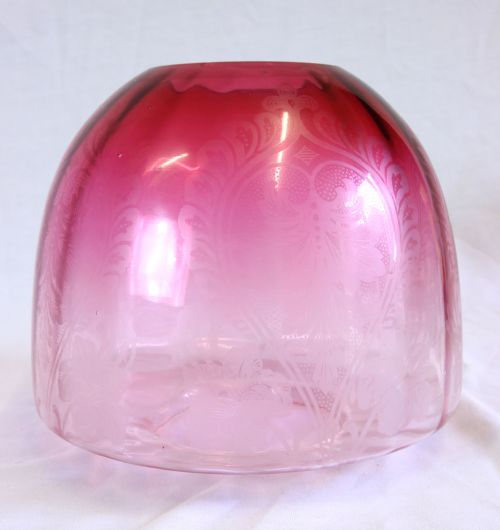
The most frequent examples on this page are oil lamps and pendant lights utilising brass, ceramic, or marble mounts. Buyers also encounter table lamps and ceiling lights featuring opaline, frosted, or cranberry glass globes.
Origins range from British workshops to French studios, encompassing styles from industrial utility to ornate nautical and Chinese export designs. Each piece reflects the lighting technology and design priorities of its specific decade.
How they were made
Makers shaped glass through blowing and moulding techniques, producing smooth, opaline, frosted, or coloured vessels like cranberry and vaseline glass. Metal components rely on cast and turned brass, copper, chrome, and spelter, often paired with heavy marble or ceramic bases.
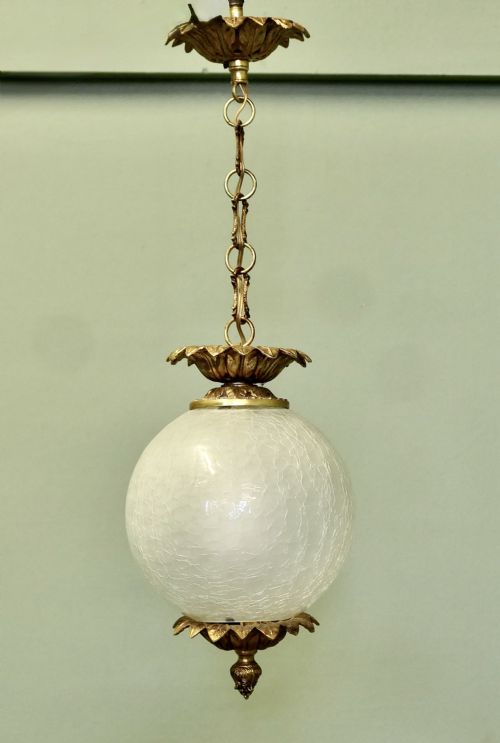
Construction methods combine structural metalwork with delicate glass globes, securing shades with brass galleries or specialised fittings. Oil lamps incorporate metal fonts and burners, while hanging lights utilise chains and ceiling roses suited to domestic or industrial spaces.
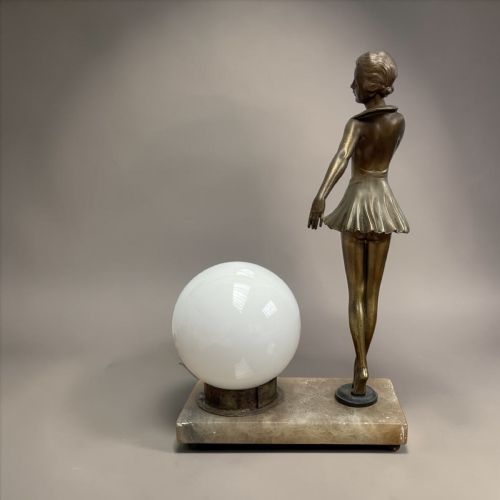
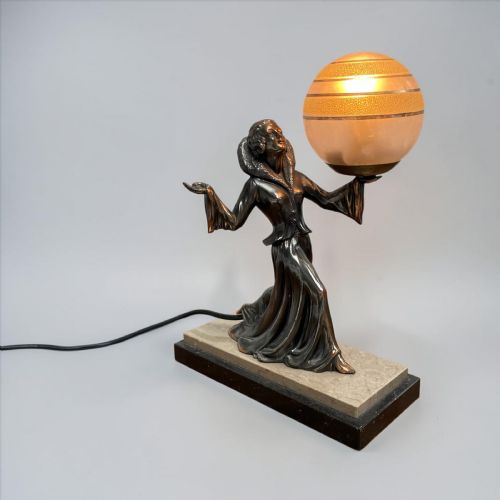
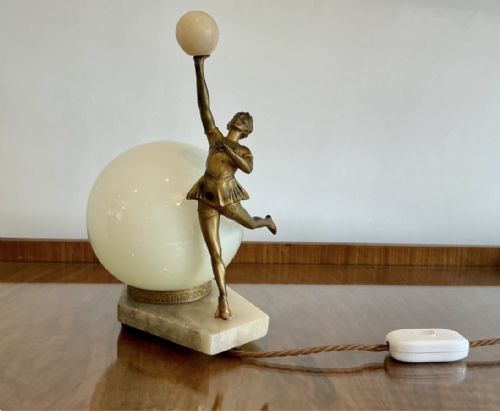
Several Art Deco table lamps feature charming figural lady designs, casting a warm glow through their glass globes.
What varies in quality
Quality rests upon the weight and depth of the glass, the crispness of the moulding, and the richness of colour in options like cranberry or opaline. Superior metalwork shows clean casting in brass, bronze, and spelter, whereas lesser examples display softer detail.
Proportion and material integration distinguish the finest pieces, such as those combining marble bases with copper or matching ceramic fonts. The integrity of the original components, from burner mechanisms to suspension chains, dictates the overall standard.
Émile-Jacques Ruhlmann·Hinks of Birmingham·Perry & Co
The Glass Globe Lamp Glossary
- Opaline Glass
- A semi-opaque glass with a milky appearance, frequently utilised in Victorian and Art Deco lighting to diffuse illumination evenly. This material appears in various soft pastel tones across period globes.
- Spelter
- A zinc alloy commonly cast into decorative figures and bases during the Art Deco period, often given a bronze or metallic finish. It provided an economical alternative to solid bronze for figural lamps.
- Font
- The oil reservoir portion of an oil lamp, usually seated within a metal or ceramic base beneath the burner and glass globe. Fonts were frequently fashioned from coloured glass to catch the light.
- Torchiere
- An uplighter floor lamp designed to cast illumination toward the ceiling, appearing in Art Deco designs on this page. These fixtures often feature large glass shades supported on slender shafts.
- Gallery
- The metal ring or collar designed to hold a glass shade securely in place above the burner or lamp body. Galleries ensure the globe remains balanced and stable during use.
Glass Globe Lamp: Frequently Asked Questions
How do I date a glass globe lamp?
Dating relies on identifying stylistic markers, such as Victorian brass oil assemblies versus Art Deco geometric forms or figural lamp bases. Materials like opaline glass, spelter, and specific brass casting techniques also point to particular manufacturing decades.
Examining the construction of the burner, wiring ports, and fitter galleries provides further clues to whether a piece originates from the late nineteenth century or the interwar period.
Can antique oil lamps be converted to electricity?
Many oil lamps transition safely to electric table lamps by running wiring through the original burner or font assembly without altering the exterior brass or ceramic structure. This allows period globes and shades to function with modern domestic power.
Professional conversion preserves the historical base and shade while providing practical illumination for contemporary living spaces.
What is opaline glass?
Opaline glass is a translucent, milky material developed to soften glare while emitting a warm, diffused glow through the globe. It appears frequently in Victorian and Edwardian lighting fixtures.
Its distinct opacity results from the addition of bone ash or specific opacifiers during the glassmaking process.
How do I clean an antique glass shade?
Cleaning requires warm water and mild soap, avoiding harsh chemical abrasives that might damage frosted surfaces or delicate hand-etched scenes on the glass. Removable globes should be detached from their brass galleries before washing.
Careful handling prevents chipping the fitter rims where the glass meets the metal mounting hardware.