


Art Deco Lady Lamp
When you search for an art deco lady lamp, you are hunting for sculptural figural lighting that captures the elegance of the interwar years.
What an art deco lady lamp is
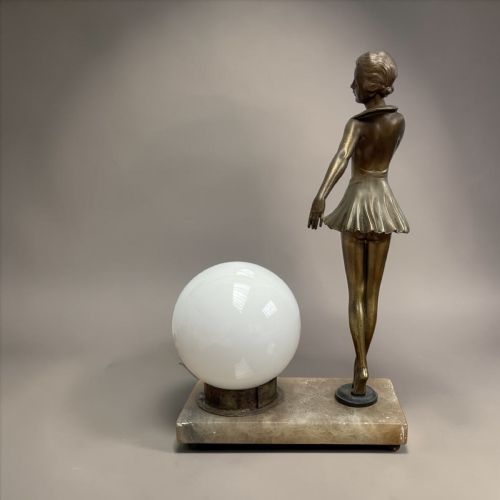
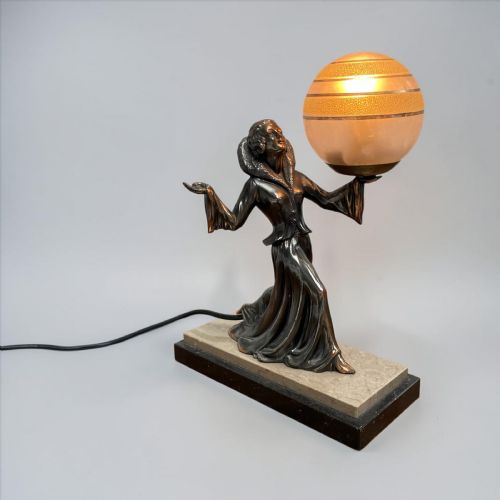
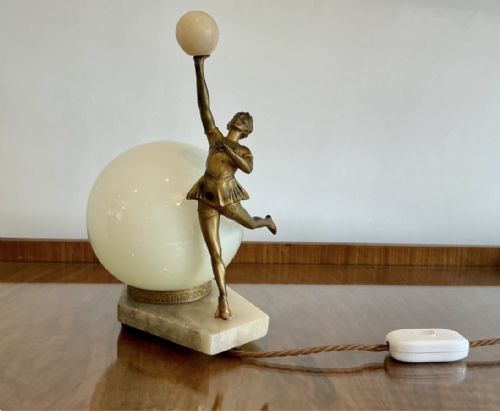
An art deco lady lamp is a figural table lamp that incorporates a female form into its structural design. These pieces typically take the form of a nude or clothed woman standing, kneeling, or posing as part of the base or stem.
The versions you are most likely to meet on this page originate from the nineteen thirties, with a small number extending into the nineteen forties. They function primarily as decorative table lamps that cast ambient light while doubling as sculptural artwork.
The human figure often interacts directly with elements like balls, globes, flames, or doves. These designs reflect the modernist styling and streamlined aesthetics popular during the interwar period.
How they were made
Makers utilised a diverse selection of materials to construct these figural lamps, combining metal figures with glass and stone components. Spelter, bronze, and chrome provide the structural body for the female figures, often finished with cold painting, silvering, or gilding.
Lighting elements incorporate glass, frosted glass, crackle glass, and marbled globes or flame shades. Bases frequently consist of solid marble or alabaster, anchoring the heavier metal figures securely.
Retail Price Guide 2026
Typical UK retail prices for art deco lady lamp, calculated from the Sellingantiques database of over a million retail prices indexed since 2003. This retail price guide relies exclusively on Sellingantiques data; no external sources or auction records are used, so the figures do not describe the wider market.
Some ladies hold aloft entire glass globes as if balancing the weight of the evening on their fingertips.
What varies in quality
The choice of accompanying materials dictates the overall calibre of the piece. Lamps incorporating genuine alabaster bases, original crackle glass shades, or cold painted spelter finishes demonstrate superior manufacturing standards compared to simpler metal-only constructions.
Josef Lorenzl·Walther
The Art Deco Lady Lamp Glossary
- Spelter
- A zinc alloy commonly used as a base metal for sculptural figures during the period. It was frequently painted or electroplated to imitate bronze or silver.
- Cold painted
- A technique where paint is applied to a metal sculpture without being fired in a kiln. This finish is delicate and prone to chipping if handled roughly.
- Alabaster
- A soft, translucent stone utilised for carved lamp bases. Its natural veining allows light to diffuse softly through the material.
- Crackle glass
- A type of decorative glassware characterised by a network of fine cracks intentionally created during blowing. It provides textured light diffusion for lamp shades.
- Figural lamp
- A lighting fixture whose base or body incorporates a sculptural human or animal representation. In this category, the form is exclusively a female figure.
Frequently Asked Questions
What is an art deco lady lamp?
An art deco lady lamp is a figural table lamp featuring a sculpted female form integrated into the base or stem. These pieces combine functional lighting with the distinct artistic styling of the interwar period.
They are typically constructed from metals like chrome, bronze, or cold painted spelter, often paired with glass shades and marble or alabaster bases.
How do I style a lady lamp?
Place your lamp on a sturdy surface such as a sideboard, desk, or occasional table where the figural base can be viewed from multiple angles. Ensure the surrounding decor complements the metallic finishes and sculptural form.
Keep the lighting context aligned with the period aesthetic by pairing the lamp with simple, uncluttered furniture that allows the detailed figure to stand out as a focal point.
Are these lamps original period pieces?
The pieces listed originate from the nineteen thirties and nineteen forties, reflecting the manufacturing techniques and materials of those decades. Makers utilised metals, glass, and stone characteristic of the era.
Examining the construction methods, such as cold painted spelter or original glass shades, helps identify authentic period examples from later reproductions.
What materials were used?
Makers constructed these lamps using a combination of metal figures mounted on stone or marble bases. Common metals include chrome, bronze, and spelter with cold painted or silvered finishes.
Lighting elements consist of glass, frosted glass, or alabaster, featuring specialised components like crackle glass shades or marbled globes.