


Art Deco Figural Lamp
These art deco figural lamp pieces combine sculpture and illumination, offering a striking focal point for interior display.
What They Are
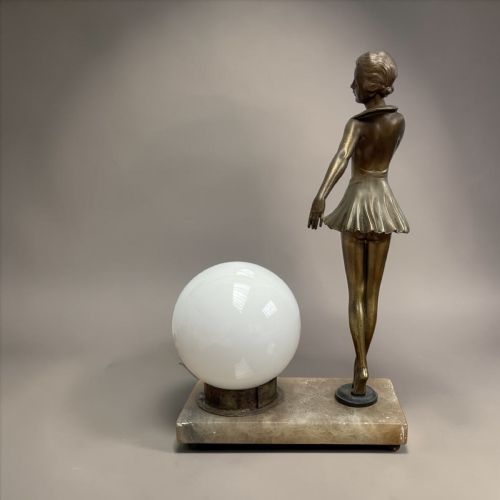
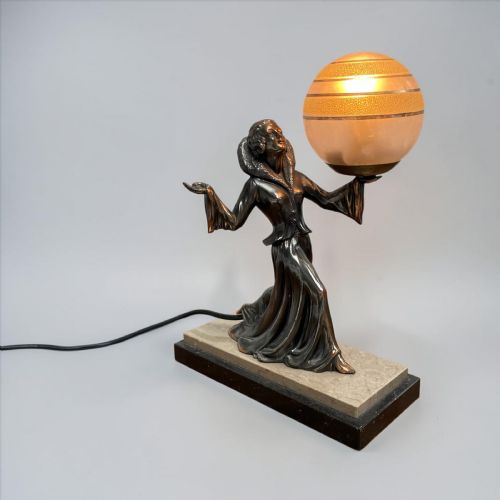
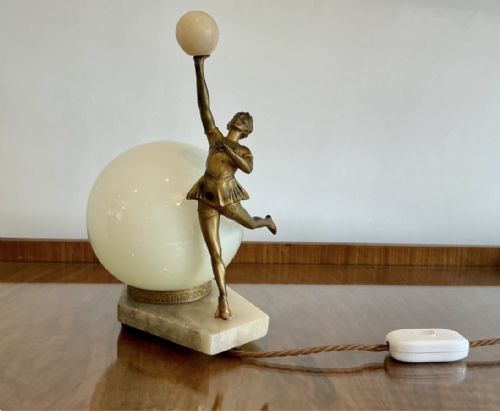
An art deco figural lamp brings together sculptural human figures and functional lighting, commonly taking the form of a table lamp. The pieces on this page most frequently depict female figures, often cast in metal alongside glass shades.
Originating predominantly from the 1920 and 1930 periods, these table lamps capture the distinctive geometric and stylised aesthetic of the era. The human form is frequently paired with decorative elements such as doves, fountains, or spherical glass shades.
Collectors encounter variations ranging from large sculptural centrepieces to simpler brass and marble table lamps. Figures of ladies dominate the selection, whether rendered in patinated metal, cold painted bronze, spelter, or chrome.
How They Were Made
Bases and structural elements frequently incorporate marble or alabaster, providing a stable foundation for the heavier metal sculptures. Glass components, including frosted and opaline shades, are integrated to diffuse the light emitted from the table lamp.
Retail Price Guide 2026
Typical UK retail prices for art deco figural lamp, calculated from the Sellingantiques database of over a million retail prices indexed since 2003. This retail price guide relies exclusively on Sellingantiques data; no external sources or auction records are used, so the figures do not describe the wider market.
Listings feature table lamps primarily from the 1920 and 1930 periods, executed in materials including marble, spelter, and frosted glass.
What Varies in Quality
The survival of the original cold painted finish or integrated glass shade significantly influences the integrity of the piece. Combinations involving premium materials such as marble bases and original opaline or frosted shades represent the upper tier of the range.
Bruno Zach·Lorenzl
The Art Deco Figural Lamp Glossary
- Spelter
- A zinc alloy commonly utilised as a cost-effective alternative to bronze for casting decorative figures. It accepts patination and cold painting readily.
- Cold Painted Bronze
- Bronze sculpture decorated with paint applied at room temperature rather than fired in a kiln. This technique allows for vibrant polychrome clothing and hair details.
- Opaline Glass
- A pale, translucent glass type often blown into spherical or geometric shades. It softens the light output while maintaining a milky appearance.
- Patinated Metal
- Metal treated with chemicals or heat to produce a deliberate surface sheen or colour change. This finish protects the underlying alloy and adds visual depth to drapery and hair.
Frequently Asked Questions
What materials are used?
The pieces utilise a combination of cast metals such as spelter, bronze, brass, and chrome for the figures. These are frequently mounted on marble or alabaster bases and paired with frosted or opaline glass shades.
Additional materials include carved alabaster for figural scenes involving elements like fountains. The diversity of media reflects the decorative ambitions of the 1920 and 1930 periods.
How do I date them?
Dating relies on the characteristic stylistic traits of the 1920 and 1930 periods, along with the specific manufacturing materials employed. Chrome and cold painted spelter are particularly indicative of interwar production.
Examining the construction of the base and the mounting of the figural sculpture provides further chronological context. Archival evidence shows these pieces cluster tightly around these two decades.
Are original shades common?
Original glass shades, particularly frosted or opaline variants, form an integral part of the composition when present. Many pieces survive with their period globes or panels designed to complement the metal lady figure.
Because glass is fragile, finding a lamp with its matching period shade requires careful inspection. Replacement shades appear frequently on older table lamps due to accidental breakage over time.
Where should I place one?
These table lamps function best as prominent decorative items on sturdy surfaces like sideboards, desks, or console tables. Their sculptural profile ensures they command attention even when unlit.
Placement should account for the height and weight of the marble or metal base to ensure stability. They suit interior spaces dedicated to interwar design or eclectic historical displays.