


Art Deco Dancer Lamp
An art deco dancer lamp brings sculptural grace and period illumination into a room, capturing movement in metal and glass.
Art Deco Dancer Lamp
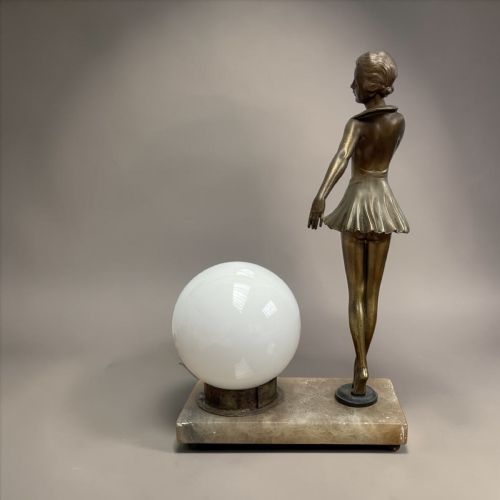
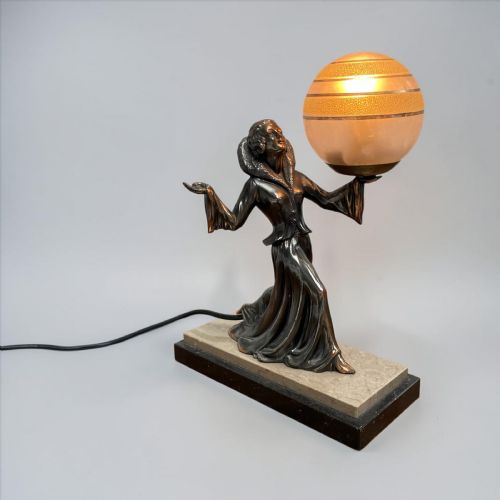
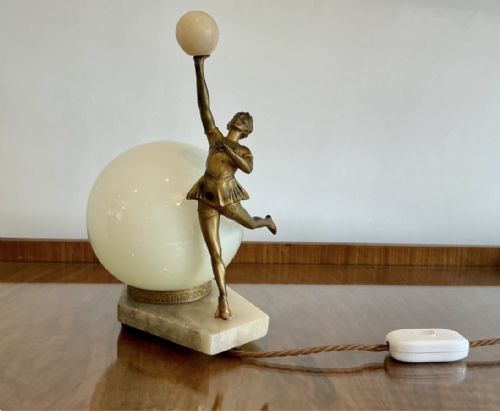
When you search for an art deco dancer lamp, you are examining figural lighting that portrays female dancers, nudes, and athletes from the early twentieth century. These table lamps combine sculptural metal figures with glass shades, illuminating spaces with distinctive period styling.
The pieces you meet on this page span the decades from the 1920s to the 1940s, originating from workshops in England and Austria. Forms range from a simple lady lamp to dynamic figures holding balls or executing high kicks.
Most examples adopt classic table lamp formats where the human figure forms the central standard or stands beside the light source. These sculptures capture athletic poses and fluid motion characteristic of the era's aesthetic.
Materials and construction
Makers utilised a range of metals for the figures, including bronze, spelter, brass, silver plate, and chrome. Patinated metal finishes were frequently applied to create depth and contrast on the sculpted surfaces.
Lighting elements incorporate glass, frosted glass, opaline glass, and alabaster to diffuse the illumination effectively. Bases are frequently constructed from marble to anchor the heavy figural standards securely.
Art Deco Dancer Lamp Retail Price Guide 2026
Typical asking prices for art deco dancer lamp among the pieces listed under this phrase on Sellingantiques today, from the lower quarter to the upper quarter. They describe what is for sale here now, not the wider market.
Listings feature table lamps spanning the 1920s to the 1940s, incorporating glass, marble, chrome, bronze, and spelter.
Assessing quality and execution
The choice of base materials and shade components also separates standard production from superior examples. Heavy marble mounts and high-grade patinated metal or silver plate indicate better workshop standards.
The Art Deco Dancer Lamp Glossary
- Spelter
- A zinc alloy commonly used as a substitute for bronze in figural casting. It takes patination well but requires careful handling due to its relative softness.
- Patinated metal
- Metal treated with chemicals or heat to produce a coloured surface finish. This technique enhances sculptural definition and protects the underlying material.
- Opaline glass
- A milky, semi-translucent glass used for shades. It softens the light output and diffuses glare evenly across the room.
- Alabaster
- A fine-grained mineral stone carved for bases and lamp components. Its natural veining ensures each piece has a distinct visual texture.
Art Deco Dancer Lamp: Frequently Asked Questions
How do I date an art deco dancer lamp?
Dating relies on stylistic clues and materials recorded in the specific titles and periods. Pieces range across the 1920s, 1930s, and 1940s.
Examine the construction methods and the finish of the metal, as chrome and silver plate point towards specific decades within this span.
What materials were used for the figures?
Makers cast figures in bronze, brass, spelter, and chrome, often applying patinated metal finishes. Silver plate was also utilised for luxury production.
Heavier metals provide stability, while marble is frequently paired with these figures to form the structural base of the lamp.
Are these lamps suitable for daily use?
These table lamps function well in modern interiors when fitted with appropriate modern wiring. They provide focused accent lighting for desks and side tables.
Care should be taken with delicate glass or alabaster shades to preserve their original condition during everyday operation.
Where were these figural lamps made?
Origins include workshops in England and Austria, reflecting broader European manufacturing trends of the period. Continental output often featured distinct stylistic influences.
Regional differences appear in the casting quality and the choice of base stones like marble.