
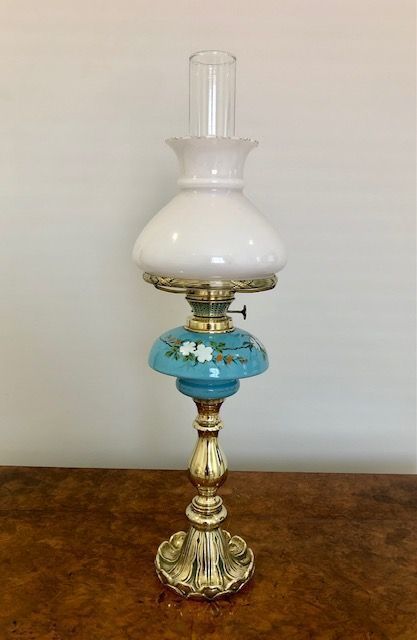


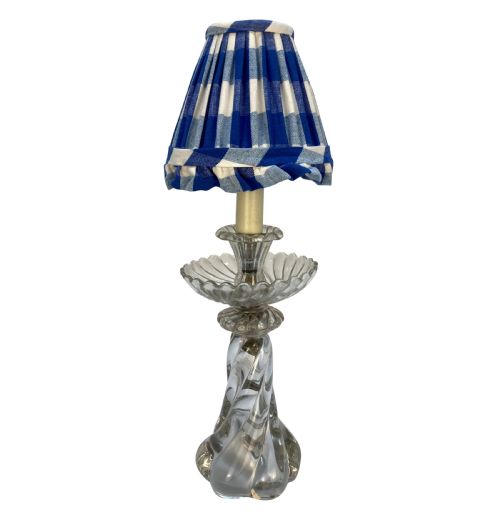


Blue Glass Table Lamp
These blue glass table lamps bring a distinct pool of coloured light to a room, spanning nineteenth-century oil conversions and twentieth-century electricity.
Blue Glass Table Lamp
A blue glass table lamp is typically formed around a coloured font, jar, or body that sits upon a metal base of brass or gilt bronze. These pieces appear frequently in Victorian and Edwardian forms, alongside later French designs from the Art Deco period.
The selection ranges from converted oil lamps featuring terrestrial globe or crimped shades to decorative ewers and apothecary jars adapted for domestic illumination. Mid-nineteenth-century examples sit alongside early twentieth-century creations, showing how lighting evolved from burning oil to electric bulbs.
Makers and origins stretch across English workshops and French studios, with specific pieces utilising decalcomania techniques or overlaid glass. Buyers encounter both single statement lamps and matched pairs designed for sideboards or desks.
Materials and construction
Glass forms the primary body, utilised in blown, cut, frosted, and opaline variations to create different qualities of translucency. Makers combined this coloured glass with heavy cast brass, gilt bronze, or chrome components to provide structural stability.
Metal mounts and collars secure the glass fonts to bases made of black glass, brass, or ceramic. Many pieces began life as oil lamps before later conversion to take standard electrical fittings.
Blue Glass Table Lamp Retail Price Guide 2026
Typical asking prices for blue glass table lamp among the pieces listed under this phrase on Sellingantiques today, from the lower quarter to the upper quarter. They describe what is for sale here now, not the wider market.
Several lamps double as historical globes, letting you illuminate your desk beneath a miniature terrestrial map of the world.
Assessing quality
Quality rests in the depth and clarity of the blue glass itself, particularly where overlay, cutting, or frosting techniques reveal multiple layers. Crisp casting work on the brass or gilt bronze mounts distinguishes finer pieces from standard production.
Baccarat·Tiffany Studios NYC
The Blue Glass Table Lamp Glossary
- Font
- The reservoir portion of an oil lamp designed to hold fuel beneath the burner. In modern conversions, this remains the decorative glass centrepiece of the lamp.
- Opaline glass
- A pale, translucent glass popular in nineteenth-century decorative pieces. It diffuses light softly through its milky appearance.
- Decalcomania
- A technique where printed designs are transferred onto the interior or exterior of glass surfaces. This method creates decorative patterns that resist normal surface wear.
- Gilt bronze
- Bronze metal treated with a fine layer of gold or gold-coloured alloy. This finish adds a warm metallic contrast to the cool tones of blue glass.
- Overlay glass
- Glass composed of two or more distinct layers of different colours. Cutting through the outer layer reveals the contrasting colour beneath.
Blue Glass Table Lamp: Frequently Asked Questions
Are these lamps converted from oil?
Many examples began as nineteenth-century oil lamps that were subsequently wired for electricity during later decades.
This adaptation allows period brass burners and font collars to remain intact while accommodating modern bulbs.
How do I date a blue glass lamp?
Dating relies on examining the manufacturing techniques of the glass, the style of the metal base, and the type of fittings used.
Victorian pieces often feature heavy brass castings and cut glass, whereas Art Deco examples display cleaner geometric lines and frosted finishes.
Can I use modern lamp shades?
Most lamps accept standard modern shades provided the fitter ring matches the gallery or shade holder size.
Original period globes and crimped shades remain desirable, but contemporary replacements offer flexibility in room styling.
How do I clean antique glass?
Cleaning requires warm soapy water and a soft cloth applied gently to avoid disturbing delicate gilt bronze or decalcomania details.
Harsh chemical cleaners should be avoided to protect the original finish of both the glass and the metal mounts.