
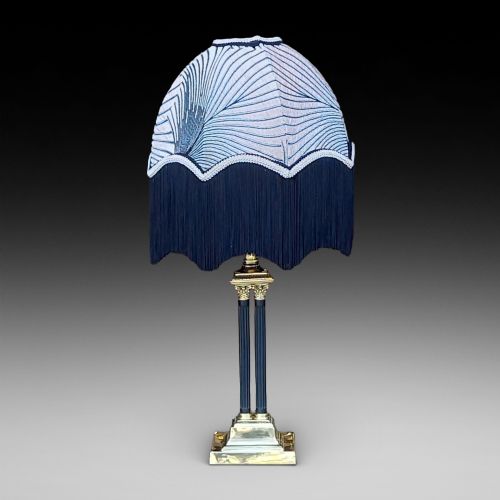
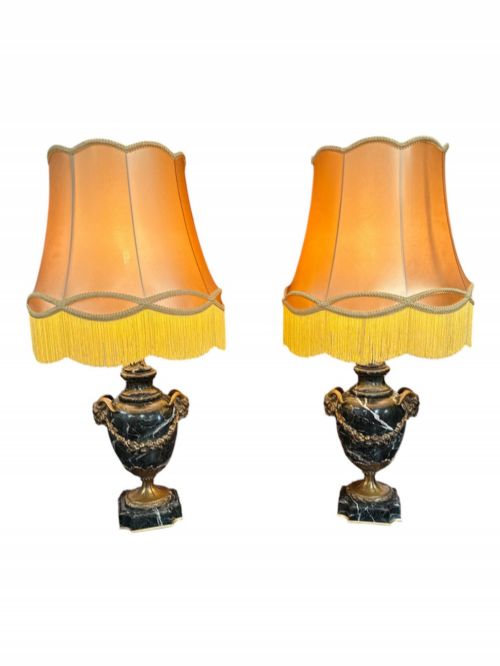
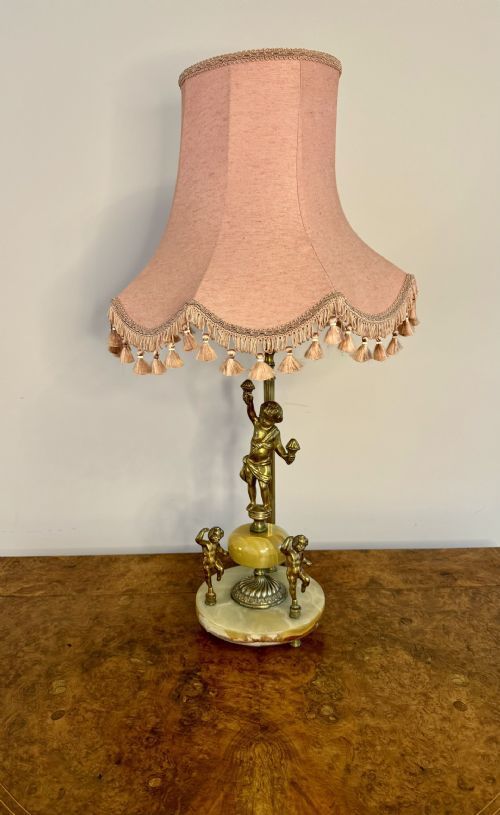
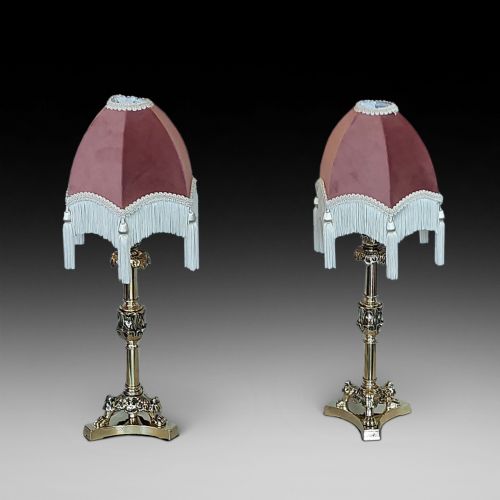
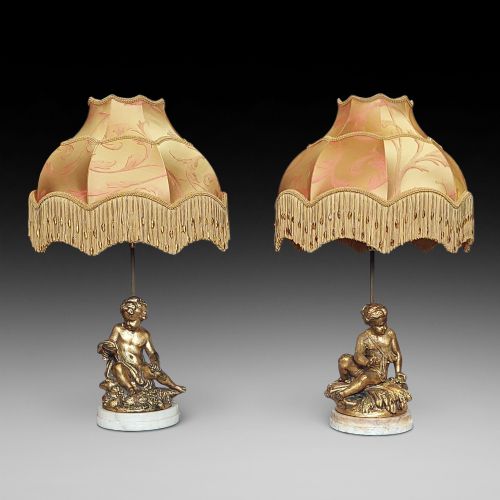

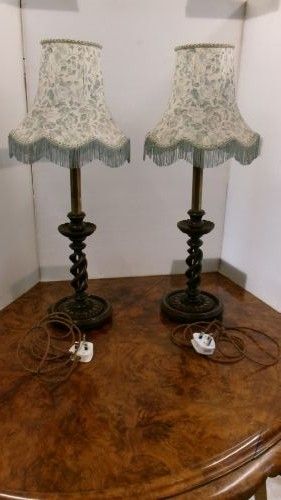


Fringed Shade Table Lamp
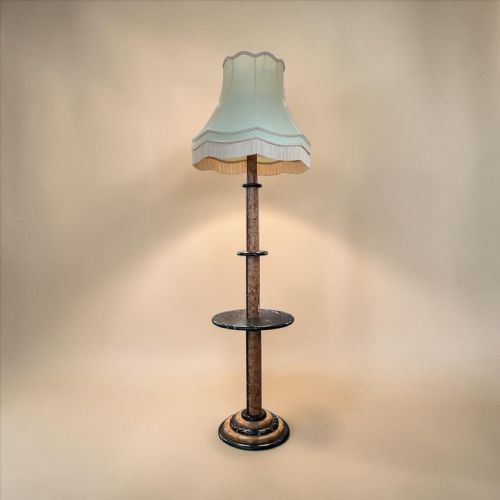
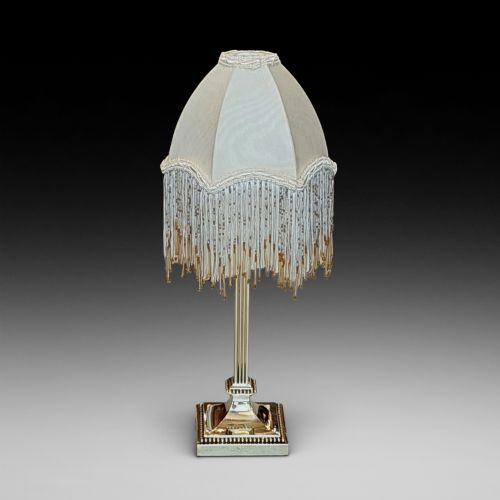
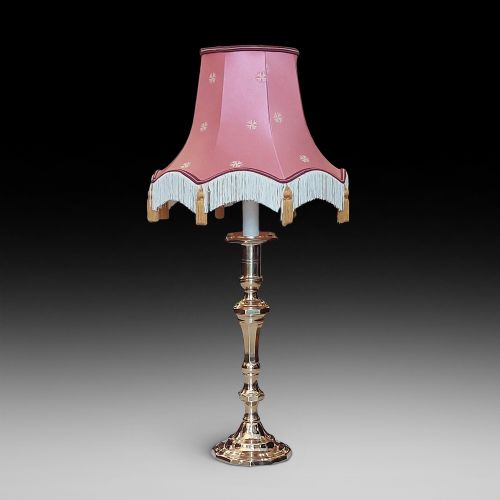
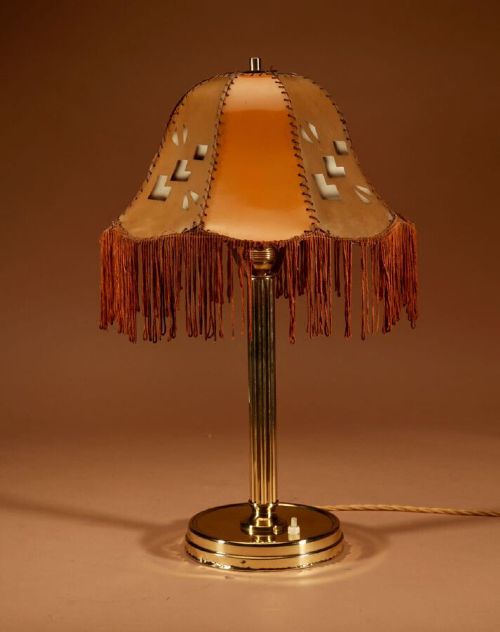
These fringed shade table lamp examples bring Victorian and Edwardian character to a room through brass, silk and glass bead work.
What these pieces are
A fringed shade table lamp brings period character to a room through traditional forms and tactile materials. These pieces include Victorian and Edwardian examples alongside designs from the 1880s, 1890s and 1920s.
Buyers will encounter several distinct styles on this page, ranging from Neoclassical Revival and Victorian Neoclassical to Chinoiserie. Common forms include brass Corinthian columns, converted oil lamps, silver-plate pillars, carved rootwood figures and ornamental blue glass ewers.
How they were made
Construction relies upon traditional materials such as brass, silver-plate, hardwood, rootwood and glass beads combined with fabric and silk elements. Metal components are cast and turned into architectural columns or oil lamp bodies.
Carved rootwood provides figural forms, while glass bead work and fabric shades add texture. Ewers and columns utilise period manufacturing methods appropriate to the late nineteenth and early twentieth centuries.
Retail Price Guide 2026
Typical UK retail prices for fringed shade table lamp, calculated from the Sellingantiques database of over a million retail prices indexed since 2003. This retail price guide relies exclusively on Sellingantiques data; no external sources or auction records are used, so the figures do not describe the wider market.
Some nineteenth-century makers expected owners to inspect their Corinthian capitals under candlelight.
What varies in quality
Quality differences lie in the fidelity of the Neoclassical Revival detailing and the crispness of brass or silver-plate casting. Corinthian capitals and fluted columns show varying degrees of hand-finishing and architectural proportion.
The complexity of the materials also dictates the standard of the piece, from carved rootwood figures to intricate glass bead fringing on silk shades. Superior examples display refined proportions and cohesive styling across both the base and the shade.
The Fringed Shade Table Lamp Glossary
- Corinthian column
- A classical architectural order featuring ornate capitals decorated with acanthus leaves, frequently utilised for metal table lamp bases.
- Rootwood
- Natural tree root timber shaped and carved into figural or decorative objects, seen in early twentieth-century Chinese pieces.
- Silver-plate
- A base metal coated with a thin layer of silver, common in late nineteenth-century lighting manufacture.
- Ewer
- A large jug with a wide spout, adapted here as an ornamental lamp base formed from blue glass.
- Neoclassical Revival
- A style drawing inspiration from classical antiquity, prominent in nineteenth and early twentieth-century decorative arts.
Frequently Asked Questions
What periods do these lamps come from?
The pieces span the late nineteenth century and the early twentieth century. This includes Victorian and Edwardian items as well as specific years from the 1880s to the 1920s.
Designs reflect the aesthetic movements of these decades, incorporating Neoclassical Revival styles and Chinoiserie influences.
What materials are used in these lamps?
Makers utilised a variety of materials including brass, silver-plate, hardwood, rootwood, glass beads, fabric and silk. Metalwork forms the structural columns and oil lamp bodies.
Textiles and glass beads appear in the shades and decorative dressings, while glass and carved wood shape the figural and ornamental bases.
Are these lamps converted oil lamps?
Some pieces originate as late nineteenth-century oil lamps that have subsequently been adapted for electrical use. This conversion history is common in period lighting.
Retaining the original brass reservoirs and burners, these lamps combine antique metalwork with modern wiring requirements.