





Brass Pedestal Table Lamp
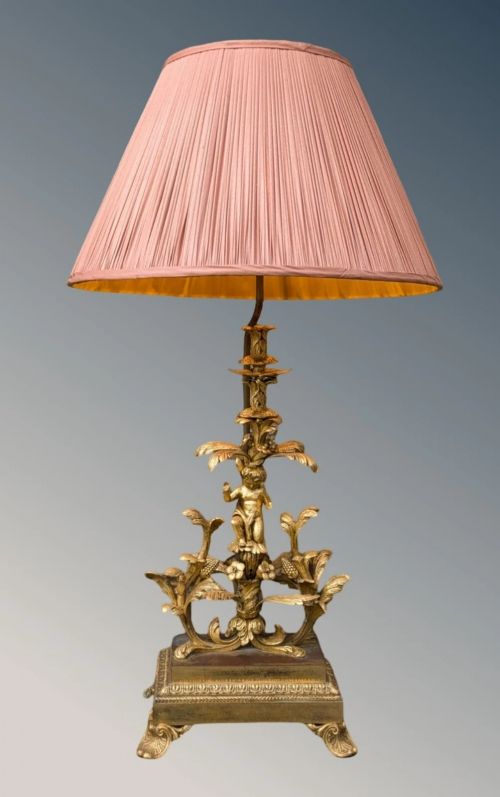
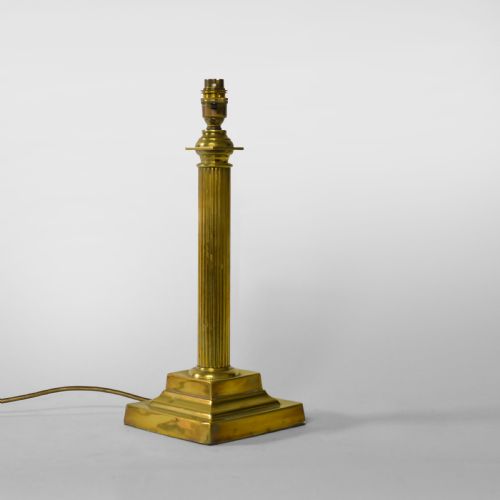
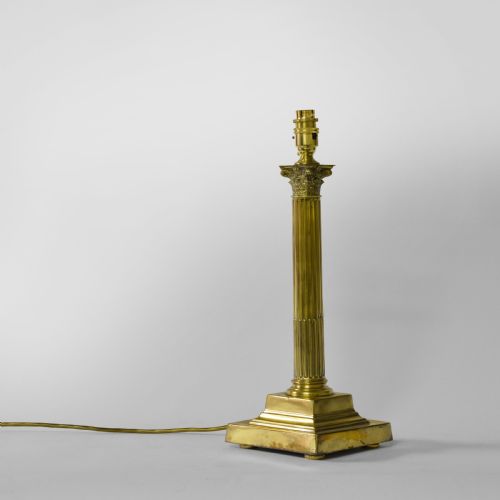
These brass pedestal table lamps bring heavy metal columns and classical orders straight onto your desk or side table.

What they are
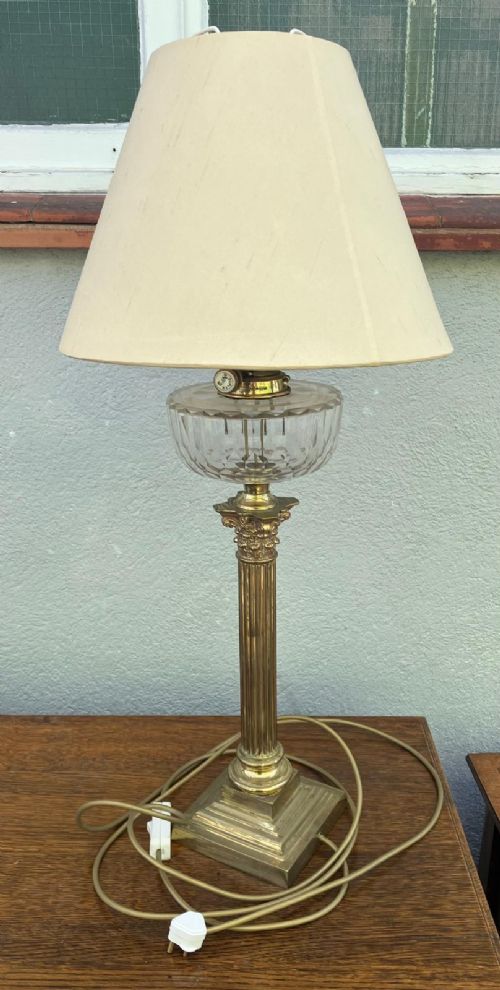
A brass pedestal table lamp stands on a heavy foot and rises as a metal column to hold a shade. When you search for a brass pedestal table lamp, you are looking at sturdy upright lighting solutions designed for daily use.
The versions you are most likely to meet on this page belong to the 19th Century, Edwardian period, and early 20th century up to 1920. They draw directly on Victorian and traditional English tastes, leaning heavily into classical revivalism.
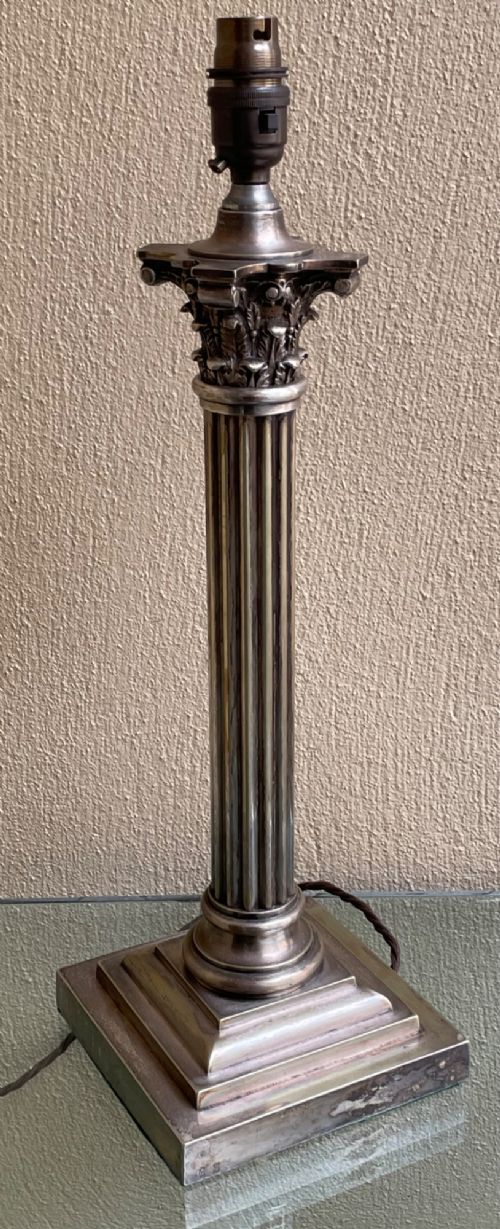
Most examples take the form of architectural columns rather than plain posts. They ground a room with substantial weight and traditional presence.
How they were made
These lamps utilise solid brass castings for the main shafts and bases, often paired with fabric, silk, glass beads, or plain glass for the shades. The metal parts are cast and turned to create crisp architectural details like fluting and stepped bases.
Makers shaped the metal columns into distinct orders, relying on traditional foundry work and hand-finishing techniques. The resulting structures combine enduring metal frames with delicate shade materials.
Retail Price Guide 2026
Typical UK retail prices for brass pedestal table lamp, calculated from the Sellingantiques database of over a million retail prices indexed since 2003. This retail price guide relies exclusively on Sellingantiques data; no external sources or auction records are used, so the figures do not describe the wider market.
Current listings span the 19th Century, 1900, 1910, Edwardian era, and 1920, using brass, fabric, silk, glass beads, and glass.
What varies in quality
Quality separates in the crispness of the cast architectural details, such as the acanthus leaves on a capital or the precision of the fluting down the shaft. Better examples show deep relief and clean edges rather than soft or blurred casting.
The choice of materials also dictates the tier, moving from simple spun metal bases to weighty classical capitals and refined fabric or glass bead shades. Heavier castings and sharper proportions distinguish the upper range.
The Brass Pedestal Table Lamp Glossary
- Corinthian column
- A classical architectural order featuring ornate capitals decorated with acanthus leaves. This style forms the defining motif for several Victorian and early twentieth-century examples.
- Doric column
- The simplest and sturdiest of the classical orders, characterised by a plain capital and fluted shaft. It provides a more austere architectural silhouette than the Corinthian variant.
- Neoclassical Revival
- A decorative movement reviving classical Greek and Roman forms during the nineteenth and early twentieth centuries. Lamps in this style imitate ancient architectural columns.
- Pedestal table lamp
- A portable lighting fixture raised on a distinct vertical support and base rather than sitting flat on a surface. It elevates the light source to give better reach.
Frequently Asked Questions
What periods do these lamps come from?
The pieces span the nineteenth century, the Edwardian era, and the early decades of the twentieth century up to 1920. They reflect traditional English tastes from these periods.
Most items date from the Victorian era through the 1910s and 1920s, showing consistent neoclassical revival design traits.
How are the columns styled?
The columns follow classical architectural orders, most notably the Corinthian and Doric styles. They feature detailed capitals and fluted shafts.
These designs translate stone architecture into domestic brass hardware, creating miniature columns to support light fittings.
What materials are used?
The structural elements rely entirely on brass and general metalwork. Shades incorporate fabric, silk, glass beads, or plain glass.
This combination pairs heavy cast metal bases with softer translucent or decorative shade coverings.
Where should I place one?
These lamps suit side tables, desks, and reading areas where a substantial traditional light source is required. Their upright column form fits well in period-styled rooms.
The heavy brass bases provide steady support while the classical design adds a formal decorative touch.