

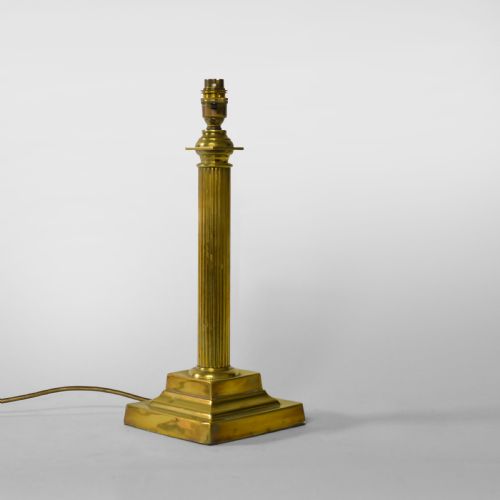
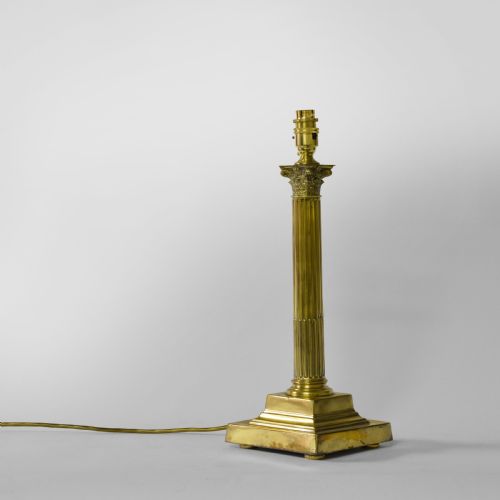


Heavy Brass Table Lamp
These heavy brass table lamps bring structural weight and polished warmth to an interior, built to anchor a room with period character.
Heavy Brass Table Lamp
A heavy brass table lamp combines solid metal foundations with functional lighting, appearing frequently in forms derived from Victorian and Edwardian domestic or ecclesiastical fittings. You will often encounter architectural columns, Gothic altar sticks, and converted oil lamps adapted for modern surfaces.
The selection spans the nineteenth century through the early twentieth century, taking in Neoclassical, Gothic Revival, and French Rococo designs. These pieces range from military and naval gimbal iterations to elegant domestic column standards.
Original oil lamps and altar candlesticks form a significant portion of these listings, having been converted for electrical use over time. Their substantial physical presence derives from solid cast components intended to remain stable during use.
Materials and construction methods
Foundry work relies heavily on cast brass, which provides the necessary heft and allows for intricate decorative detailing such as Corinthian capitals, claw feet, and floral motifs. Altar sticks and column bases utilise this heavy casting method to achieve structural stability.
Secondary materials such as cut glass, polished marble, and silk fringe elements appear in combination with the metalwork, adding textural contrast. Electrical wiring and replacement fabric shades are modern additions introduced during safety testing and restoration.
The inventory records pieces spanning the 1850s to the 1930s, constructed predominantly from cast brass alongside cut glass and polished marble.
Assessing quality and manufacture
The distinction between standard production and superior work lies in the crispness of the casting and the thickness of the metal used in the shaft and base. Finer examples exhibit sharply defined architectural detailing and substantial weight without hollow thinness.
Proportion and balance dictate the architectural success of a piece, with high-quality columns maintaining correct classical ratios. The integration of secondary elements like marble inserts or cut glass reservoirs also marks out more ambitious studio output.
The Heavy Brass Table Lamp Glossary
- Cast brass
- Molten metal poured into a mould to create solid, shaped components with high detail. This process ensures the substantial weight characteristic of these lamps.
- Corinthian column
- An architectural order featuring an ornate capital decorated with acanthus leaves. It is a popular motif for nineteenth-century table lamp bases.
- Gimbal
- A pivoted ring mounting that allows a lamp to remain level regardless of movement. These were commonly utilised in military and naval contexts.
- Altar candlestick
- A tall, heavy ecclesiastical candlestick adapted for domestic illumination. They form a robust subcategory of the available lighting.
- Neoclassical
- A style drawing on classical Greek and Roman art and architecture. It influences the clean proportions and symmetry seen in many column lamps.
Heavy Brass Table Lamp: Frequently Asked Questions
Are these lamps safe for modern electrical use?
Most antique lighting requires professional rewiring to meet contemporary safety standards before domestic installation. Many pieces have been updated with modern flex and tested accordingly.
Buyers should inspect the lampholder and wiring path to confirm suitability for their local electrical supply.
How do I identify a Corinthian column lamp?
Corinthian columns are easily recognised by their distinctive capitals adorned with carved acanthus leaf decoration. The shaft itself may be fluted or plain, rising from a stepped square base.
This classical vocabulary was widely used by Victorian makers to project architectural authority.
Can I use standard shades with these bases?
Standard shades can usually be fitted provided the harp or shade carrier matches the diameter of the existing lampholder. Proportion remains key when pairing a heavy brass base with a new fabric shade.
Consider the visual weight of the metal base to determine the appropriate scale and opacity for the shade.
What indicates an altar candlestick conversion?
Altar sticks typically feature an exceptionally heavy cast base, a drip pan beneath the nozzle, and a tall, sturdy stem designed for church use. The conversion process generally involves drilling the base or stem to conceal electrical wiring.
These pieces retain an austere, monumental presence distinct from domestic lamp designs.