

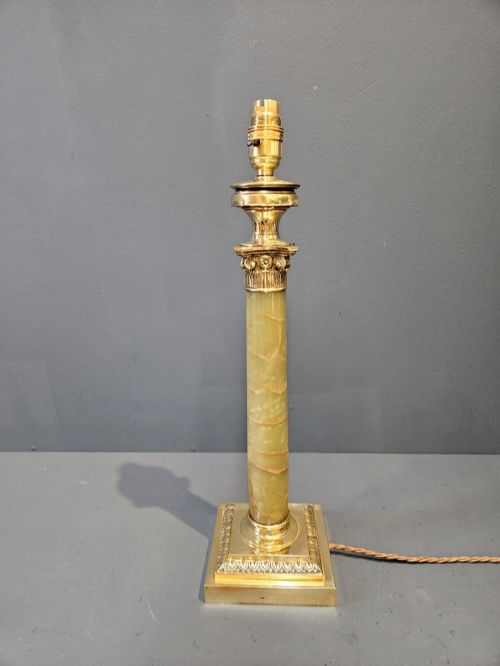
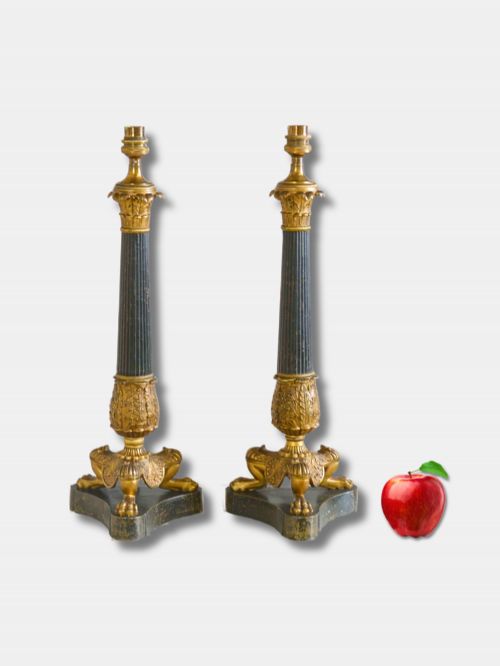
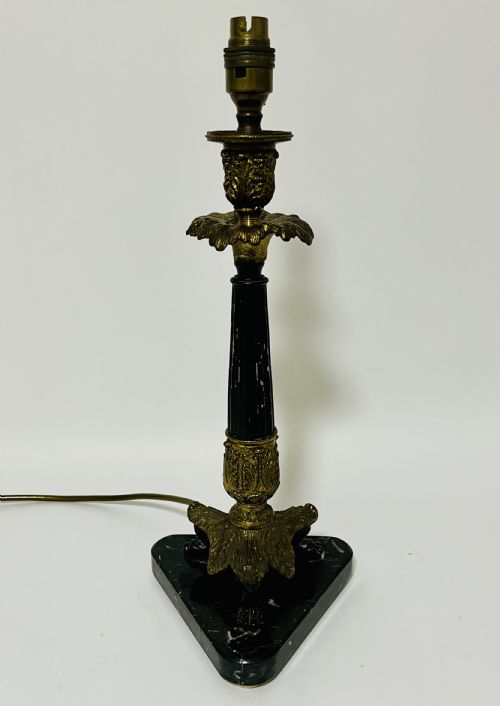
Neoclassical Brass Table Lamp
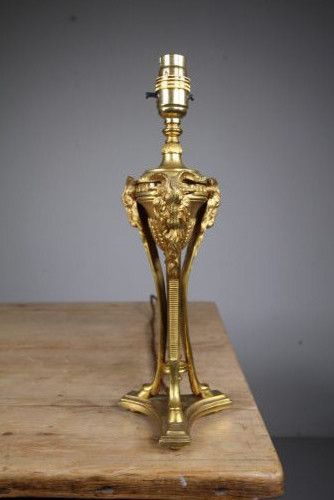
A neoclassical brass table lamp brings formal symmetry and classical architectural detail straight into a room.
What these pieces are
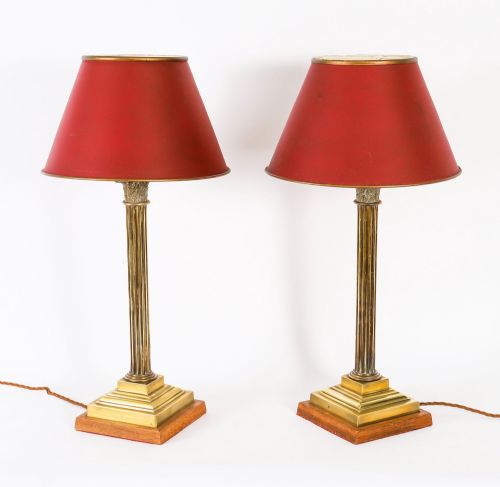
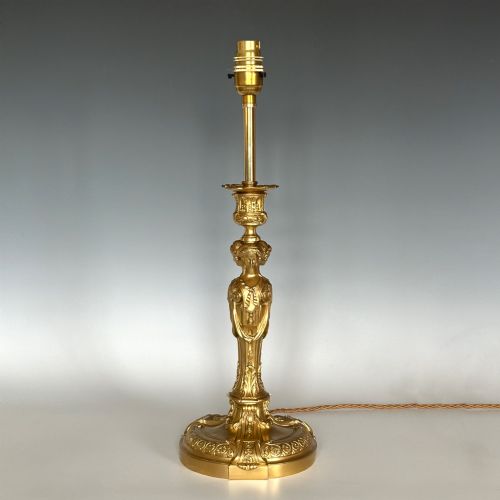
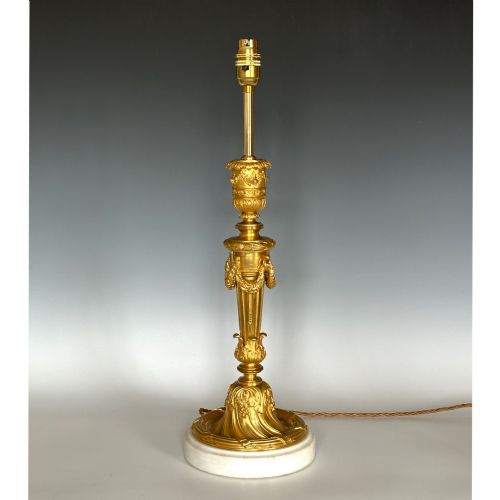
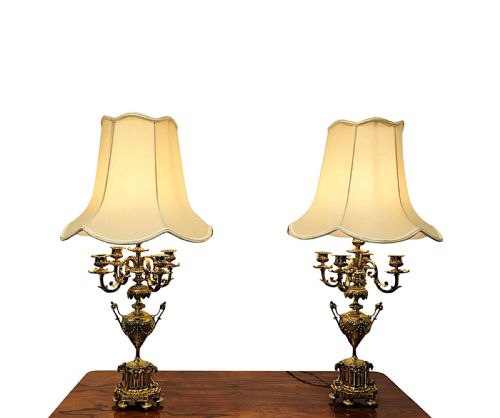
A neoclassical brass table lamp combines classical architectural forms with functional domestic lighting. These pieces draw directly on ancient Greek and Roman motifs, translating stone columns and capitals into polished metal.
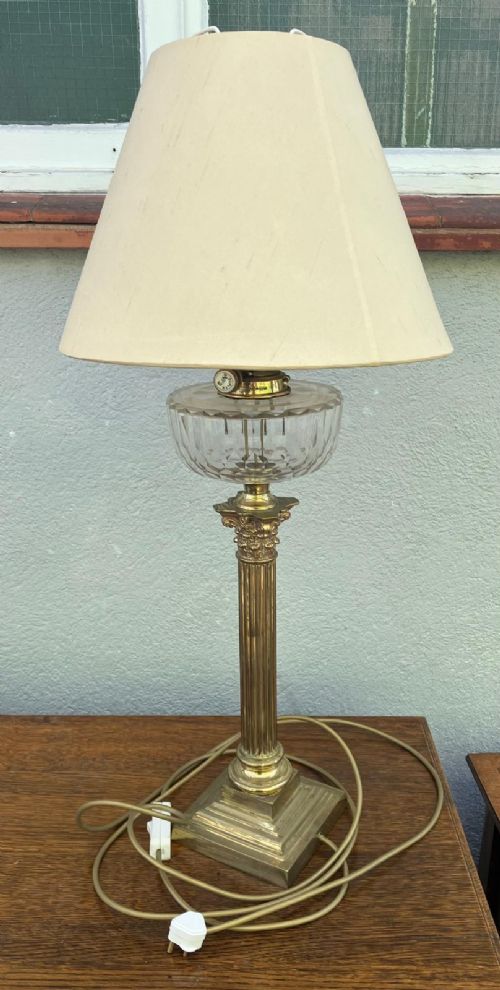
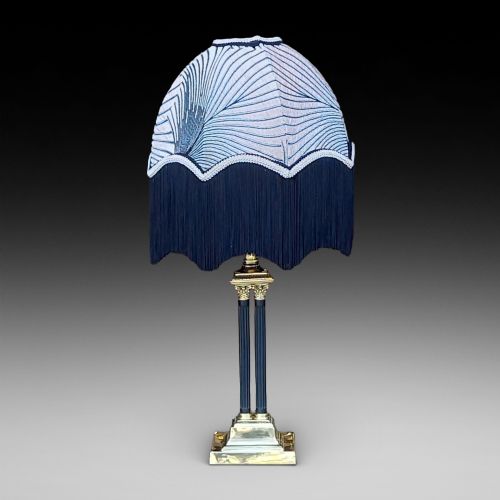
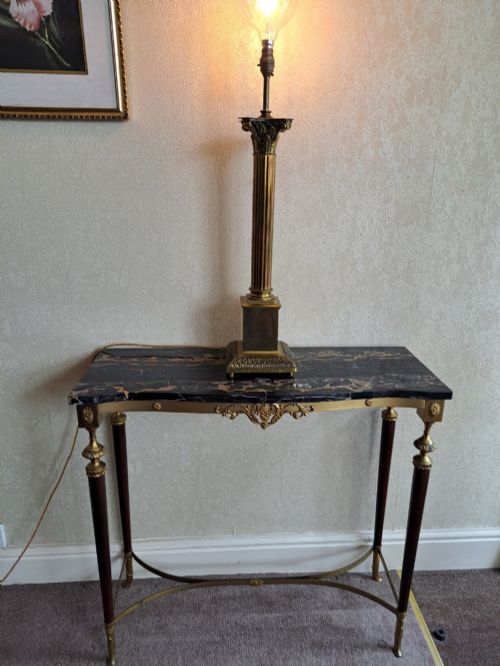
The versions most commonly met on this page take the form of ionic or corinthian column table lamps. Standing tall in brass, they echo monumental temple architecture on a domestic scale.
Makers adapted these classical designs during the Victorian era, the Edwardian period, and into the early twentieth century. Alongside standard table lamps, desk lamps appear in the inventory, often combining brass with painted toleware or cut glass reservoirs.
How they were made
Craftsmen built these lamps using heavy brass castings, turning columns on lathes and detailing capitals with acanthus leaves and volutes. Metal components were joined securely to create sturdy shafts capable of supporting weighted bases.
Makers incorporated contrasting materials into the metal framework. Cut glass reservoirs held lamp oil before conversion to electricity, while other examples paired brass with painted toleware shades and fabric elements.
Retail Price Guide 2026
Typical UK retail prices for neoclassical brass table lamp, calculated from the Sellingantiques database of over a million retail prices indexed since 2003. This retail price guide relies exclusively on Sellingantiques data; no external sources or auction records are used, so the figures do not describe the wider market.
The inventory records pieces spanning the Victorian era, the Edwardian period, and the early twentieth century.
What varies in quality
Quality reveals itself in the crispness of the casting on the column capitals and the weight of the brass used throughout the body. Finer examples display sharp, hand-finished detailing on the acanthus leaves rather than soft, mass-produced contours.
The integration of secondary materials defines the upper tier of pieces. Lamps featuring heavy cut glass reservoirs or bespoke painted toleware components show a higher level of decorative ambition than plain metal shafts.
The Neoclassical Brass Table Lamp Glossary
- Corinthian
- A classical order of architecture characterised by ornate capitals decorated with acanthus leaves. Lamps using this form feature elaborate, scrolled corners at the top of the brass column.
- Ionic
- A classical architectural style identifiable by the scroll-like volutes on the capital. Victorian makers frequently utilised this slender column design for desk and table lamps.
- Reservoir
- The glass container situated beneath the burner on older lamps. In neoclassical pieces, these are often fashioned from heavy cut glass.
- Toleware
- Painted or lacquered metalware used for shades and bodies. French examples pair this colourful material with polished brass structures.
Frequently Asked Questions
How do I date a brass column lamp?
Dating relies on examining the construction methods, wiring ports, and base weighting. Victorian and Edwardian examples often feature heavy brass castings and threaded components distinct from later reproductions.
Looking closely at the wear patterns on the brass and the style of the capital helps narrow down whether the piece dates to the nineteenth century or the early 1900s.
Were these lamps originally electric?
Most nineteenth-century examples started life as oil or paraffin lamps before undergoing conversion to electricity later in their lives. The presence of a cut glass reservoir usually indicates an oil-burning origin.
Conversion work often retains the original metal columns and burners while adapting the internal wiring for modern domestic use.
Where should I place a column lamp?
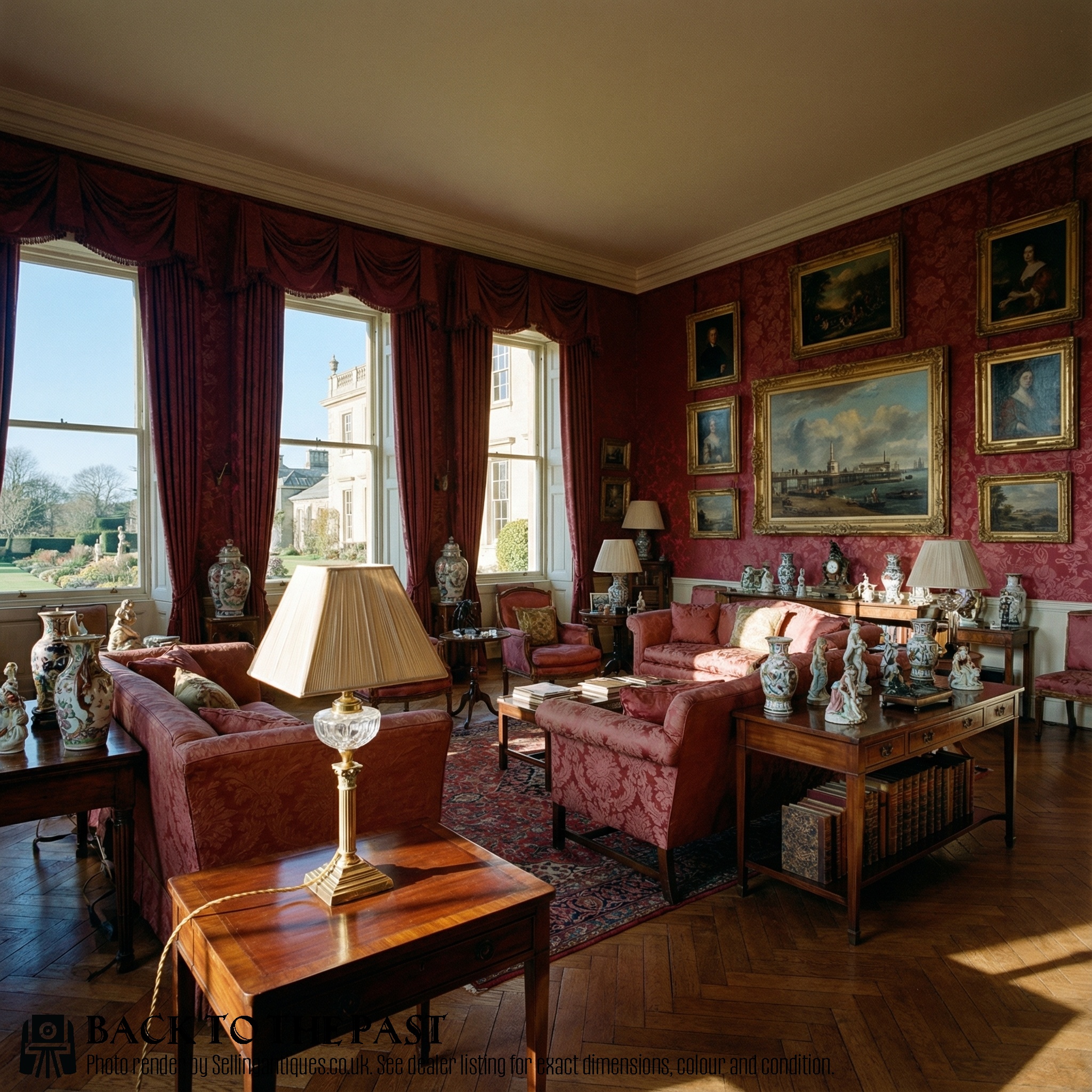
These tall architectural lamps suit sideboards, large desks, and sturdy hall tables where their vertical presence balances the surrounding furniture. Their formal symmetry works well in traditional reception rooms.
Placing them on a stable surface ensures the heavy brass base and column remain secure, particularly when paired with a fabric shade.
What is a cut glass reservoir?
The reservoir is the middle section of the lamp that once held fuel above the heavy metal base. Cut glass versions feature geometric or floral patterns sliced into the surface to catch the light.
On surviving pieces, this glass sits directly beneath the burner assembly, adding textural contrast to the polished brass column below.