

Silver Plated Column Lamp
When searching for a silver plated column lamp, a buyer seeks a dignified lighting fixture rooted in classical architecture.
Silver Plated Column Lamp
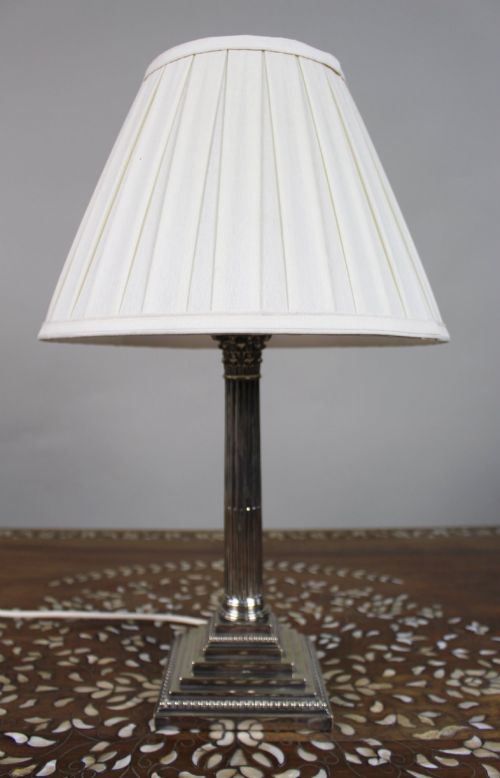
A silver plated column lamp brings architectural proportion to domestic lighting, taking its cues from ancient building forms. Buyers encounter these pieces primarily as table lamps or floor-standing variants, drawing upon classical design principles popular in past decades.
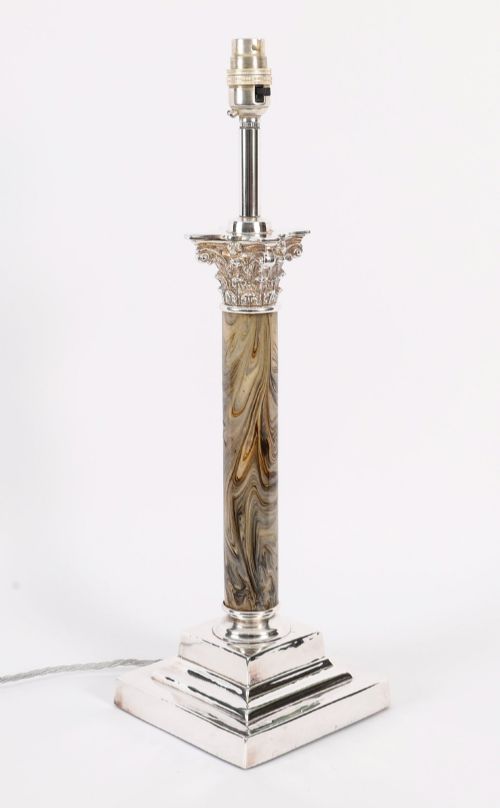
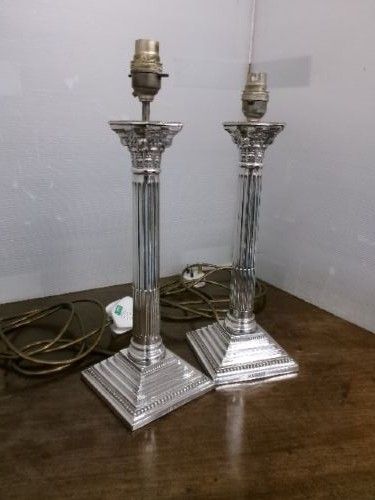
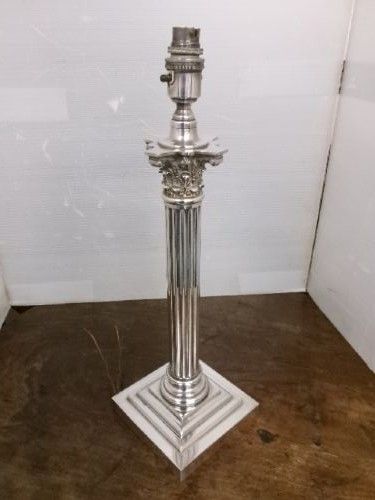
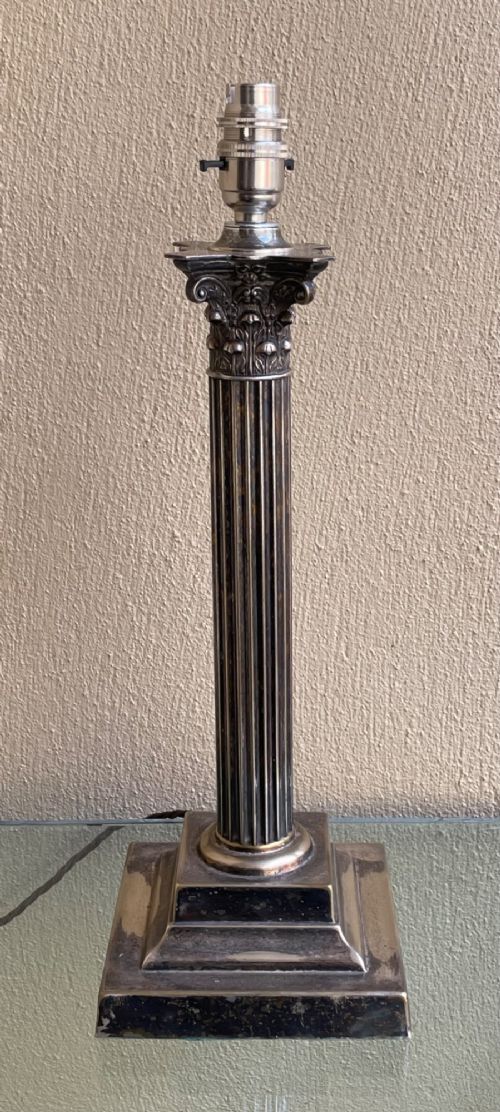
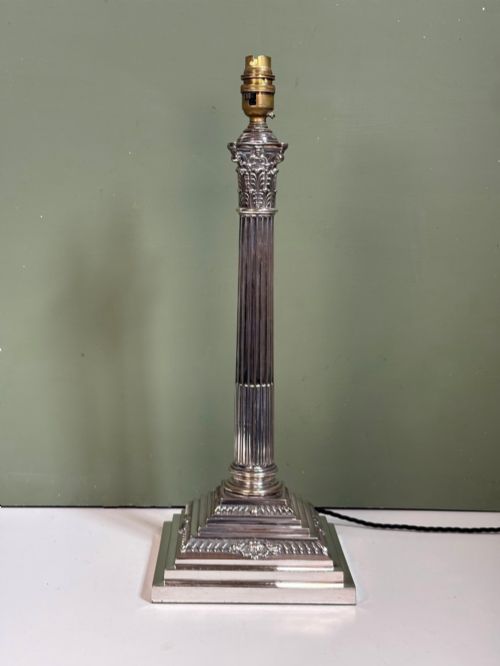
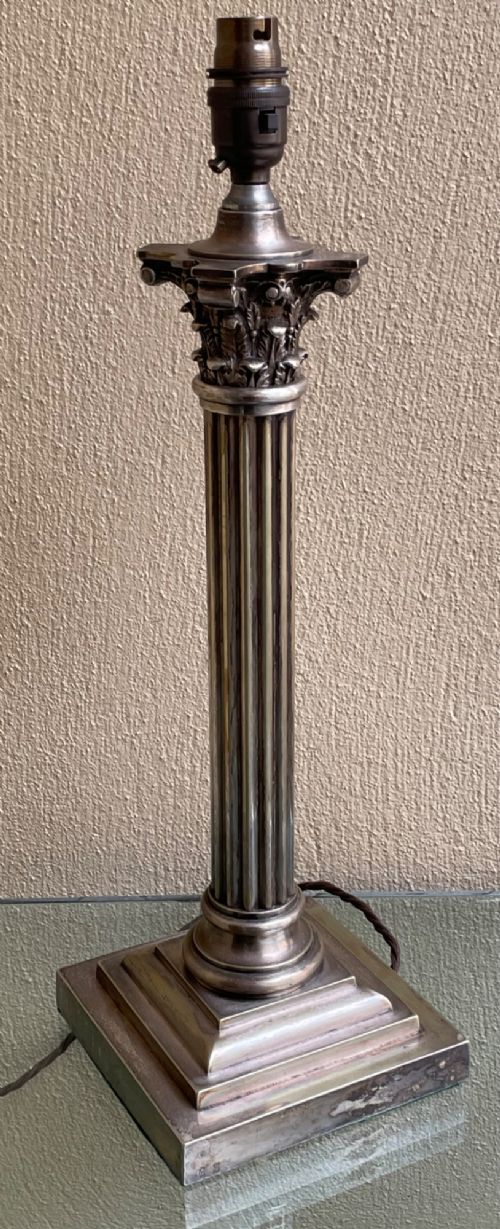
The most common form on this page is the Corinthian column, modelled closely on antiquity with fluted shafts and elaborate acanthus leaf capitals. These designs span the Victorian, Edwardian, and early twentieth-century periods, often originating from periods of classical revival.
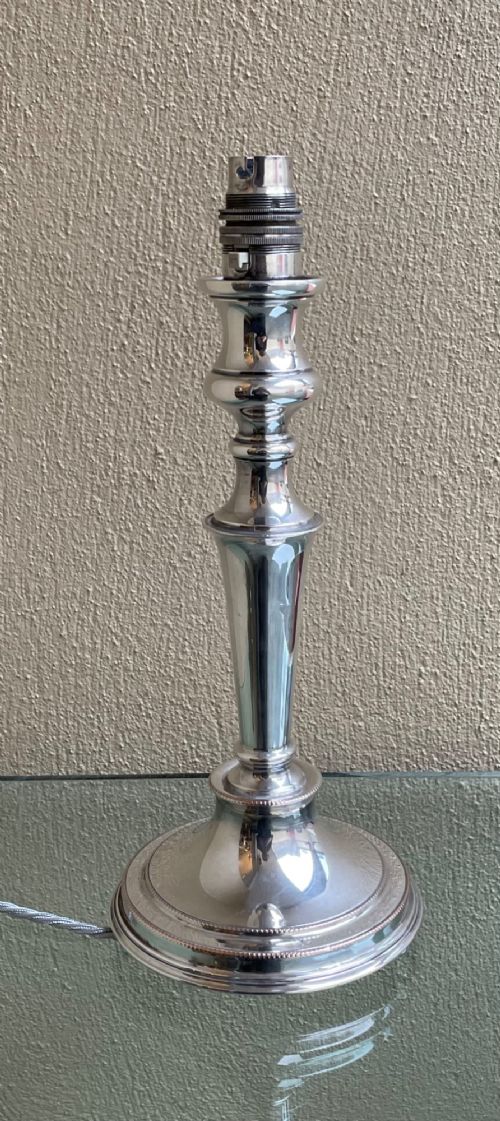
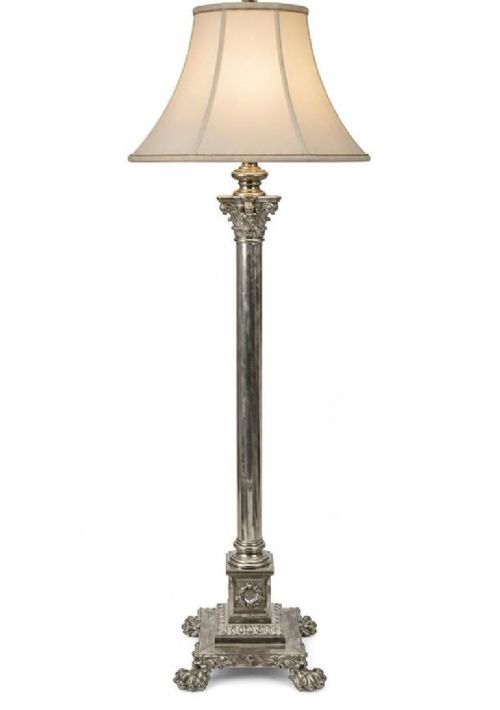
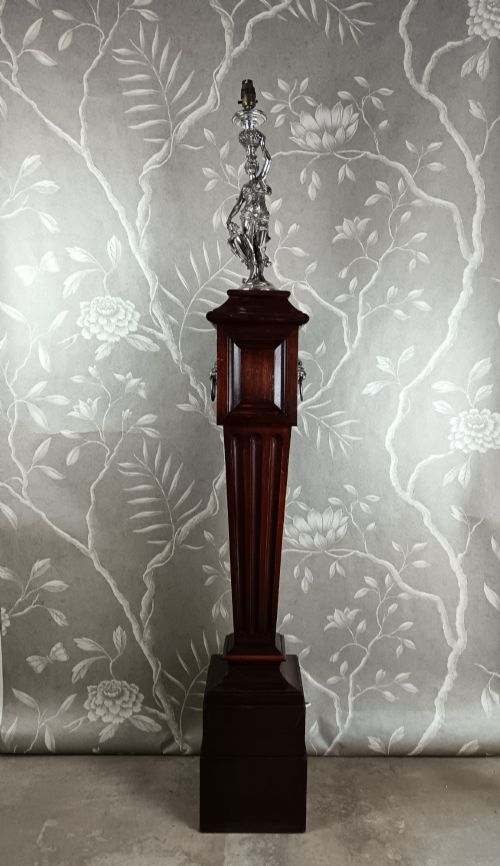
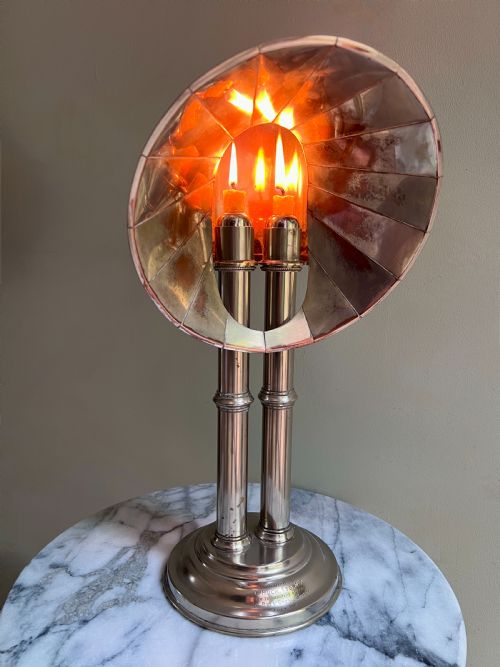
Alongside standard table heights, the selection encompasses conversion pieces originally built as oil lamps, candle lamps, or torchere standards. These objects bridge the gap between functional household items and formal decorative sculpture.
How They Were Made
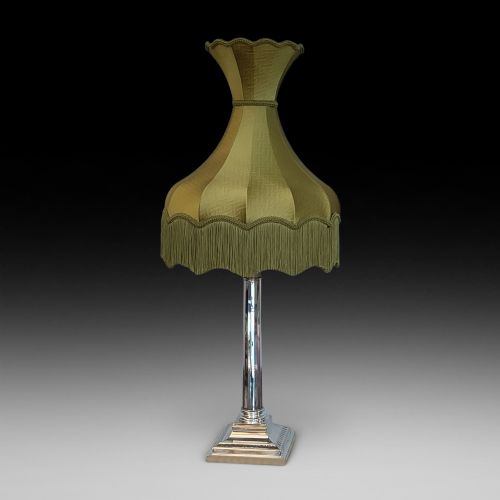
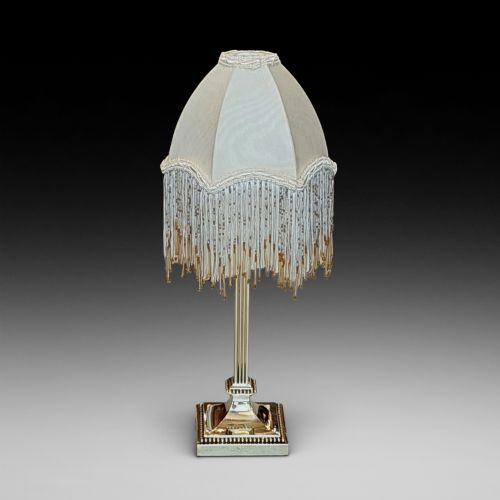
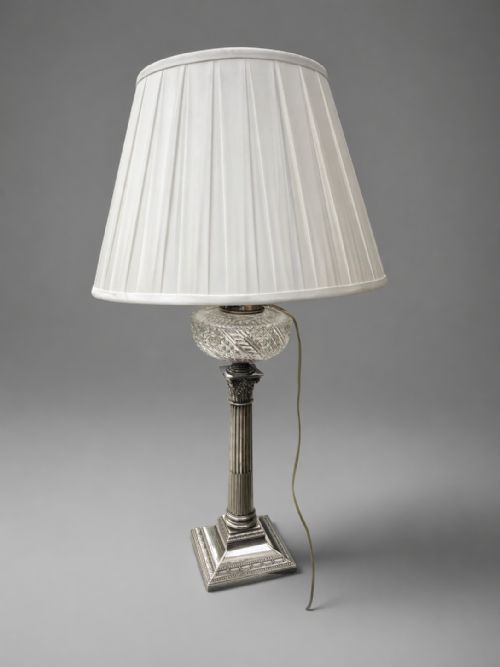
Manufacturers built these lamps upon a sturdy core of brass or base metal, applying a layer of silver via electroplating to achieve a polished metallic finish. Some examples incorporate contrasting elements such as cut glass segments, silk shades, or polished onyx shafts.
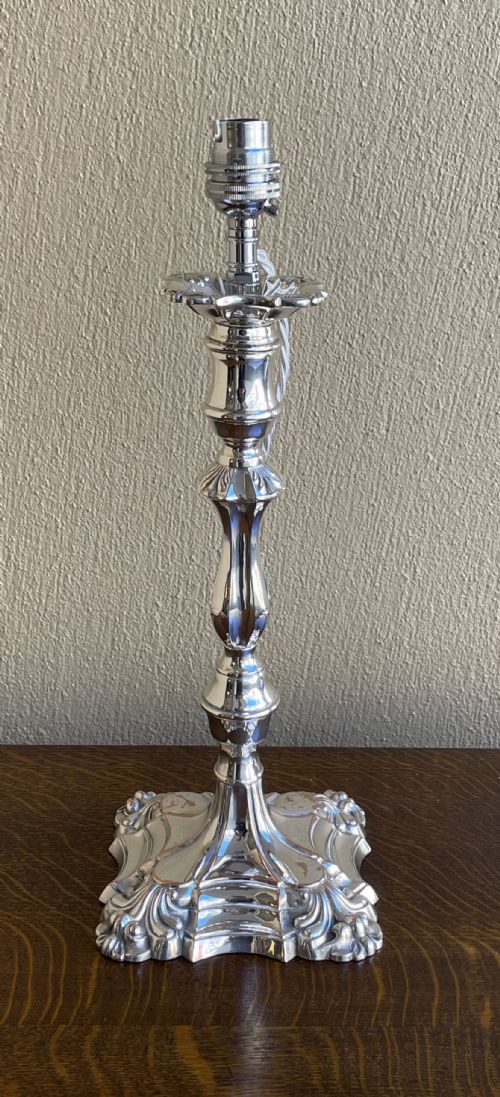
The classical capitals and stepped square bases were frequently cast in separate sections before being joined to the central column. Details like lion's paw feet or beaded collars were soldered or cast directly into the metalwork structure.
Listings feature items spanning the Victorian, Edwardian, and 1920s periods, executed in silver plate, brass, onyx, and cut glass.
What Varies in Quality
Quality rests upon the crispness of the casting work, particularly visible in the fine detail of the acanthus leaves and volutes upon the capital. Superior examples maintain sharp relief and clean architectural lines rather than softened, worn contours.
The thickness and durability of the original silver plating determine how well the surface ages over decades of handling and polishing. Heavier gauge metalwork provides a reassuring weight and stability to the completed lamp base.
WMF·Goldsmiths and Silversmiths Company·Harrison Brothers and Howson·Palmer and Co·Mappin and Webb
The Silver Plated Column Lamp Glossary
- Corinthian column
- A classical architectural order featuring an ornate capital decorated with rows of carved acanthus leaves and small scrolls. This motif remains the most frequently encountered style for antique metal lamps.
- Electroplate
- A process of depositing a layer of silver onto a base metal using electrical current, widely adopted by nineteenth-century manufacturers. It allowed makers to produce solid-looking silver objects at a fraction of the cost.
- Doric column
- A sturdy classical column style with a plain, unadorned capital sitting atop a fluted or smooth shaft. These offer a more austere aesthetic compared to the ornate Corinthian alternative.
- Pricket candlestick
- A spike-topped metal stand designed originally to hold a large candle directly upon a central point. Converted versions appear as tall lighting fixtures.
- Torchere
- A tall standing floor lamp or pedestal designed to hold a light source high above the ground. These substantial pieces often feature figural statuary elements.
Silver Plated Column Lamp: Frequently Asked Questions
How are oil lamps converted?
Many historical oil lamps undergo conversion to electricity by threading a cord through the original burner mechanism or font. This process allows traditional lighting pieces to function safely with modern wiring.
Rewired examples retain their decorative brass reservoirs and burners while discreetly accommodating standard bulb fittings.
What periods do these date to?
The available lighting pieces predominantly date from the Victorian and Edwardian eras, spanning the late nineteenth into the early twentieth century. Neoclassical revival movements during these decades strongly influenced their architectural designs.
Maker marks and stylistic details help narrow the manufacturing date within these broad historical periods.
Are pairs commonly found?
Matching pairs of column lamps appear regularly, often originating from grand dining rooms or formal reception spaces where symmetrical lighting was preferred. These matched sets take considerable time to source due to losses over the decades.
Individual lamps remain more common as standalone accent pieces for side tables or desks.
How heavy are these lamps?
These fixtures possess a substantial weight owing to their solid metal cores and stepped weighted bases. This heft prevents tipping when supporting heavy fabric or glass shades.
Larger floor-standing standards and two-foot column lamps require careful placement to ensure absolute stability on domestic flooring.