


Classical Revival Lighting
Classical revival lighting brings ancient architectural forms into domestic interiors through brass columns, bronze candelabras and marble bases.
Classical Revival Lighting
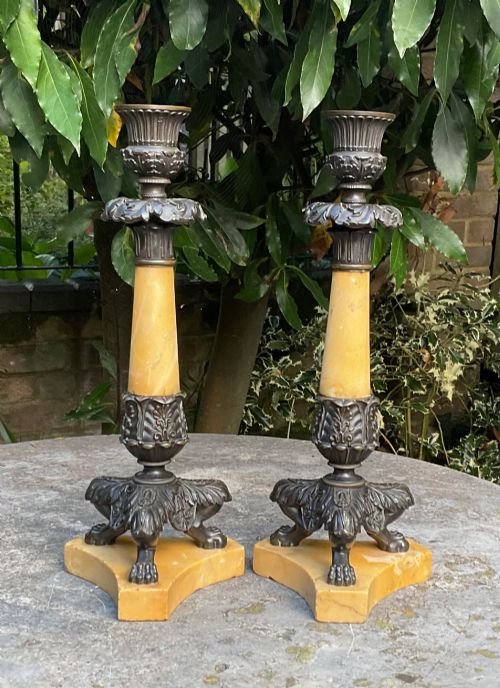
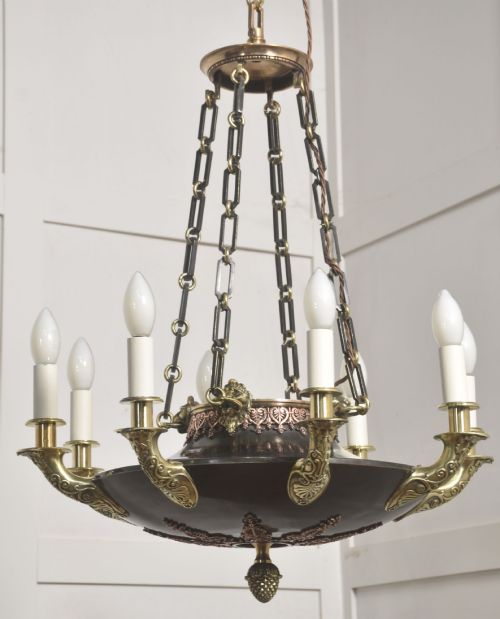
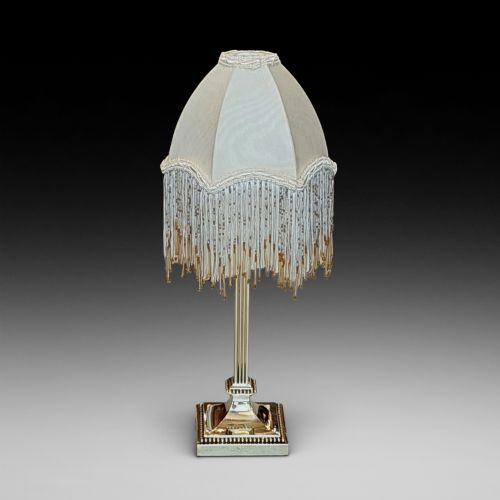
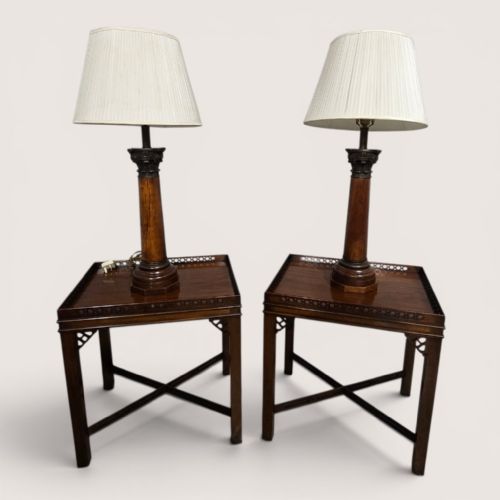
Classical revival lighting draws heavily upon ancient Greek and Roman motifs, translating architectural columns and sculptural figures into functional illumination. Buyers seeking these pieces encounter table lamps, wall lights, and multi-branched candelabras designed to project formal elegance. The selection ranges from compact Edwardian desk lamps to grand Victorian silver-plated candelabras and heavy bronze standards.
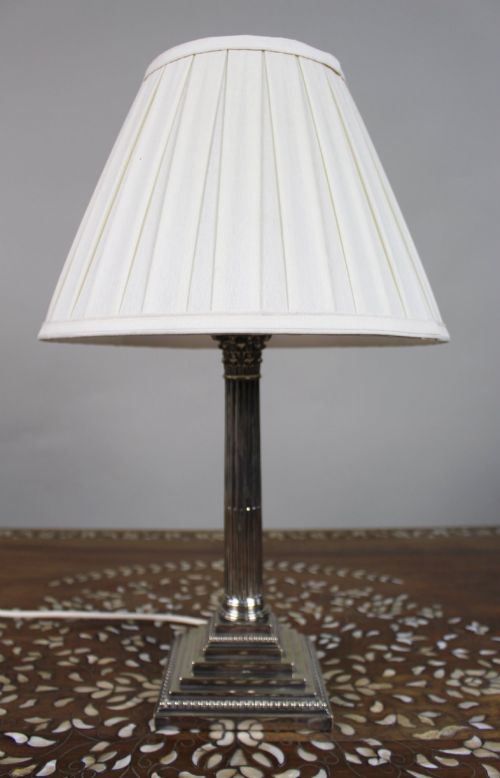
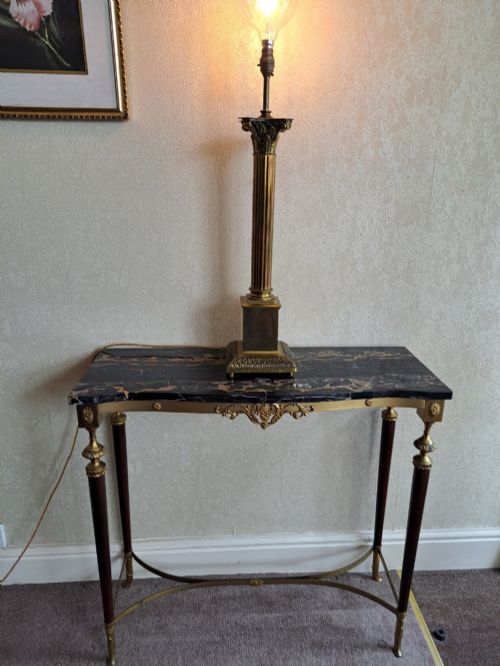
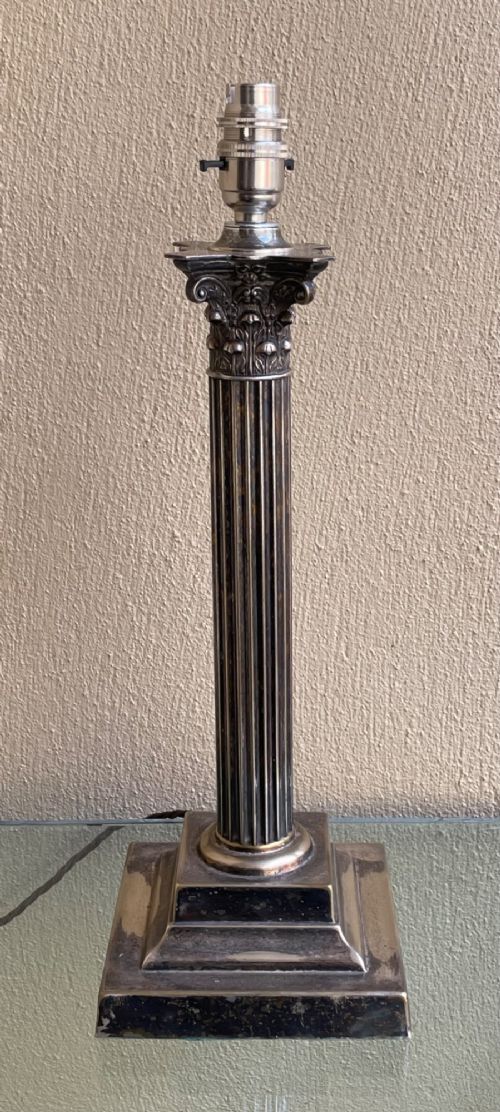
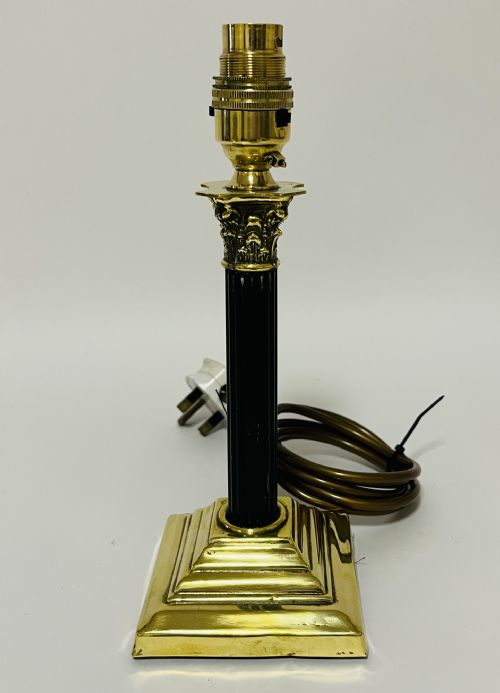
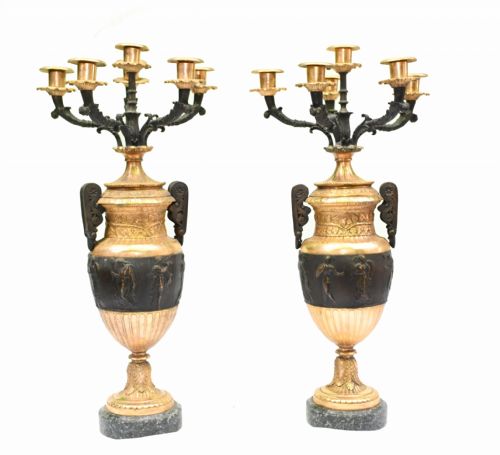
Most examples originate from British and French workshops active across the nineteenth and early twentieth centuries. Corinthian column table lamps in polished brass or silver plate appear frequently alongside French ormolu and marble pieces. Makers during the Victorian, Edwardian, and Regency periods reinterpreted classical vocabularies to suit contemporary drawing rooms and libraries.
Distinctions in Execution
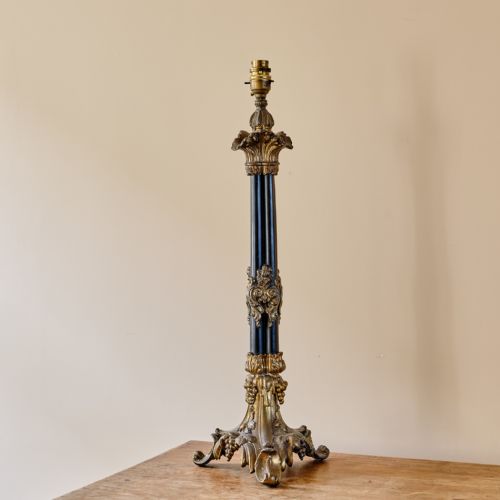
Quality rests upon the crispness of the cast ornamentation and the weight of the materials employed. Superior pieces display sharply rendered acanthus capitals, deep relief work on figural mounts, and substantial marble or bronze bases that anchor the design securely. Weaker examples show soft detailing in the chasing and lighter gauge metals that lack rigidity.
Proportion and material integrity dictate the standing of an individual piece. Finer items integrate distinct media, such as bronze and marble or ormolu and onyx, with tight joints and original gilding rather than applied modern lacquers. The sophistication of the revival style depends entirely upon the fidelity of the classical proportions.
Mythical mermaid bases and rock crystal columns occasionally support French lighting designs from the turn of the twentieth century.
Harrison Brothers & Howson
The Classical Revival Lighting Glossary
- Ormolu
- Gilded bronze used widely in French decorative metalwork. The technique involves applying a gold amalgam to a bronze base before heating.
- Corinthian column
- An architectural order featuring an ornate capital decorated with rows of acanthus leaves. It forms the most common shaft design for period table lamps.
- Torchère
- A stand or tall lamp designed to carry a light source aloft. Figures holding torches often provide the vertical support in revival pieces.
- Candelabra
- A branched candlestick holding multiple lights. These fixtures distribute illumination across several arms extending from a central stem.
- Patina
- The surface sheen developed through age and handling. This coloration indicates the natural oxidation of metals over decades.
Classical Revival Lighting: Frequently Asked Questions
What is classical revival lighting?
Classical revival lighting encompasses lamps, candelabras, and wall fixtures that draw design inspiration from ancient Greek and Roman architecture. These pieces utilise traditional motifs like fluted columns and acanthus leaves.
Craftsmen during the nineteenth and early twentieth centuries reinterpreted these ancient forms using brass, bronze, and marble for domestic interiors.
Are these lamps wired for modern use?
Many period lamps have been adapted for contemporary electrical standards while retaining their original brass or bronze structures. Rewiring allows antique standards to function safely in modern rooms.
Buyers should inspect the internal wiring and bulb holders to ensure compatibility with current safety regulations.
Where were these pieces made?
The listings feature items primarily produced in British and French workshops during the nineteenth and early twentieth centuries. Continental pieces often incorporate marble and gilt bronze.
English manufacturers frequently specialised in silver-plated and brass Corinthian column designs.