

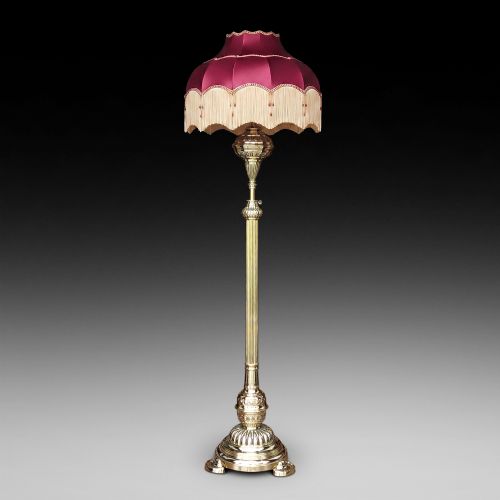
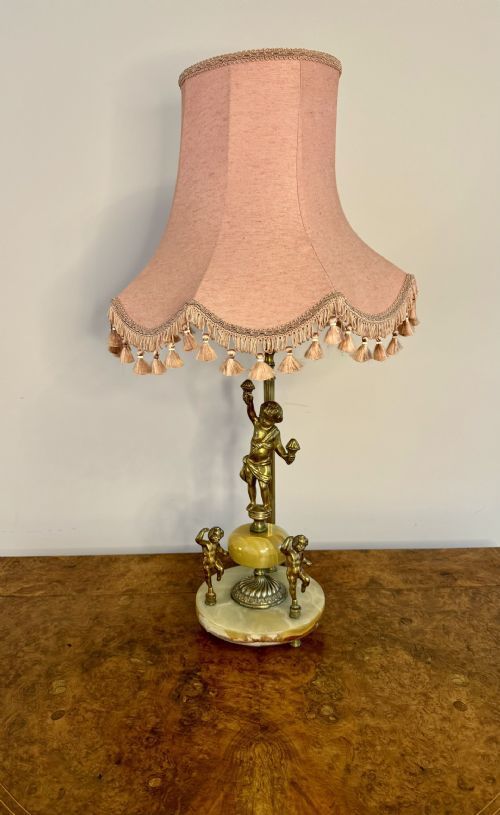
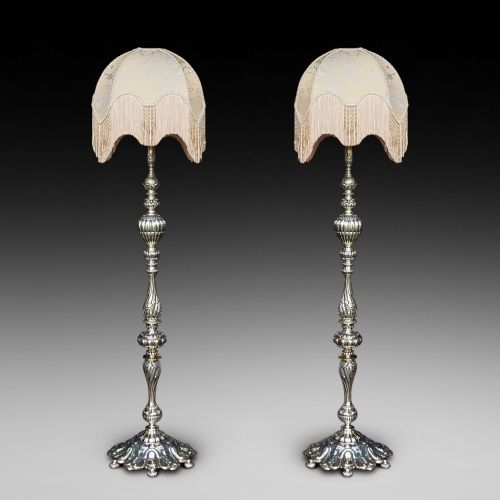
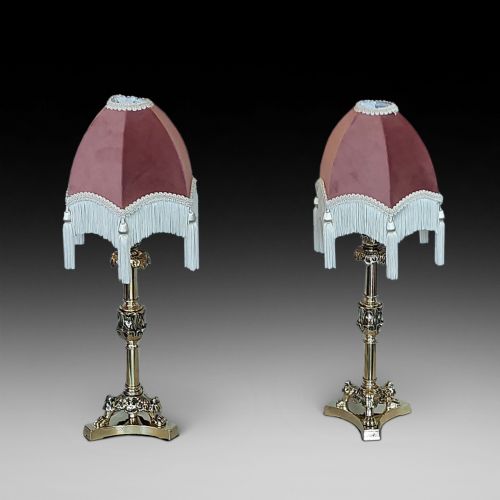


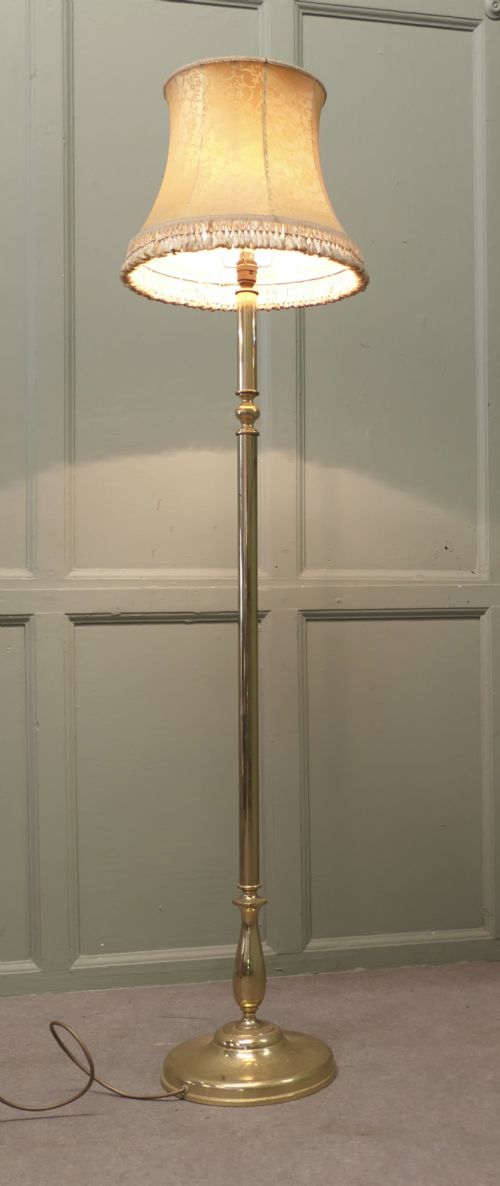


Fringed Brass Lamp
A fringed brass lamp brings warm, textured light and period character to a room through heavy metalwork and decorative fabric.
Fringed Brass Lamp
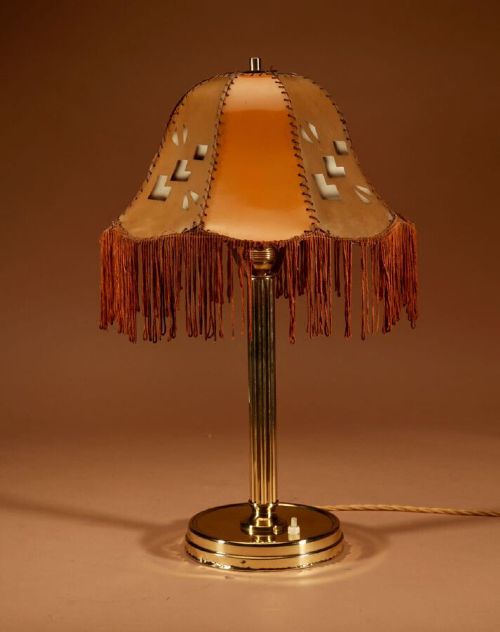
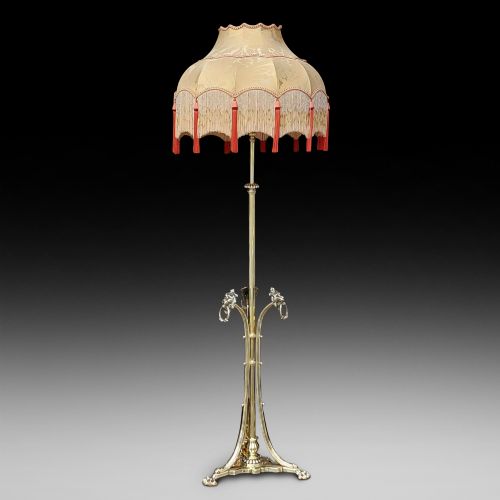
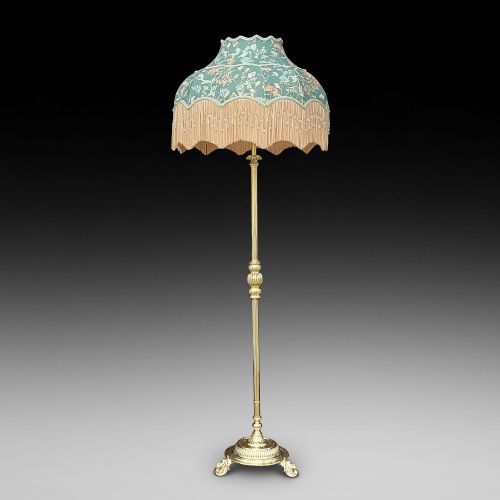
A fringed brass lamp encompasses standard floor lamps, adjustable reading lights, and table lamps originating from the Victorian, Edwardian, and early twentieth-century periods. These pieces combine substantial metal bases with fabric shades embellished with silk, fringe, and glass beads.
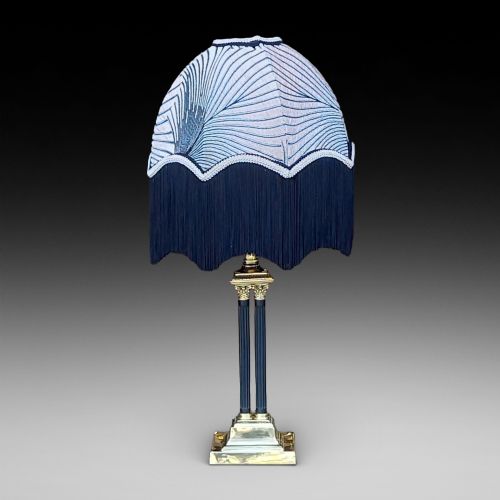
The selection ranges from tall Corinthian column standards to converted oil lamps and heavy desk designs. Many pieces display styles spanning Art Nouveau, Arts and Crafts, and Neoclassical Revival.
Buyers encounter standard lamps with telescopic stems alongside smaller boudoir and table models. Brass, bronze, and copper form the primary structural foundations for these varied lighting fixtures.
Craftsmanship and Materials
Maker construction relies heavily on cast and pressed brass, complemented by secondary materials such as white onyx, porcelain, and wrought copper. Standard lamps frequently utilise heavy weighted bases to support adjustable stems and telescopic mechanisms.
Shades incorporate delicate textiles, silk panels, and applied glass beadwork designed to diffuse light softly. Metal components receive various finishes, from polished gilt to patinated dark bronze and beaten copper surfaces.
Listings feature brass, bronze, and copper alongside fabric shades, silk, and glass beads across Victorian and Edwardian periods.
Judging Quality in Period Lighting
Quality rests in the weight of the metal casting and the precision of mechanical adjustments, such as telescopic columns and screw keys. Superior examples demonstrate crisp detailing on Corinthian capitals, floral openwork bases, and figural mounts like eagles or cherubs.
The integrity of the original components, including weighted bases and integrated oil-lamp conversions, separates standard production items from finer workshop pieces.
Hinks of B'ham
The Fringed Brass Lamp Glossary
- Standard Lamp
- A tall floor-standing lighting fixture designed to illuminate a room from standing height. These pieces often incorporate heavy bases and adjustable stems.
- Telescopic
- A descriptor for adjustable stems that allow the height of the lamp to extend or contract. This mechanism appears on floor and standard lighting from the nineteenth and early twentieth centuries.
- Ormolu
- Gilded bronze or brass applied to decorative mounts and lamp bases. The finish provides a rich, gold-coloured sheen characteristic of French and Victorian decorative arts.
- Steamer Lamp
- A specialised reading or utility lamp designed for stability on ships or in compact spaces. These pieces often feature secure adjustments and weighted components.
Fringed Brass Lamp: Frequently Asked Questions
What is a standard lamp?
A standard lamp is a tall floor-standing lighting fixture designed to provide ambient illumination across a room. These pieces often feature heavy bases to maintain stability when extended.
Many examples include adjustable stems or telescopic mechanisms developed during the Victorian and Edwardian eras.
How do I identify a Victorian lamp?
Victorian lamps typically display classical revival motifs such as Corinthian columns, heavy brass casting, or ornate floral openwork bases. Many started as oil lamps before later conversion to electricity.
Look for structural elements like adjustable brass collars and substantial metal weights within the base.
Are these lamps converted from oil?
Several tall standards and table lights began life as oil-burning lamps before receiving modern electrical fittings. These conversions often retain original burners, reservoirs, or extending stems.
Such pieces combine period oil-lamp mechanics with contemporary wiring for domestic use.
Where should I place a floor lamp?
Floor standards suit corners of reception rooms or beside reading chairs where adjustable height proves useful. Their heavy metal construction requires a stable surface.
Telescopic models allow the height to adapt to different seating arrangements and ceiling proportions.