



Chrome and Glass Lamp
A chrome and glass lamp delivers the clean lines and reflective sheen that define the industrial interior.
Chrome and Glass Lamp
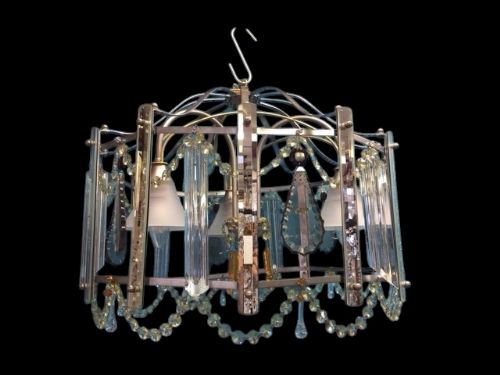
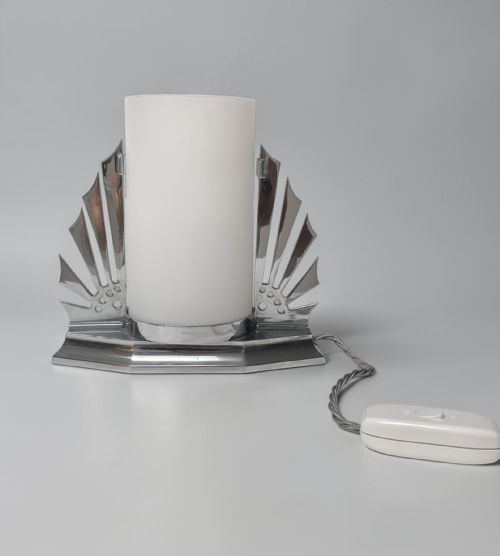
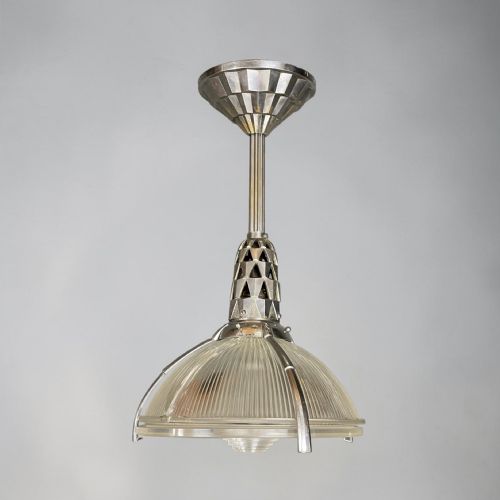
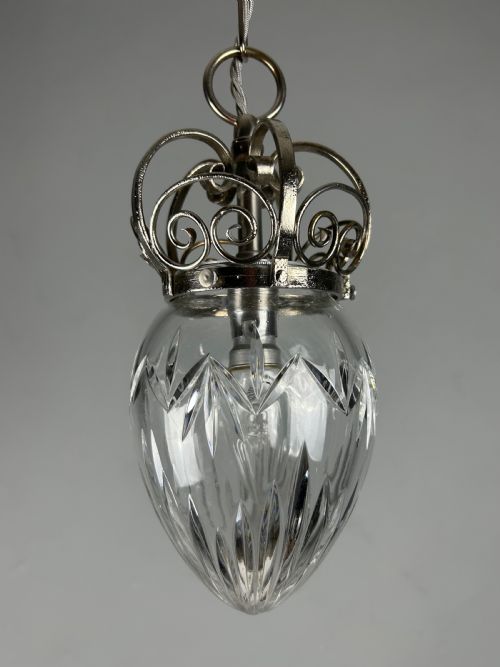
A chrome and glass lamp combines metallic plating with translucent or moulded shades to direct and soften interior illumination. The pieces on this page span table lamps, wall lights, pendant lights, ceiling lights, floor lamps, and desk lamps.
Most examples originate from the 1920s, 1930s, and 1940s, embodying Art Deco, Industrial Art Deco, Modernist, and French Art Deco styles. Edwardian and Regency periods also appear among the diverse lighting and occasional furniture forms.
Table lamps and wall sconces form the core of the selection, frequently paired as matching sets or architectural torcheres. Collectors encounter specialised designs including adjustable desk lamps, figural bases, and clam shell ceiling fittings.
How they were made
Makers utilised electroplated chrome over steel or base metal to provide a durable, mirror-like finish that resists tarnishing. This metallic structure paired with glass elements such as frosted, opaline, milk, pink, and cut glass.
Glass components were blown, moulded, or pressed into distinctive geometric shapes like trumpet sconces, flame motifs, and fish scale shades. Bakelite occasionally appeared in electrical housings and switch components to complement the metalwork.
Lighting assemblies relied on metal galleries and tubular brackets to secure heavy glass shades safely. Adjustable joints and weighted bases provided mechanical function to floor lamps and desk models.
Listings feature chrome, steel, and Bakelite paired with frosted, opaline, milk, and pink glass across table, wall, and ceiling forms.
What varies in quality
The sophistication of the glass moulding dictates the visual distinction of a piece, separating standard production shades from artistic works with complex reeded, clam shell, or figural details. Heavier gauge chrome plating and solid metal construction indicate higher manufacturing standards.
Cohesion of design separates ordinary lighting from exceptional examples, particularly in matched pairs and suites where the chrome mounts and glass diffusers integrate seamlessly. The presence of specialised engineering, such as working adjustable arms or intricate figural bases representing athletes and dancers, elevates a piece.
Émile-Jacques Ruhlmann·Peter Ghyczy
The Chrome and Glass Lamp Glossary
- Chrome
- An electroplated metallic coating providing a bright, reflective, and corrosion-resistant surface. This finish defines the sleek aesthetic of twentieth-century industrial design.
- Opaline glass
- A milky, translucent glass that diffuses light evenly without harsh glare. It was frequently blown into pendants and shades during the early twentieth century.
- Torchiere
- An uplighter floor lamp designed to bounce illumination off the ceiling. These tall fixtures create ambient room lighting through exposed glass bowls.
- Bakelite
- An early synthetic thermosetting plastic utilised for electrical components and switch bases. Its dark, durable finish complements polished metal hardware.
- Sconce
- A wall-mounted light fixture secured by a bracket. These pieces often feature matching pairs of glass shades held by chrome galleries.
Chrome and Glass Lamp: Frequently Asked Questions
How do I date a chrome lamp?
Dating relies on stylistic markers such as stepped geometric bases, tubular metal construction, and moulded glass shade shapes typical of the interwar decades. Manufacturers frequently integrated materials like Bakelite alongside chrome, aligning pieces with specific design movements from the nineteen-twenties and thirties.
Examining construction methods and patent marks on internal fittings provides further chronological context. Original wiring standards and switch types also help narrow down the production era.
Are these lamps safe for daily use?
Vintage lighting generally requires rewiring to meet modern electrical safety standards before regular use in a contemporary home. Professional electricians can easily update internal cords while preserving original sockets and switches.
Collectors should check that metal frames remain stable and glass shades fit securely into their chrome galleries. Regular dusting keeps the reflective surfaces bright without damaging historic finishes.
Where should I place a torchiere?
Torchieres function best in corners or beside seating areas where their upward-directed light can bounce off ceilings to illuminate a room. These tall floor lamps provide ambient glow rather than direct task lighting.
Positioning them away from high-traffic walkways protects the upright chrome shaft and heavy glass bowl from accidental knocks. Their vertical profile makes them effective for adding height to interior spaces.
What is the difference between opaline and milk glass?
Opaline glass possesses a subtle translucency that allows light to diffuse with a soft, glowing quality. Milk glass is typically more opaque and solid in appearance, offering a dense white finish.
Both materials were utilised in period shades to soften the glare of early incandescent bulbs. Their smooth surfaces complement polished chrome fixtures.