


Chrome Desk Lamp
A chrome desk lamp brings bright industrial lines and polished geometric form straight to the working surface.
Chrome Desk Lamp
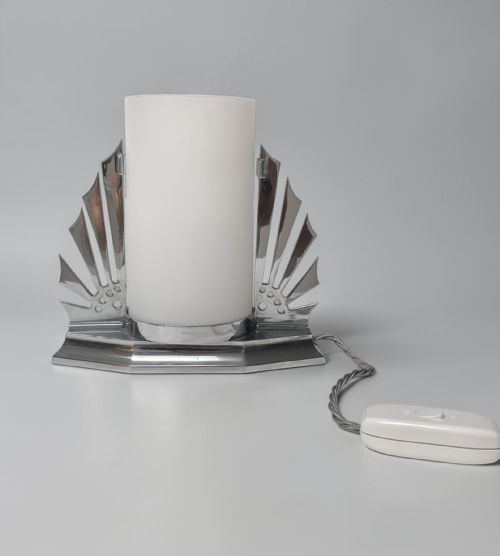
A chrome desk lamp offers distinct lighting built primarily during the nineteen-thirties and nineteen-twenties, frequently aligned with Art Deco and Machine Age design. These task lights range from simple adjustable stems to novelty figural sculptures holding bulbs aloft.
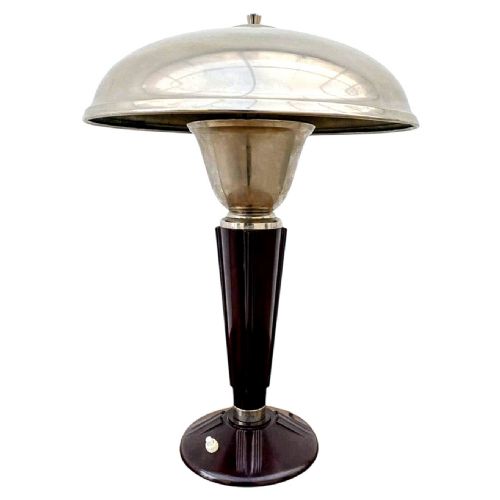
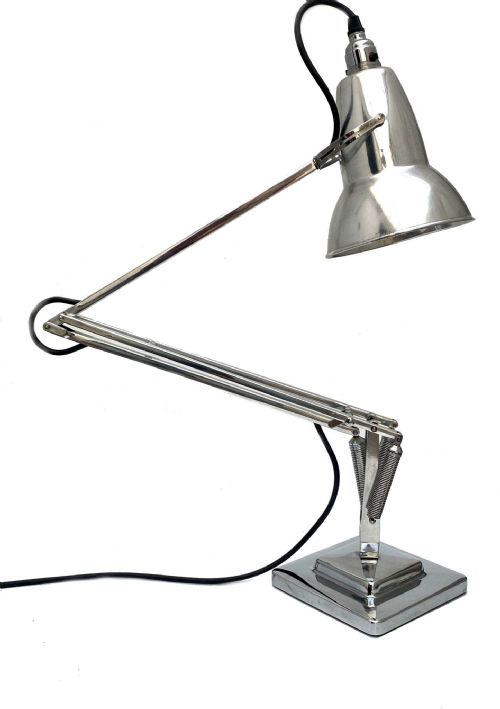
The version most commonly met on this page is the Art Deco table lamp or adjustable desk light, often combining metal framing with glass shades or bakelite switches. French workshops and English makers produced numerous variants featuring swivel joints and pivoting shades.
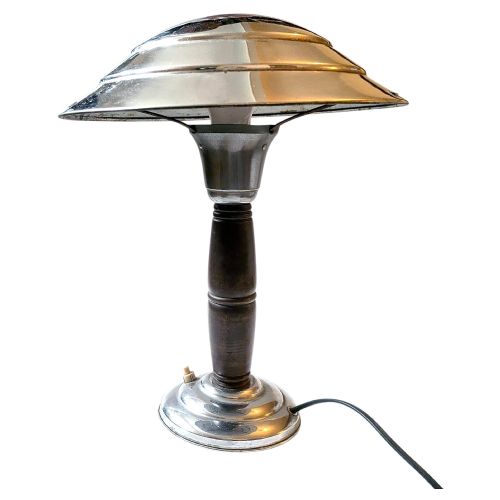
Many survivors incorporate sculptural elements like athletes, sailboats, or nude figures standing on bases made of marble, granite, or cast iron. Others adopt streamlined industrial configurations with dome shades or double shade arrangements.
Materials and Construction
Manufacturers built these desk lights using a base metal plated in chrome, nickel, or silver plate, sometimes pairing the reflective finish with contrasting elements of copper or polished white metal. Structural stability often required heavy bases formed from cast iron, marble, or granite.
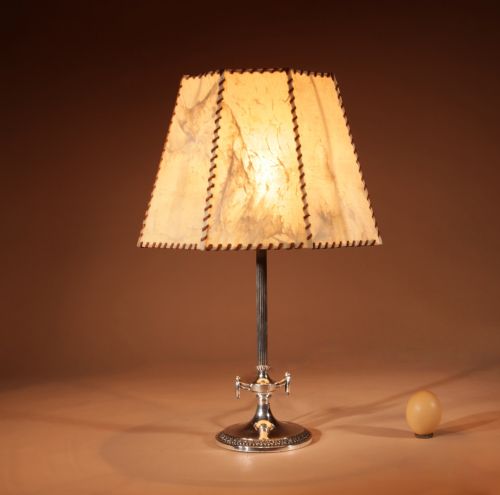
Electrical components integrated moulded dark plastics such as bakelite and catalin phenolic alongside functional switches. Shade construction relied on frosted glass, milk glass, opaline, blue glass, or pink glass to diffuse the illumination effectively.
Chrome Desk Lamp Retail Price Guide 2026
Typical asking prices for chrome desk lamp among the pieces listed under this phrase on Sellingantiques today, from the lower quarter to the upper quarter. They describe what is for sale here now, not the wider market.
Some desk lamps double as ashtrays, offering a built-in vide poche for the industrious smoker.
Distinctions in Quality
The upper tier of these lamps is distinguished by substantial gauge metalwork, robust articulated joints that hold position without slipping, and integrated sculptural castings executed with fine anatomical detail. Lesser examples rely on lighter sheet metal and simpler stamped parts.
Makers known for specific engineering patents, such as Anglepoise mechanisms or specialised French swivel fittings, demonstrate superior mechanical execution. The quality of the original plating and the integrity of combined materials like coloured glass or genuine marble bases further separate standard production from exceptional pieces.
Eileen Grey·Herbert Terry·Pirouette·Kabeco·Fare·GEC
The Chrome Desk Lamp Glossary
- Bakelite
- An early synthetic thermosetting plastic formed from phenol and formaldehyde. It appears frequently on switches, plugs, and decorative accents across these lamps.
- Opaline glass
- A type of semi-translucent glass that diffuses light evenly. It was widely used for dome and cylinder shades on period task lighting.
- Machine Age
- A design aesthetic from the interwar decades celebrating industrial efficiency, clean chrome surfaces, and aerodynamic forms.
- Catalin
- A cast phenolic resin similar to bakelite that allowed for brighter, translucent colour variations in lamp components.
- Vide poche
- A small tray or dish incorporated into a base design to empty pockets. Several desk lamps integrate this feature directly into the marble or metal foundation.
Chrome Desk Lamp: Frequently Asked Questions
How do I identify a nineteen-thirties chrome desk lamp?
Look for characteristic geometric styling, heavy cast bases, and specific material combinations like chrome plating paired with bakelite or frosted glass. The integration of Machine Age or Art Deco motifs typically confirms the interwar period of manufacture.
Examine the construction methods and switch types, as stamped metal joints and vintage fabric-covered wiring often indicate genuine period production rather than later reproduction.
Can these vintage desk lamps be used safely today?
Many survivors require rewiring and professional electrical testing to meet modern safety standards before daily use on a desk. Working with a qualified technician ensures the original metal framework and vintage switches remain intact while updating internal circuits.
Pat testing and modern insulation protect against electrical faults while preserving the aesthetic value of the original nineteenth-century or twentieth-century hardware.
What styles of shades are found on these lamps?
Shades appear in various configurations including milk glass, pink glass, opaline, blue glass, and plain metal domes. Adjustable metal shades with ventilation slots also frequent industrial and Machine Age designs.
Double shade arrangements and frosted glass cylinders provide different diffusion levels, altering both the focused task lighting and the ambient glow of the fixture.
Where were these lamps manufactured?
Production centred largely in British and French workshops, with various domestic factories contributing specialised adjustable task lights and novelty figural pieces. French makers often emphasised sculptural forms and stylized figures.
English manufacturers frequently focused on patented mechanical arm movements like the classic Anglepoise design, prioritizing functional adjustability for office and drafting environments.