


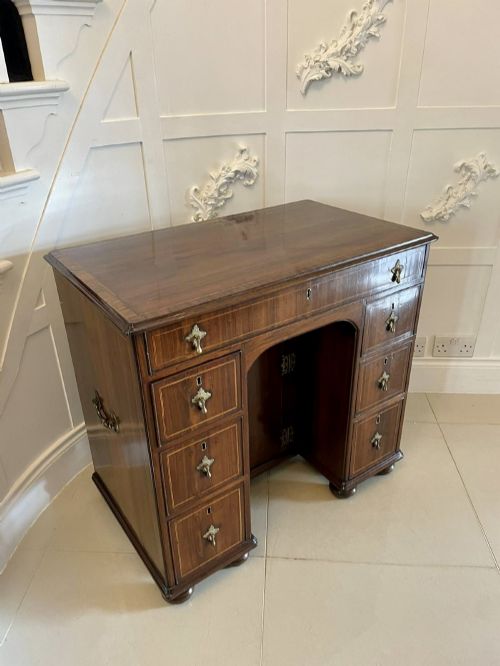
18th Century Writing Bureau
An 18th century writing bureau offers a fall-front workspace with internal pigeonholes and drawers, providing a practical workspace that conceals correspondence.
18th Century Writing Bureau
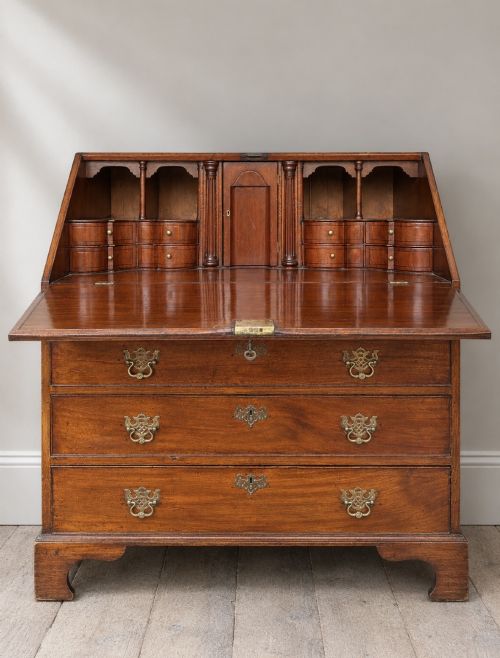
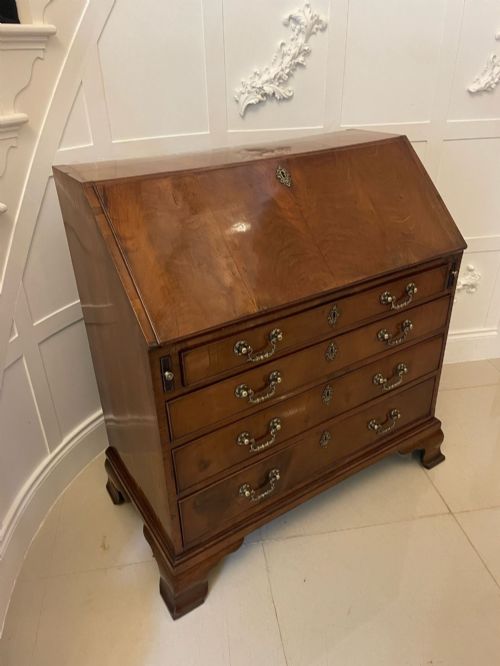
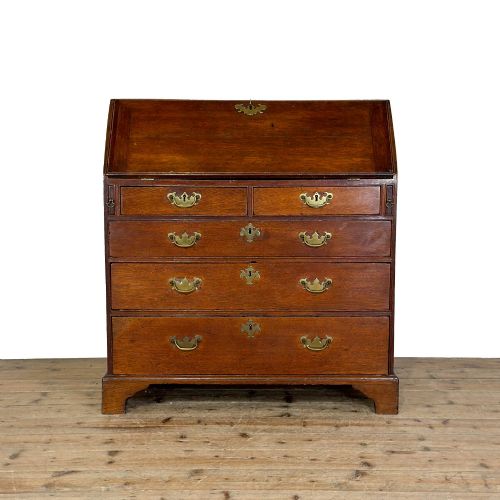
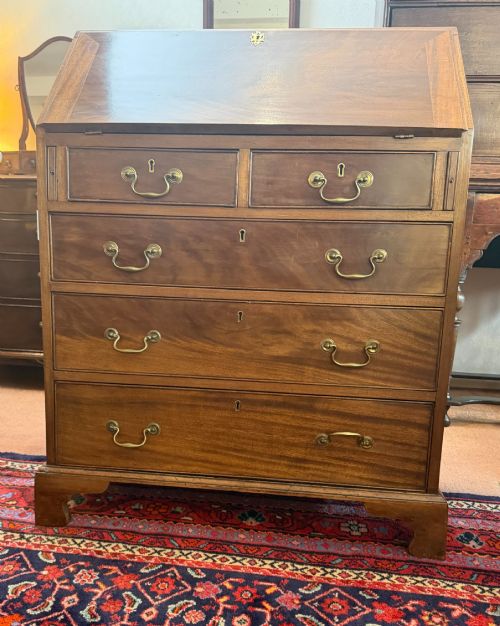
An 18th century writing bureau is a dedicated writing cabinet featuring a sloping fall-front flap that opens to reveal a fitted interior of small drawers and pigeonholes. When closed, the piece presents a neat chest of drawers with a secure writing surface stored upright.
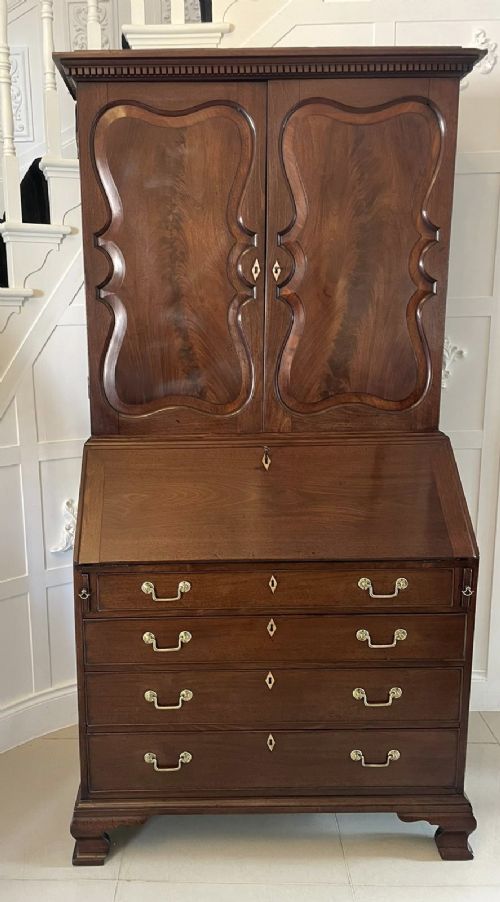
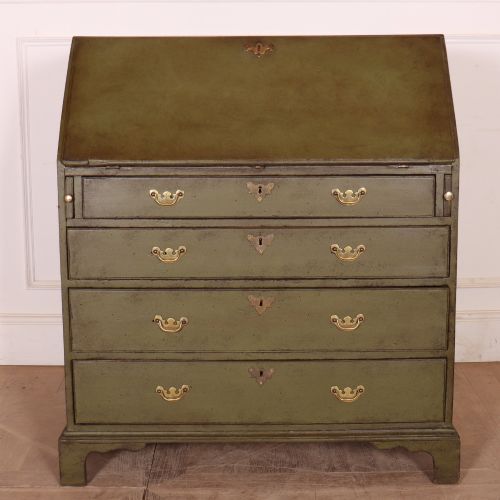
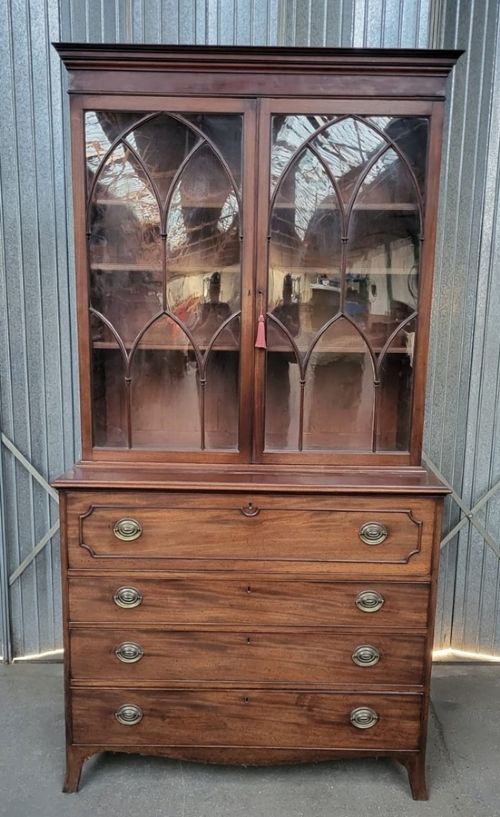
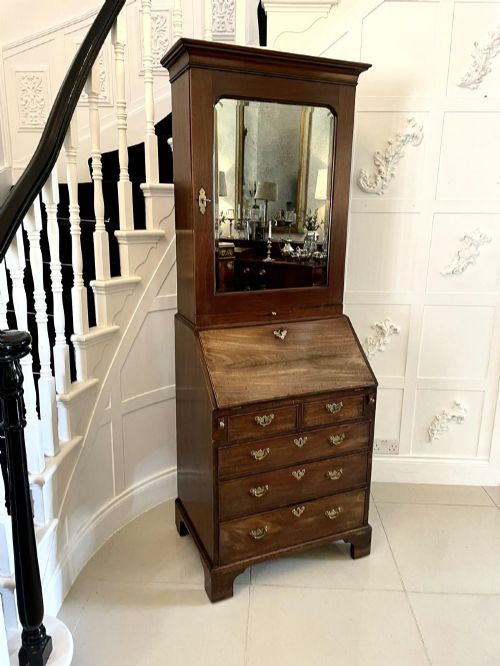
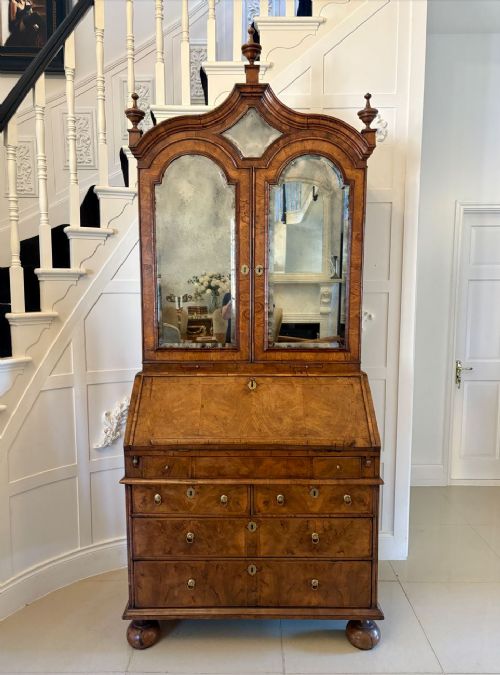
The pieces seen here range from compact country oak and fruitwood examples to sophisticated George II and George III mahogany and burr walnut desks. Many incorporate bookcase tops with glazed doors, creating tall storage combinations for libraries and private studies.
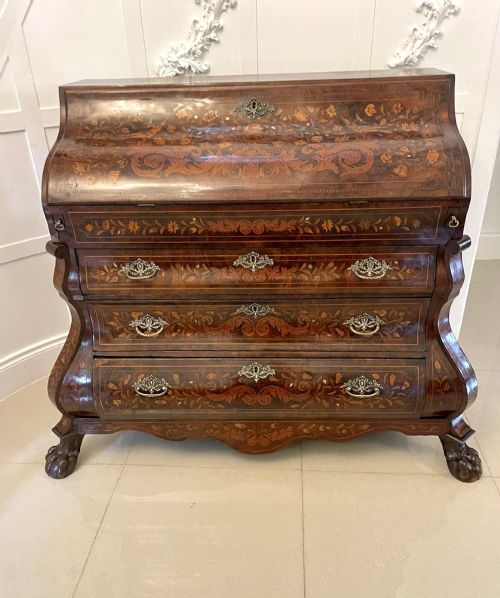
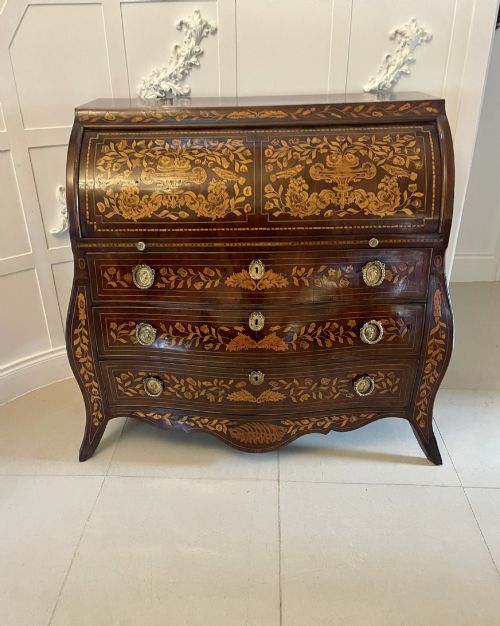
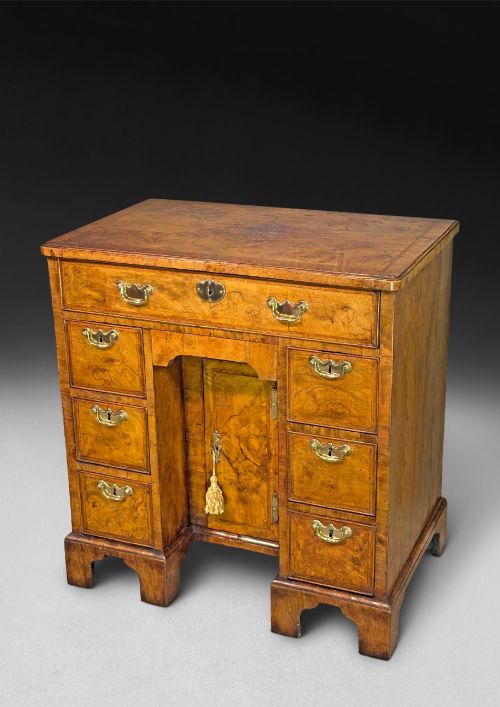
Makers adapted these forms across various regions, producing bombe-shaped Dutch marquetry desks alongside English walnut and mahogany models. Bureau bookcases and kneehole desks also appear frequently, reflecting diverse domestic requirements for private record-keeping.
How they were made
Cabinetmakers constructed carcass frames using solid timbers such as oak and pine, applying choice veneers of mahogany, walnut, and burr walnut to visible exterior surfaces. Drawer linings typically utilise secondary timbers like oak or deal, joined with hand-cut dovetails.
Decorative work involved complex marquetry and parquetry in floral patterns, utilising fruitwoods, boxwood, and contrasting veneers. Brass hardware, including drop handles, escutcheons, and bracket feet, secured the structure and finished the exterior appearance.
One early oak bureau bookcase has been adapted to house a television.
What varies in quality
The choice of timber grain determines much of the visual merit, with figured mahogany and densely patterned burr walnut commanding attention. Selecting veneers that match symmetrically across the fall-front flap and drawer fronts marks the work of skilled cabinetmakers.
The complexity and internal arrangement of the stepped writing compartment reveal the maker's hand, particularly where secret compartments and intricate pigeonholes are present. Original brasses and well-preserved bracket feet further elevate the integrity of the piece.
The 18th Century Writing Bureau Glossary
- Fall-front
- The hinged sloping board on a bureau that drops down to form a writing surface. This panel conceals the internal drawers and pigeonholes when closed.
- Marquetry
- Inlaid patterns created with various coloured woods applied to furniture surfaces. Floral and geometric designs are typical of Dutch and English examples.
- Kneehole desk
- A compact desk featuring a central recessed space for the legs, flanked by pedestals of small drawers. These pieces often include a shallow central drawer above the opening.
- Escritoire
- A tall cabinet or writing desk with a drop-down writing flap, often dating from the late 17th or early 18th century. It combines vertical storage with a dedicated writing surface.
- Featherbanding
- A type of inlay using veneer strips cut diagonally to form a herringbone pattern around drawer edges and panel borders. It provides a subtle decorative frame.
18th Century Writing Bureau: Frequently Asked Questions
How do I use a bureau desk?
Release the brass catches or pull out the lopers to lower the sloping front panel into a horizontal writing surface. The interior compartments organise letters, pens, and small documents.
Close the flap when finished to conceal correspondence and protect the fitted interior from dust. The locked fall-front keeps private papers secure.
What is a bureau bookcase?
A bureau bookcase combines a sloping-front writing desk at the base with an upper shelving cabinet enclosed by doors. These taller hybrid pieces provided upper storage for books alongside a lower writing surface.
They serve as prominent room dividers or library storage units, often featuring glazed upper doors to display book bindings.
How can I tell walnut from mahogany?
Walnut displays a rich, warm brown tone with distinct dark grain swirls and intricate figuration, popular in early pieces. Burr walnut exhibits dense, swirling knot patterns across the surface.
Mahogany generally presents a deeper reddish-brown hue with straight or ribbon-like grain patterns. It became the dominant cabinet timber through the middle and late Georgian periods.
What are lopers?
Lopers are wooden support arms that slide out from the cabinet frame on either side of the kneehole or below the fall-front. They extend to bear the weight of the open writing flap.
Pushing these supports back into the cabinet allows the fall-front to close flush against the main body of the desk.