

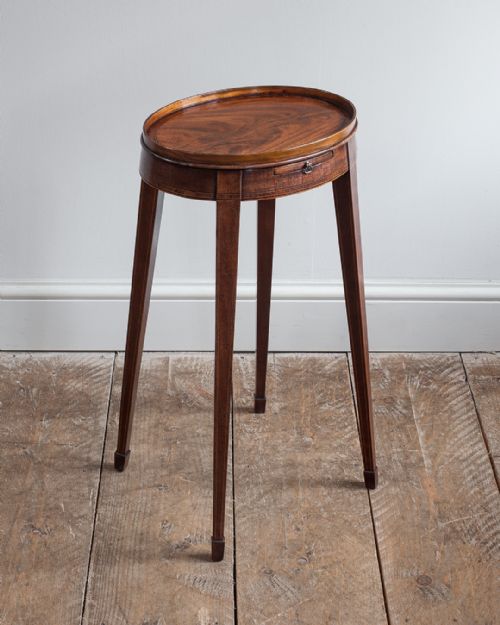


18th Century Urn Stand
An 18th century urn stand is a small, elevated table designed to hold a heavy hot water vessel, offering both refined craftsmanship and practical utility in a Georgian interior.

18th Century Urn Stand
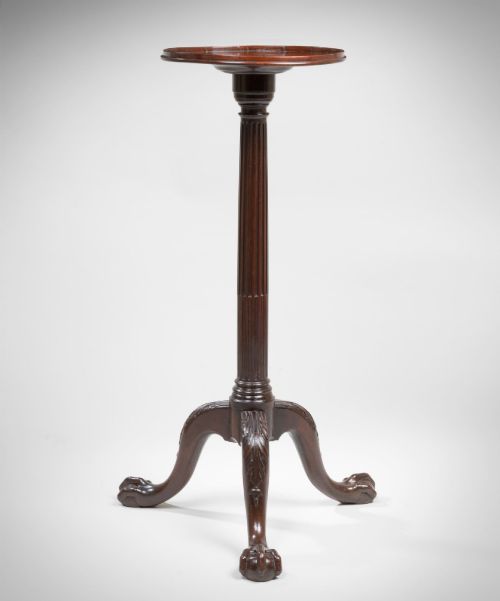
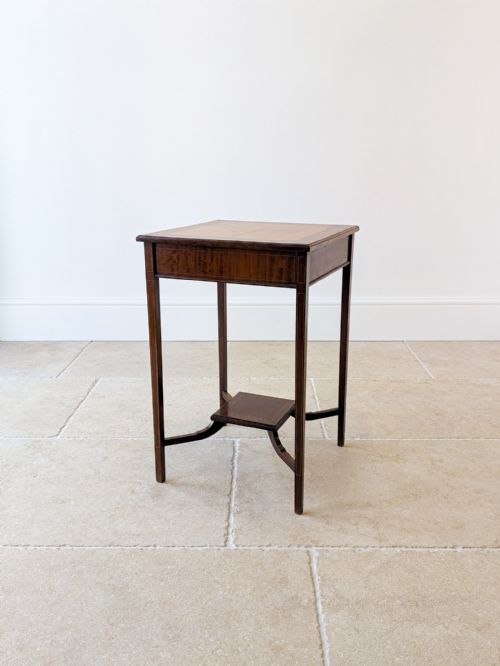
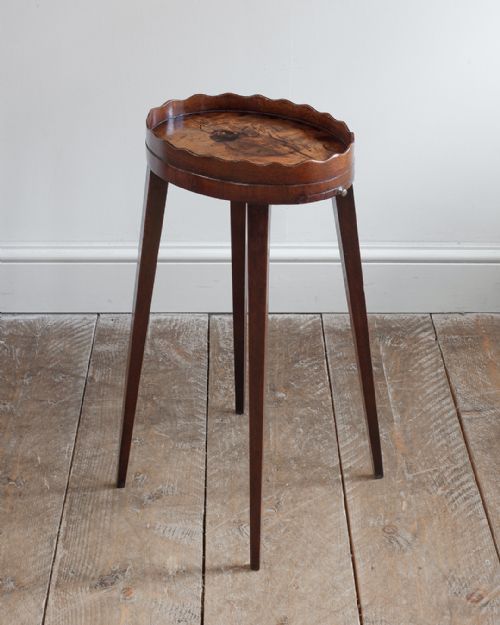
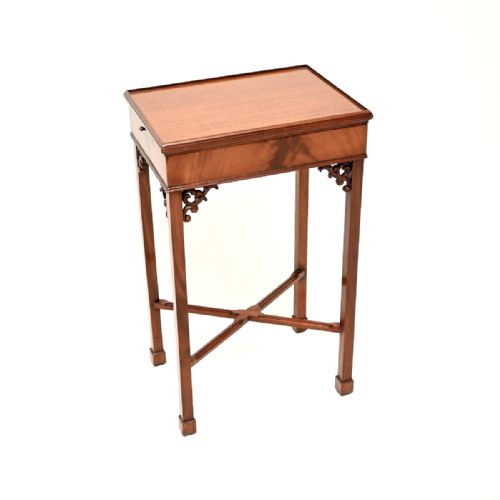
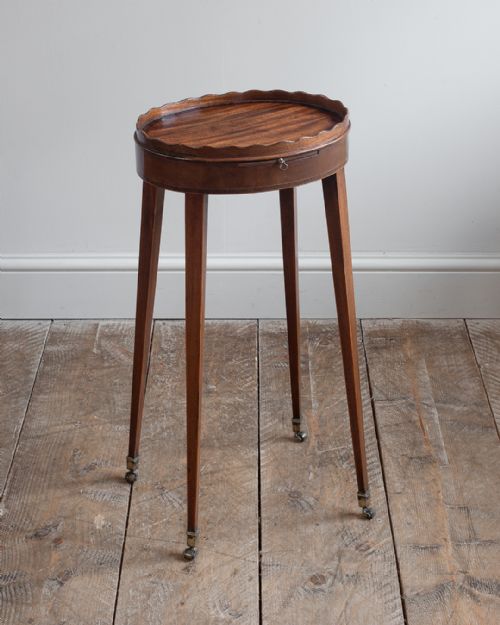
An 18th century urn stand is a compact occasional table specifically created to support a tea urn during formal domestic rituals. The pieces seen here span the Georgian period, including examples from the George II, George III, and Sheraton eras.
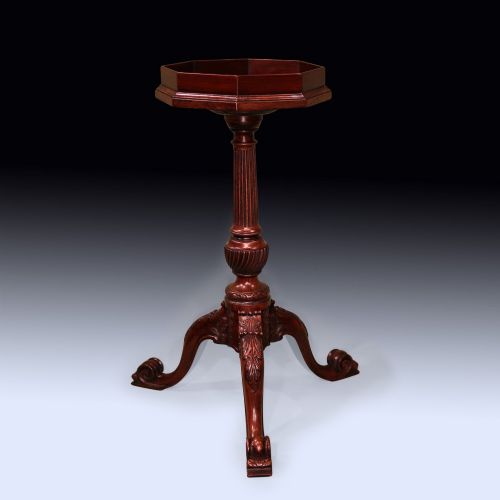
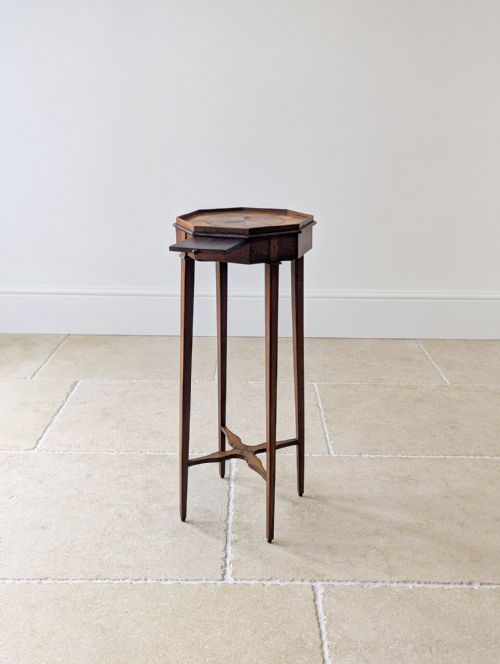
The forms on this page include oval, octagonal, and square top configurations, alongside related serving tables and kettle stands. Mahogany dominates the selection, shaped into slender pedestals, triform bases, and delicate occasional tables.
Buyers will encounter both plain timber surfaces and detailed variations incorporating inlay or carved details. These tables served a distinct social function in fashionable drawing rooms before falling out of later domestic fashions.
How they were made
Cabinet makers utilised dense imported mahogany for the primary structure of these stands, exploiting its strength to construct slender legs and thin tops without risk of warping. Timber was selected with care for grain pattern, particularly on prominent surfaces such as table tops.
Decorative embellishments often involved contrasting satinwood inlay, delicate carving along the legs or borders, and occasional gilt or painted details. Brass fittings, including castors or drop handles, completed the construction of functional pieces.
18th Century Urn Stand Retail Price Guide 2026
Typical asking prices for 18th century urn stand among the pieces listed under this phrase on Sellingantiques today, from the lower quarter to the upper quarter. They describe what is for sale here now, not the wider market.
Several stands include small pull-out slides originally intended to hold the steaming teapot steady while filling.
What varies in quality
The standard of an 18th century urn stand rests upon the crispness of its carving and the precision of any inlay work. Finer pieces display sharply defined mouldings and well-balanced proportions that maintain stability despite the small footprint.
Choice of materials also dictates the standing of a piece, with figured mahogany and contrasting satinwood banding marking out superior workshop output. Original brass hardware and sound structural joinery further distinguish the top tier of surviving examples.
The 18th Century Urn Stand Glossary
- Kettle stand
- A small occasional table designed to hold a tea kettle or urn near the tea table. These pieces share the slender proportions and height typical of urn stands.
- Triform
- A three-sided base or pedestal support configuration frequently utilised on small Georgian tables. This design ensured stability on uneven floors.
- Satinwood
- A durable, lustrous timber from the tropics with a yellowish sheen, used extensively for contrasting inlay and banding on late Georgian furniture.
- Chippendale
- A style of British furniture from the mid-to-late 18th century characterised by intricate carving, Chinese or Gothic motifs, and solid mahogany construction.
- Gesso
- A plaster-like mixture applied to wood surfaces as a base for painting or gilding. It appears on decorative frames and stands from the period.
18th Century Urn Stand: Frequently Asked Questions
What was an 18th century urn stand used for?
These stands held heavy metal tea urns filled with boiling water during formal tea service in Georgian homes. Placing the hot vessel on a dedicated small table kept it away from polished main dining or tea tables.
The elevated surface allowed servants to easily fill teapots without lifting heavy vessels across the room. Their compact size meant they could be tucked away when the tea ritual concluded.
How do I distinguish a kettle stand from a wine table?
Kettle stands and urn stands generally feature raised lips, fretwork galleries, or slide-out shelves designed to catch drips and secure heavy vessels. Wine tables typically possess flat wooden tops intended solely for bottles and glasses.
The proportions also differ, as urn stands are engineered with sturdy, slender frames to support concentrated weight safely. Their tops are frequently smaller and shaped in octagonal or oval formats.
Where should I place an urn stand in a modern room?
An urn stand works well as a compact accent table beside a chair or sofa where floor space is limited. Its height makes it suitable for holding a small lamp or a decorative object.
Avoid placing these delicate antique tables in direct sunlight or close to active heat sources that might dry out the timber. Their small scale allows them to fit neatly into corners or hallways.
How do I identify a George III period stand?
George III pieces often display classical neoclassical influences, featuring straight tapered legs, subtle satinwood inlay, and restrained carving. The transition from earlier heavier styles to lighter, more delicate forms defines this era.
Examination of the secondary woods used underneath and inside the construction helps confirm the period. Cabinet makers of this time favoured clean lines and balanced geometric table tops.