




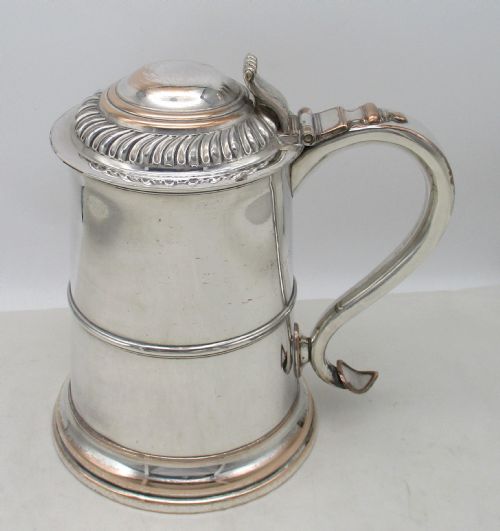
18th Century Silver Tankard
An 18th century silver tankard brings substantial weight and historic silver work straight to the table.
18th Century Silver Tankard
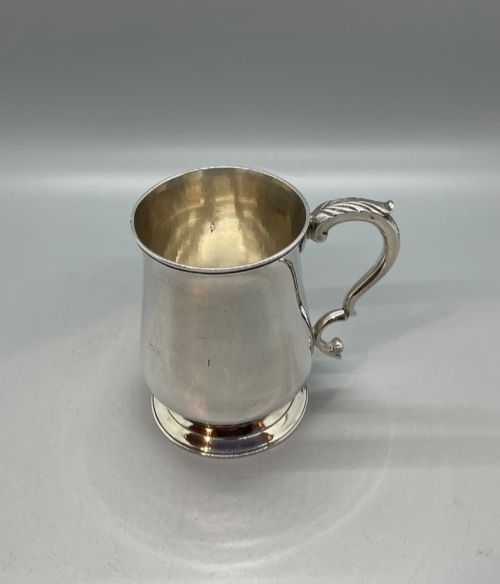
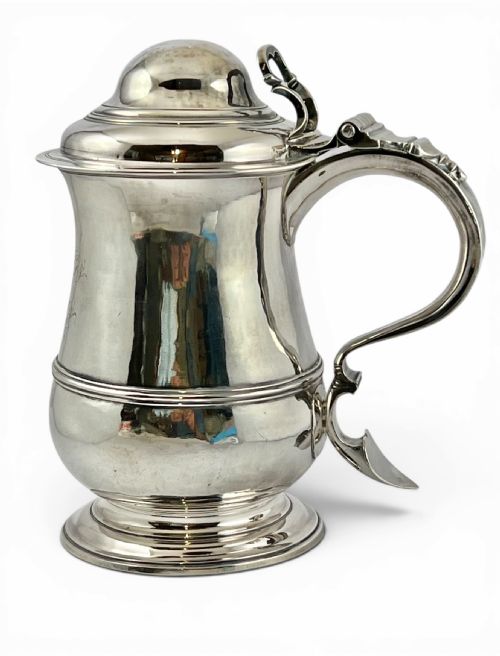
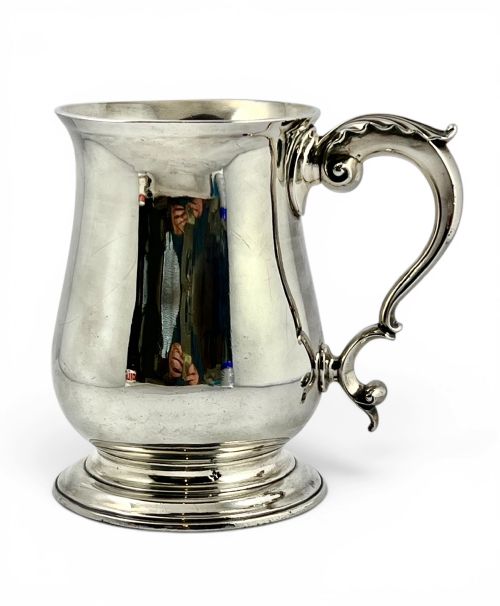
When searching for an 18th century silver tankard, buyers encounter drinking vessels shaped primarily during the Georgian, George II, and George III periods. These pieces serve as functional historical drinkware, historically used for beer, ale, and cider in homes and taverns.
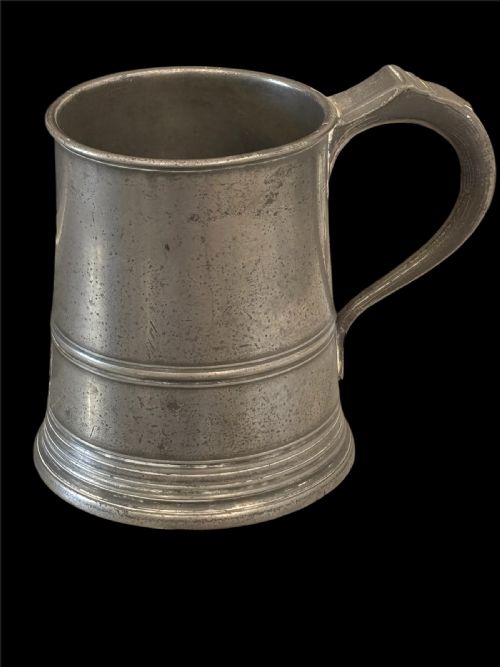
The versions most commonly met on this page span solid sterling silver and Old Sheffield Plate. Makers shaped these objects into pints, quarts, and larger capacity mugs, often incorporating hinged lids and sturdy scroll handles.
What varies in quality
The standard of an 18th century silver tankard rests on the crispness of its hallmarks, the thickness of the metal, and the integrity of the soldered joints connecting the handle and foot. Pieces retaining their original hinged lids and balanced proportions command greater appreciation.
Surface preservation also separates examples, as clean maker marks and minimal past repair work reflect careful historical ownership. Plated items vary depending on how evenly the silver layer adheres to the underlying copper core.
18th Century Silver Tankard Retail Price Guide 2026
Typical asking prices for 18th century silver tankard among the pieces listed under this phrase on Sellingantiques today, from the lower quarter to the upper quarter. They describe what is for sale here now, not the wider market.
Some eighteenth-century beer drinkers clearly possessed massive thirsts, judging by the sheer heft of the quart-sized vessels.
John Payne·William Grundy·Richard Morton·John Swift·George Smith II
The 18th Century Silver Tankard Glossary
- Sterling silver
- A silver alloy containing a specific proportion of pure silver and other metals to increase durability. This material forms the primary metal for solid Georgian drinking vessels.
- Old Sheffield Plate
- An early fusing technique combining a thin sheet of silver onto a copper base. This composite material allowed silversmiths to shape large tankards and beer jugs.
- Baluster
- A vertical architectural form featuring a swelling curve that tapers toward the top. Many mid-century tankard bodies follow this distinctive rounded profile.
- Hallmark
- A series of stamped symbols indicating the assay office, maker, and year of production. These official marks provide the documentation needed to read an antique piece.
- Quart
- A traditional measure of liquid capacity. Tankards designated as quarts hold substantially more volume than standard pint mugs.
18th Century Silver Tankard: Frequently Asked Questions
How do I clean an old silver tankard?
Maintenance requires gentle washing with warm soapy water and a soft cloth to protect the historic metal surface. Aggressive polishing removes detail and wears away thin plating.
Storing the vessel in a dry environment prevents excessive tarnish build-up. Proper care preserves the original texture of the silver and copper layers.
Were these tankards used for everyday drinking?
Historical households and taverns utilised these vessels for serving ale, beer, and cider during daily meals and social gatherings. The addition of sturdy handles and lids kept contents covered.
Larger quart sizes suited communal drinking, while pint capacity vessels served individual drinkers. Their solid construction handled frequent use.
How can I tell a George II tankard from a George III piece?
Hallmarks stamped into the silver provide the exact year of production and assay office location. Examining the date letter alongside reigning monarch stamps identifies the specific decade.
Stylistic shifts also help distinguish periods, as early forms often feature distinct baluster curves while later decades introduced varied handle and body proportions.
What is Old Sheffield Plate?
Old Sheffield Plate is an early material created by fusing a sheet of silver onto a copper ingot under heat and pressure. This composite sheet was then hammered and shaped into tankards.
This technique offered an alternative to solid sterling silver during the eighteenth century. It allowed makers to produce large vessels with visible silver surfaces.