




18th Century Saucer
An 18th century saucer represents a small ceramic dish designed for holding a teacup, collected for its delicate hand-painted motifs and historical tea service association.
18th Century Saucer
An 18th century saucer forms part of the historical tea drinking ritual, often accompanying tea bowls or coffee cups from domestic English factories and international export sources. These pieces reflect the dining habits of the Georgian period, serving both functional roles at the tea table and decorative purposes within households.
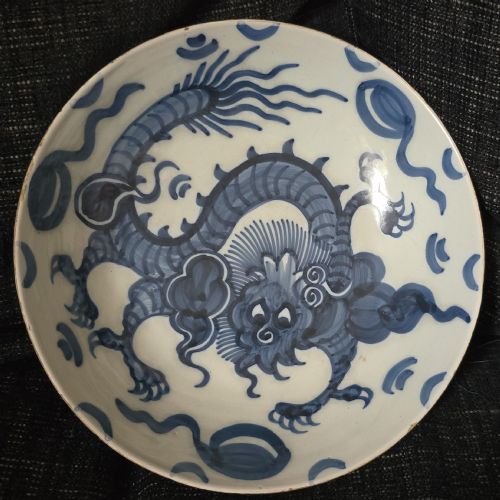
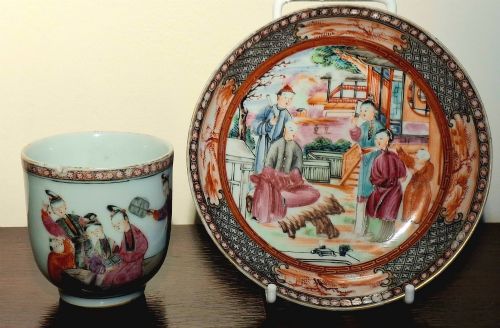
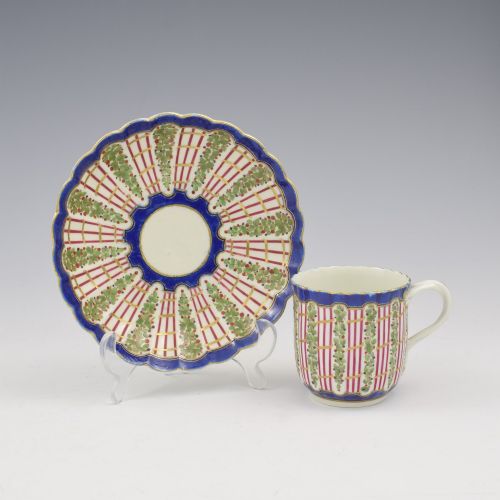
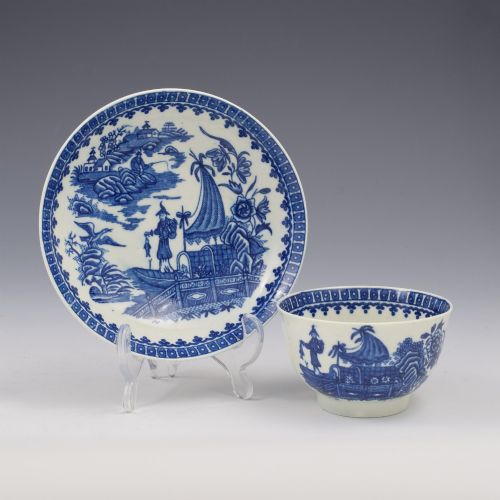
The selections available typically span English porcelain manufactories alongside Chinese export porcelain created for Western markets. Buyers frequently encounter forms decorated with hand-painted botanical motifs, figures, or blue and white underglaze patterns dating from the mid to late 1700s.
What Varies in Quality
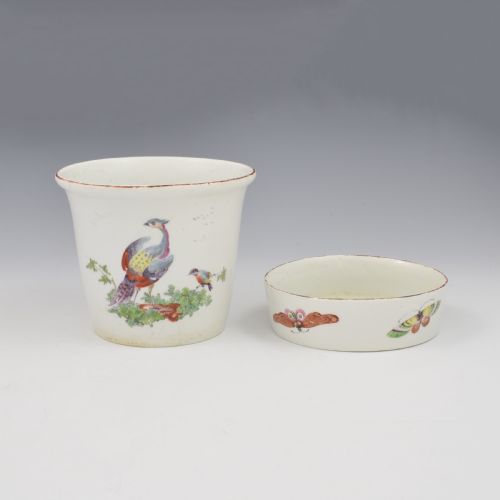
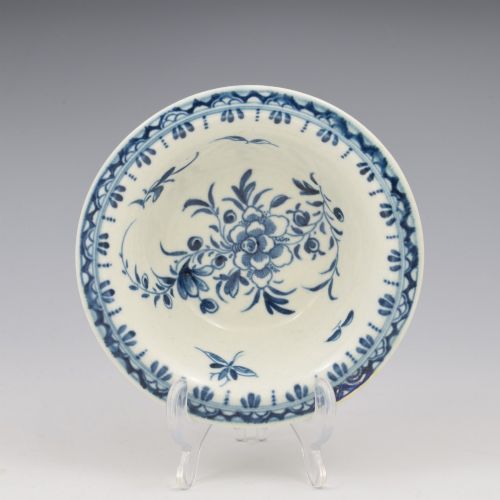
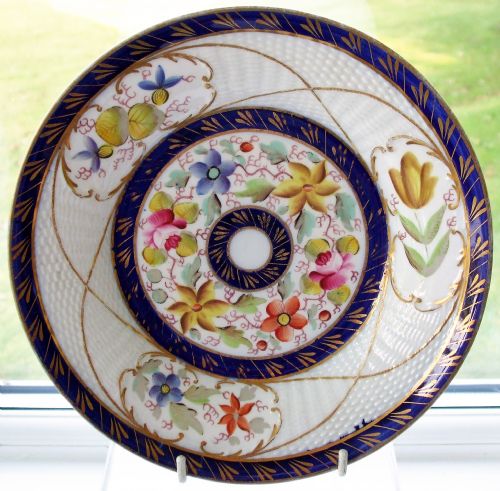
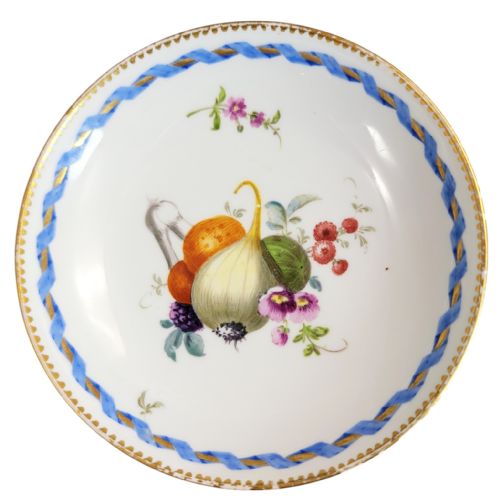
The skill of the hand-painted brushwork distinguishes superior examples from simpler utilitarian wares, with finely delineated birds, figures, or botanical details indicating higher workshop standards. The clarity of the porcelain body, the evenness of the glaze application, and the preservation of delicate overglaze enamels and gilding also determine the overall standard of a piece.
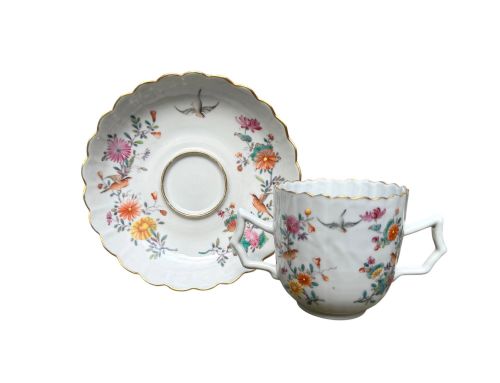
Factory provenance influences the standing of an 18th century saucer, as pieces bearing documented attribution to early periods of renowned English works or specific Chinese export periods command greater interest from collectors. The complexity of the design, such as moulded fluting or rich turquoise borders, contributes further to the distinction between standard and exceptional survivals.
Listings feature 18th century pieces created in soft-paste porcelain, hard-paste porcelain, and creamware pottery.
Flight And Barr·New Hall·Meissen·Manufacture De La Reine·Derby·Lowestoft
The 18th Century Saucer Glossary
- Soft-Paste Porcelain
- A ceramic composition made from white clay mixed with glass frit and other materials, fired at lower temperatures than hard-paste porcelain. This body type yields a slightly warmer tone and a softer glaze surface.
- Tea Bowl
- A handleless drinking vessel used during the eighteenth century for consuming tea before standard handled teacups became universal. They are frequently found paired with matching saucers.
- Underglaze
- Pigments applied to the ceramic body before the glaze is applied and the piece is fired. Cobalt blue is the most common underglaze colour seen on these pieces because it withstands high kiln temperatures.
- Enamel
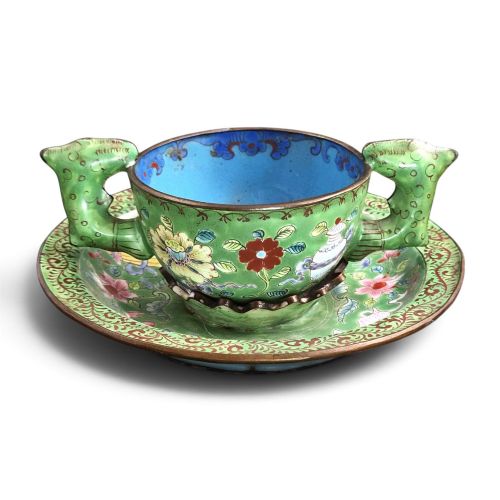
- Opaque or translucent glass-based coloured paints applied over the fired glaze. These pigments require a muffle kiln to melt and adhere permanently to the surface.
- Chinoiserie
- European artistic styles reflecting Chinese motifs and decorative techniques. Artisans interpreted Asian landscapes, figures, and architectural elements through a distinctly eighteenth-century lens.
18th Century Saucer: Frequently Asked Questions
What is the difference between a tea bowl and a teacup?
Tea bowls are small, handleless drinking vessels that were held directly in the hands during the eighteenth century. Teacups feature applied handles for grasping and generally appeared later in the period.
Both forms served the same function at the tea table and were manufactured to rest securely within the matching saucer.
How can I tell English porcelain from Chinese export porcelain?
English porcelain from this era often exhibits body characteristics specific to domestic factories, such as the slightly greenish translucency of early Worcester or the glassy composition of soft-paste bodies. Chinese export porcelain typically displays a harder, whiter body paste and often shows characteristic footrim construction typical of Qing dynasty kilns.
Decoration styles also provide clues, as European factories adapted oriental patterns or created native botanical designs alongside Chinese artists painting specifically for Western trade.
Did people drink coffee from these saucers too?
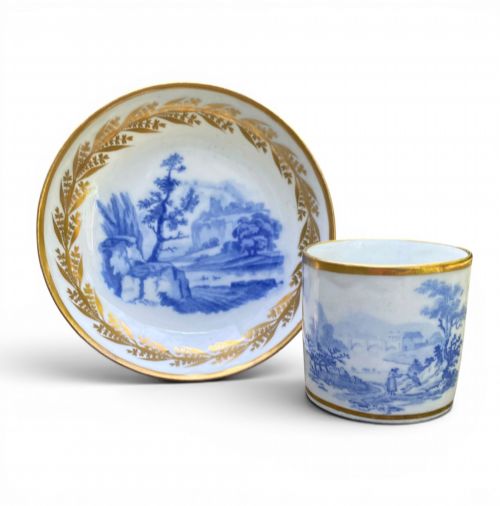
Beverage service during the eighteenth century included specialised coffee cans and coffee cups alongside tea wares. These cups often shared matching saucers within trios or sets.
Certain specialised forms, such as trembleuse cups and saucers, were specifically constructed with a raised ring in the centre of the saucer to hold the cup firmly in place during use.
How should I care for an 18th century saucer?
These ceramic pieces require gentle hand washing in lukewarm water with mild soap when cleaning is necessary. Harsh abrasives and modern dishwashers must be avoided to protect the historic glaze and delicate overglaze enamel or gold leaf decoration.
Displaying or storing them securely away from edge hazards ensures the preservation of these fragile eighteenth-century objects.