
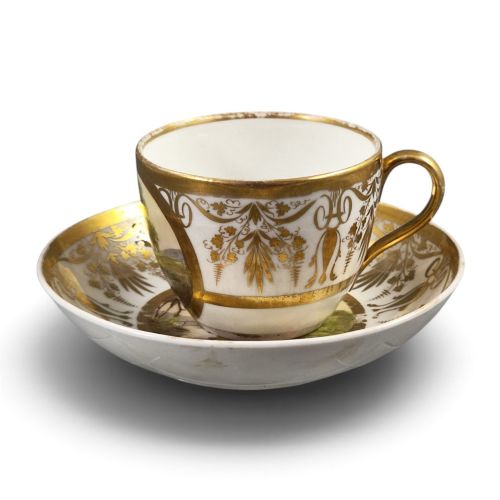
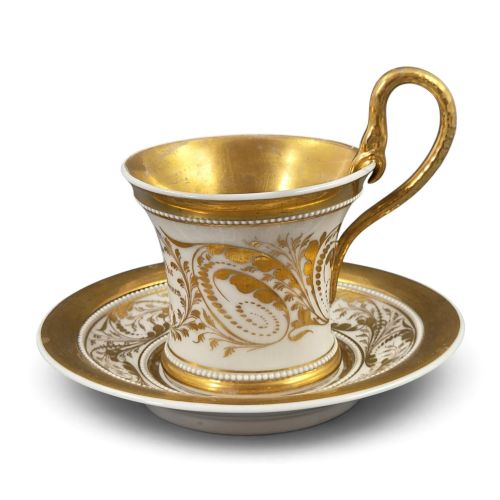
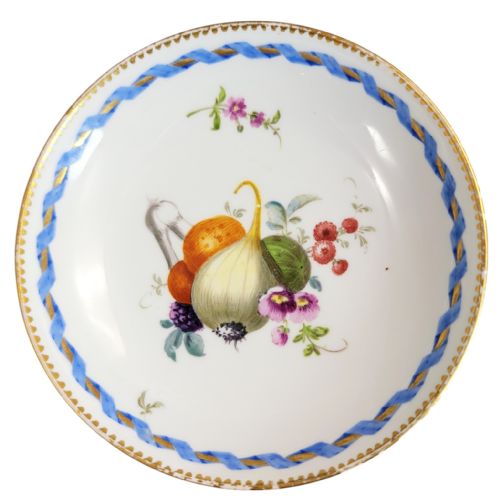


German Porcelain Saucer
A german porcelain saucer brings cabinet-maker precision and hand-painted artistry to the table, offering a tangible link to historic European kilns.
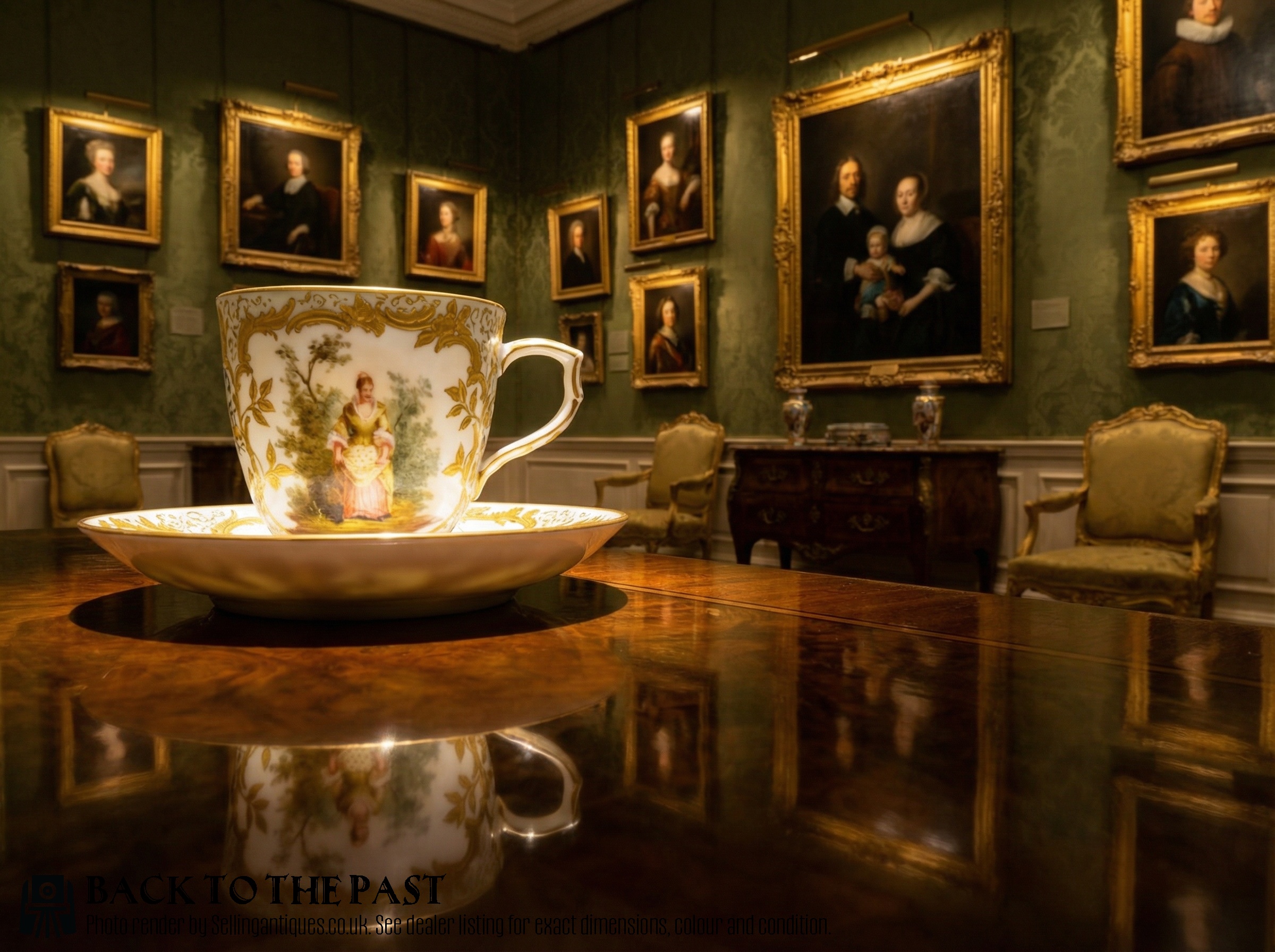
German Porcelain Saucer
A german porcelain saucer typically forms part of a broader tea or coffee service, though individual examples frequently survive independently today. These pieces span significant historical eras, including the Georgian, Edwardian, and nineteenth-century periods, reflecting the shifting tastes of European households over generations.
The objects take various functional forms on this page, appearing alongside matched cups, demitasse sets, miniature vessels, and occasional decorative plates. Buyers encounter diverse stylistic influences across these items, ranging from neoclassical restraint to exuberant rococo revival and biedermeier simplicity.
Originating from renowned continental kilns, a german porcelain saucer demonstrates the distinctive output of factories such as Meissen, KPM Berlin, and Hutschenreuther. Surviving examples showcase both utilitarian domestic wares and highly ornamental presentation pieces designed for display cabinets rather than daily dining.
Distinctions in quality
The refinement of the hand-painted details largely separates standard production wares from superior examples, particularly in the precision of floral motifs or landscape vignettes. Master painters at prominent factories achieved greater depth and nuance in enamel work compared to lesser workshops.
The application and preservation of gold leaf or gilding also indicate the tier of a piece, with heavier, burnished gold accents marking finer presentation items. Additionally, the clarity of the porcelain paste and the crispness of moulded relief work reflect the technical standards upheld during production.
Listings feature hard-paste porcelain saucers from the nineteenth century, including specific works by KPM Berlin and Meissen.
KPM Berlin·Meissen·Hutschenreuther·Hirsch Dresden·Helena Wolfsohn
The German Porcelain Saucer Glossary
- Hard-paste porcelain
- A durable ceramic material composed of kaolin and petuntse, fired at high temperatures to create a vitrified, translucent body. This substance forms the robust foundation for traditional European fine china.
- Demitasse
- A small cup and matching saucer used for serving strong black coffee or espresso. These diminutive vessels often feature elaborate hand-painted decoration.
- Gilding
- The application of gold leaf or gold paint to the surface of porcelain. This decorative technique adds metallic borders and highlights to rims and handles.
- Enamel
- A vitreous substance fused to the porcelain surface through firing to provide permanent colour. Enamel paints allow for vibrant, detailed pictorial scenes.
- Rococo Revival
- A nineteenth-century design style characterised by asymmetrical scrolls, naturalistic floral elements, and ornate, flowing lines. This aesthetic heavily influenced continental tablewares of the era.
German Porcelain Saucer: Frequently Asked Questions
How do I identify a Meissen saucer?
Look for characteristic hand-painted motifs such as Dresden flowers, birds of paradise, or blue ribbon borders. These pieces often reflect specific historical periods like the Georgian era.
Examine the overall weight and translucency of the hard-paste porcelain body. Superior examples demonstrate exceptional fineness in both the ceramic forming and the enamel decoration.
What is a demitasse saucer?
A demitasse saucer is a smaller vessel specifically scaled to accompany a half-cup coffee container. These items frequently appear in nineteenth-century settings.
They were utilised in formal drawing rooms for after-dinner coffee service. Collectors today often find them preserved as individual cabinet display pieces.
What periods do these saucers represent?
The pieces span multiple eras, including Georgian, Edwardian, and various segments of the nineteenth century. Each period brought distinct stylistic shifts to European porcelain production.
Early pieces often display neoclassical or empire influences, while later items embrace biedermeier simplicity or rococo revival ornamentation. Studying these design shifts helps date individual saucers accurately.