
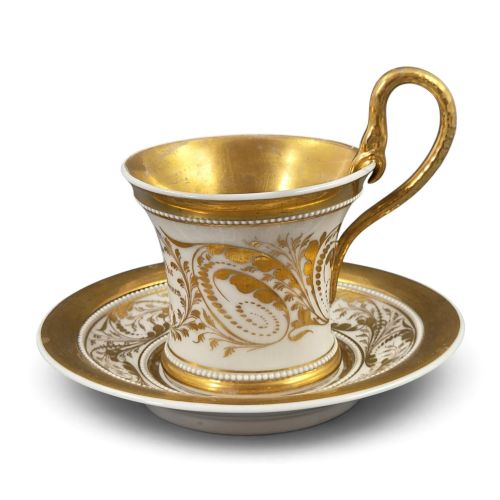


Gold Leaf Teacup
A gold leaf teacup brings cabinet-worthy porcelain and bright gilding to the table, and these refined cups and saucers offer a tangible piece of historic tableware.
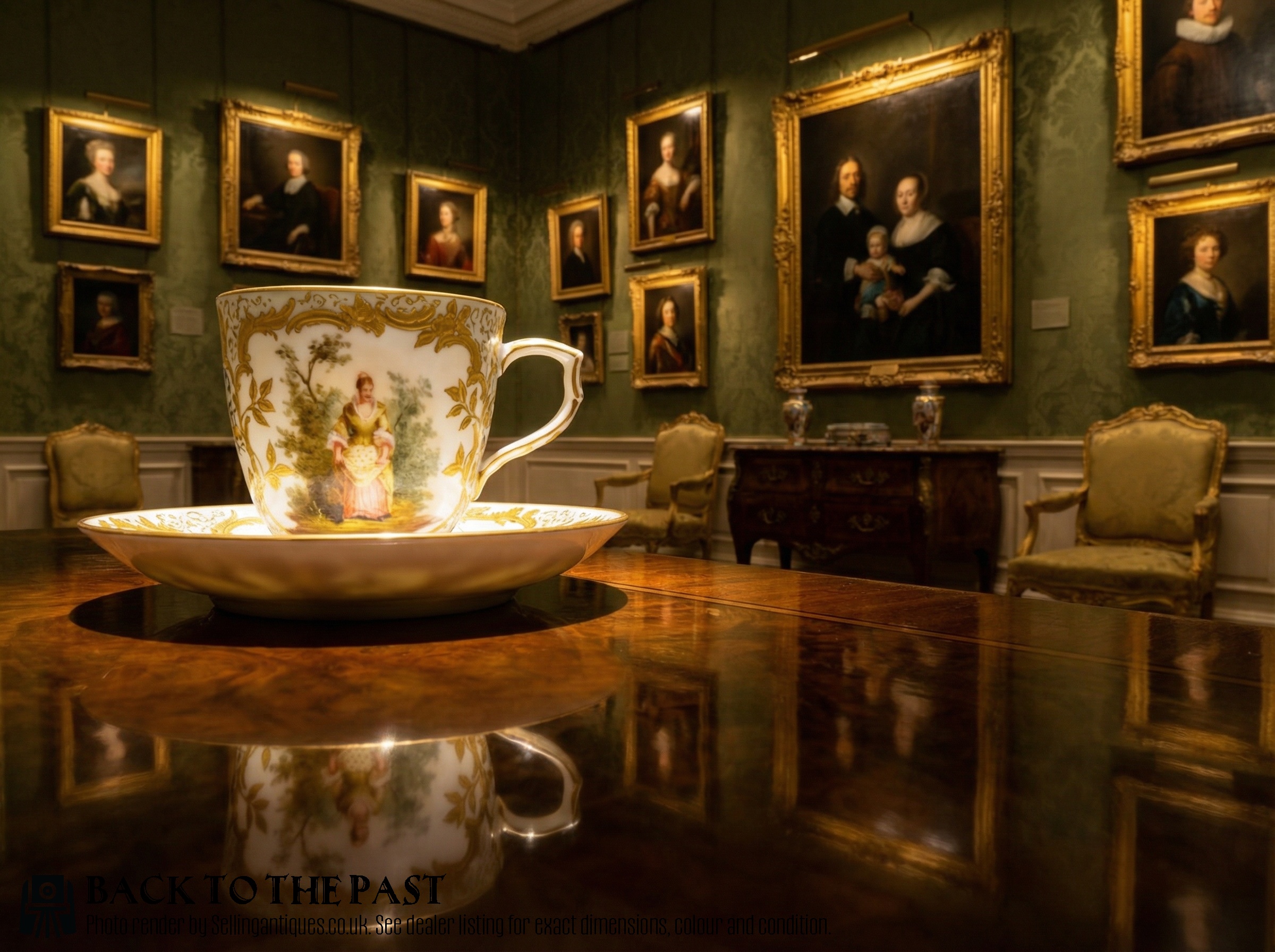
Gold Leaf Teacup
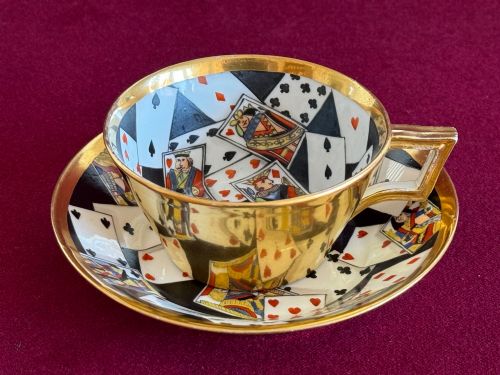
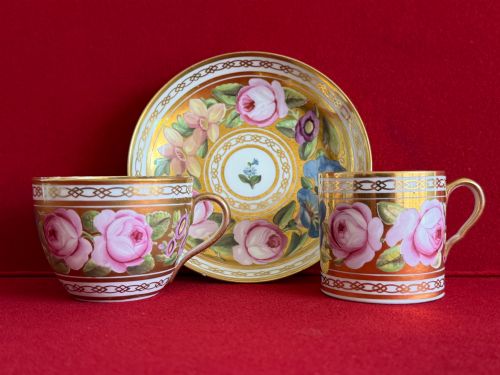
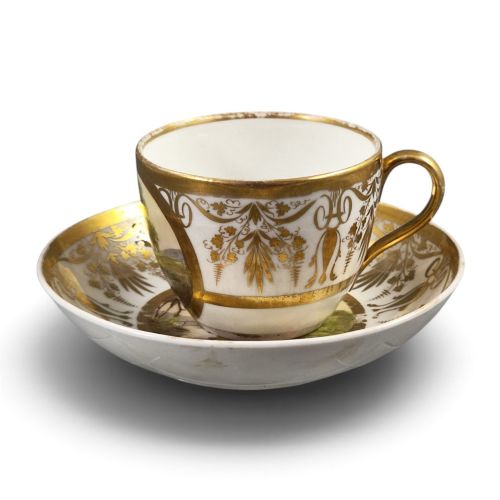
When you search for a gold leaf teacup, you encounter a selection of historic porcelain drinking vessels shaped by Georgian, Regency, and nineteenth-century aesthetics. These range from cabinet cups to demitasse sets, often featuring elaborate hand-painted landscapes or sculptural handles.
The versions most commonly met on this page date from the early nineteenth century through to the Edwardian era, incorporating styles from Biedermeier to French Empire and Rococo Revival. Makers such as KPM Berlin, Derby, and Royal Worcester dominate the selection, each bringing distinct regional forms to the teacup and saucer format.
Materials and construction methods
These pieces are fashioned from hard-paste porcelain and standard porcelain bodies, providing a durable yet delicate foundation for decorative embellishment. Artisans then applied gold leaf, gilding, and gold gilt by hand to highlight rims, handles, and intricate motifs.
Many examples incorporate detailed enamel work alongside the gilding, often framing miniature painted landscapes or geometric borders. Techniques varied from the neoclassical precision of early nineteenth-century workshops to the later production methods seen in 1890 and early twentieth-century factories.
Listings feature hard-paste porcelain and standard porcelain pieces spanning the Georgian, Regency, and Edwardian periods.
Assessing quality in historical porcelain
Quality in these teacups rests upon the crispness of the porcelain body and the finesse of the hand-painted details. Superior pieces display meticulous brushwork within painted landscapes and precise application of gold leaf rather than mechanical stamping.
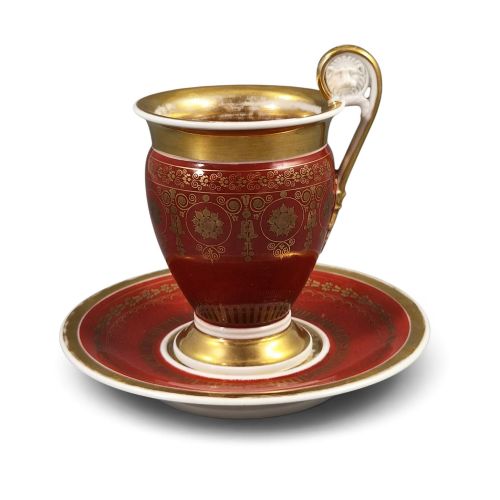
The elegance of form and the preservation of the original gilding dictate the standing of a piece within its period. Cabinet cups with sculptural elements, such as lion mask handles, demonstrate a higher degree of artistic ambition from the maker.
KPM Berlin·Derby·Hutschenreuther·Royal Worcester
The Gold Leaf Teacup Glossary
- Cabinet Cup and Saucer
- A decorative cup and saucer intended primarily for display in a cabinet rather than regular use. These pieces often feature superior artistic painting and generous gilding.
- Demitasse
- A small cup used for serving strong black coffee or espresso. They frequently appear in later nineteenth and twentieth-century porcelain production.
- Hard-paste Porcelain
- A dense, durable ceramic composed of kaolin and petuntse, fired at high temperatures. It forms the robust base for many historic European teacups.
- Gilding
- The application of gold leaf or powdered gold to the surface of porcelain. It defines the lustrous finish characteristic of these cups and saucers.
- Biedermeier
- A central European style spanning the mid-nineteenth century, known for utilitarian comfort and clean neoclassical lines. It appears frequently in German porcelain design.
Gold Leaf Teacup: Frequently Asked Questions
What is a gold leaf teacup used for?
These historical cups and saucers were designed for formal tea or coffee service among the affluent classes. Many surviving examples, particularly cabinet cups, were intended more for display than everyday dining.
Today, collectors appreciate them both as historical artefacts of nineteenth-century porcelain manufacture and as functional items for special occasions.
How can I tell periods apart?
Periods are identified through a combination of porcelain body composition, decorative style, and factory marks. Early nineteenth-century pieces often reflect Georgian or Regency neoclassical restraint.
Later nineteenth-century items incorporate busier revival styles, while 1890 and Edwardian pieces show the transition toward twentieth-century manufacturing standards.
What makes French Old Paris porcelain different?
Old Paris porcelain encompasses items produced by various independent workshops in and around Paris during the nineteenth century. These pieces are typically characterised by bright enamel colours and heavy use of gold leaf.
They frequently feature sculptural details like lion mask handles, setting them apart from contemporaneous English and German wares.